Arts & Entertainment
Local Film Producer Helps Change View of History
Hidden landscapes project chronicles new discoveries about Native American culture.
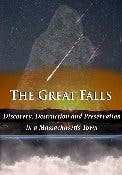
Local residents might not know Peter Frechette's name, but if they are baseball fans, they probably know his work. The Wellesley native has been a film and television producer for more than two decades, and his best-known titles include Still We Believe: The Boston Red Sox Movie and Touching the Game: The Story of the Cape Cod Baseball League.
These days, however, Frechette, co-founder of the Wellesley-based production company Fields of Vision, is dedicated to a project more deeply rooted in American history than even the national pastime. As producer of the Hidden Landscapes series, Frechette is helping to tell stories about recent anthropological discoveries that are changing traditional understandings of Native American history in the Northeast.
"I became involved with Hidden Landscapes when I met Ted Timreck, the director, at a function and he began to tell me about what he was doing," Frechette said. "He was aware of what we had done with the self-production of Touching the Game and wanted me to see his footage. We spent about three hours – one more than you are supposed to – looking at footage in one of the study rooms at the Wellesley library, and by the end I was hooked."
Find out what's happening in Wellesleyfor free with the latest updates from Patch.
So far, Hidden Landscapes has produced three episodes. The first, released this year, is called Great Falls: Discovery, Destruction and Preservation in a Massachusetts Town. It chronicles the 2007 discovery of stone ruins in Turners Falls, a village of Montague, Mass., believed by contemporary Narragansett tribe members to be ceremonial piles laid by their ancestors.
The discovery was significant because it challenged the longstanding notion that all stone ruins in the Northeast were the products of European settlers.
Find out what's happening in Wellesleyfor free with the latest updates from Patch.
"Our series carefully lays out evidence which puts into question what our textbooks tell us about the sophistication of the ancient cultures that once inhabited Eastern North America," Timreck said.
In the midst of the stones' examination, though, the Federal Aviation Administration authorized a $5 million grant to expand the Turners Falls Airport, a project that involved clearcutting land on which some of the ruins lie.
Though trees were cut, activists managed to prevent significant damage to the stone ruins, in part because of Hidden Landscapes. The project's footage, collected over 30 years as part of the Smithsonian Institution's Human Studies Film Archives, contributed to a 2008 decision by the National Register of Historic Places to add the Turners Falls stone site to its registry, making it the first recognized Native American ceremonial stone landscape in the Northeast.
"It is very rewarding to know that work you have been involved with is a part of changing the perception of history," Frechette said.
He said Hidden Landscapes is focused on promoting Great Falls and the two other completed films in the series, Before the Lake Was Champlain and The New Antiquarian. Three more are in the works, Frechette said.