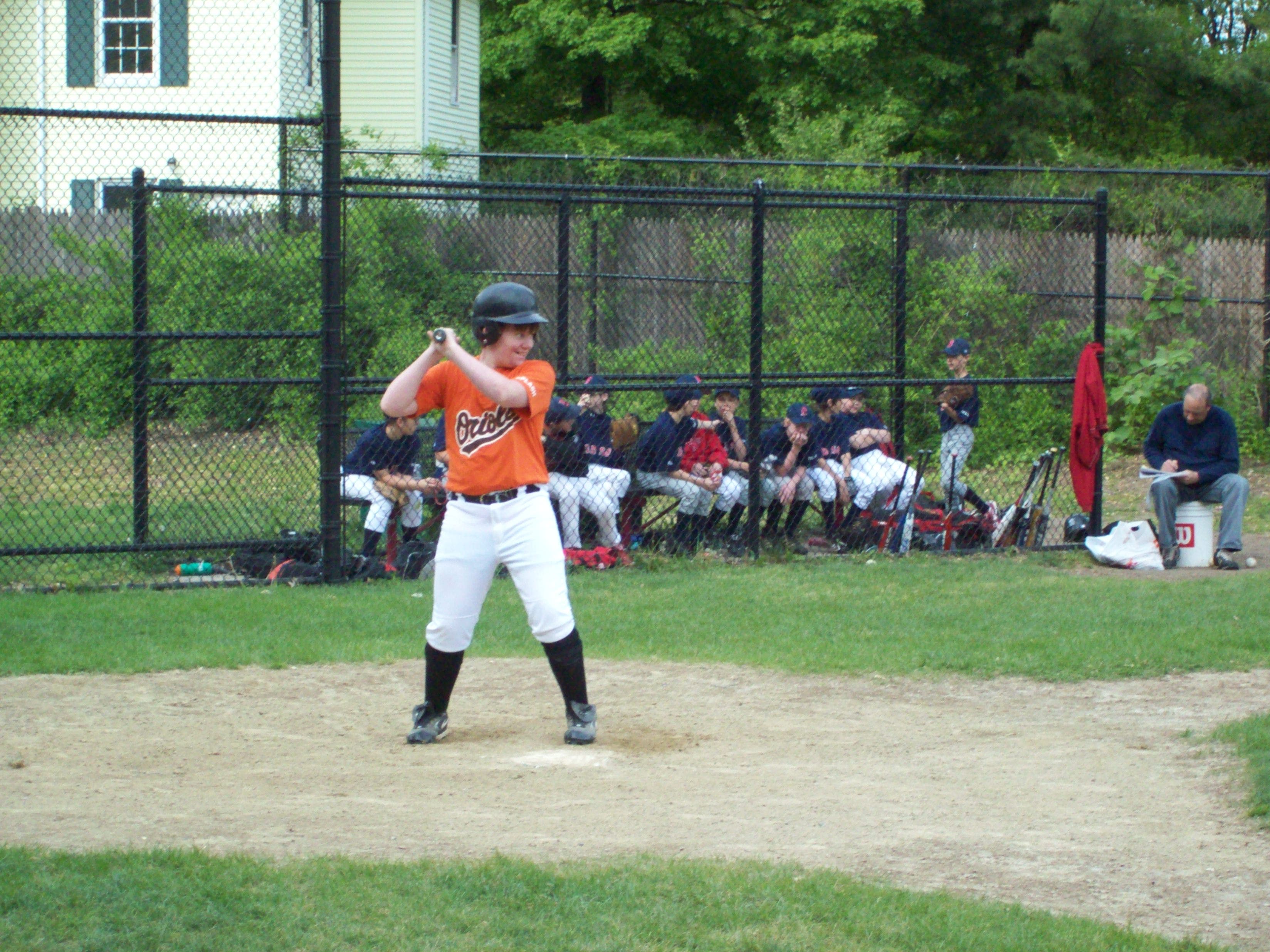
Last year was a tough season for Matt Eldridge. But he wasn't alone; a number of the Wellesley Little Leaguers struggled last spring.
For some of them it was the first time they used wooden bats. Even though Wellesley has had a wooden bat rule for the past seven years, younger leagues are allowed to use metal bats. This season Eldridge and his teammates were able to breathe a sigh of relief as Wellesley decided to lift the ban on metal bats.
"There were rumors about it over the summer and when I found out I was real excited," Eldridge said.
Find out what's happening in Wellesleyfor free with the latest updates from Patch.
The wood bat movement began in 2001 after Wellesley High School pitcher, Bill Hughto, was hit in the head off a line drive. He had to be airlifted to a hospital and spent a few days in a coma. He eventually fully recovered from his injuries.
Many residents were concerned about the safety of the metal bats compared to wood bats. But according to Wellesley safety officer Patrick Doyle, if the barrel of the metal bats is restricted, then they're no more dangerous than a wood bat.
Find out what's happening in Wellesleyfor free with the latest updates from Patch.
"We talked about moving back to metal for a few years," Doyle said. "After speaking with Little League International and understanding their studies and that almost every other league has metal we decided to switch back. There's no difference between Little League-approved bats and wooden bats."
That was something that the Wellesley players, coaches and parents were happy to hear. Not only do wood bats have a tendency to break, but the "sweet spot" on the bat is smaller, making it tougher to get a solid hit.
"I didn't really like the wood," said Eldridge, who broke two bats last year. "The metal is a lot easier to hit. The faster the kids pitch the easier it is to hit with the metal. With the metal the ball jumps off the bat better and with the wood, you need to use your hips more."
"The ball flies off the bat more with the metal," said Wellesley little leaguer Will Ebben, Jr. "With the wood you don't get as much power."
But the quality of game has also improved. For the past few years the league became known as a pitcher's league with so few runs scoring, but now with an increase in offense the games are more exciting.
"The wood bats were too heavy for the kids," said Wellesley coach Eric Winer. "The wood bats could be 28, 29, 30 ounces, while metal could be only 18. The smaller boys had a real tough time swinging the bats; they were overmatched. Now they can get the bat on the ball and get hits making the games higher scoring, which add more enjoyment."
Winer, who is also commissioner of the American League Division, has asked approximately half the players in the league and none of them want to go back to the wood bats.
"Last year I didn't get a lot of hits," said Wellesley player Will Votapka. "I struck out a lot more last season. Now it's a lot more fun and I can swing a lot more. You get more bat speed and it makes it easier to swing the bat. I wasn't strong enough to swing the wood bats."
According to Doyle, the goal is to provide a better experience for the kids, citing that cost had nothing to do with the change. Even though the league had to buy wood bats more frequently than metal bats, the wood is a lot cheaper then the metal, making the cost approximately the same.
So far the goal has been accomplished as the change back to metal has seen an increased enjoyment in the game.
"I like the metal bats, it gives me a chance to really pop the ball," Eldridge said.