Health & Fitness
Blondes, Brunettes, and Redheads
Two of my favorite subjects, Language and Ladies, are our topics for this beautiful June day.

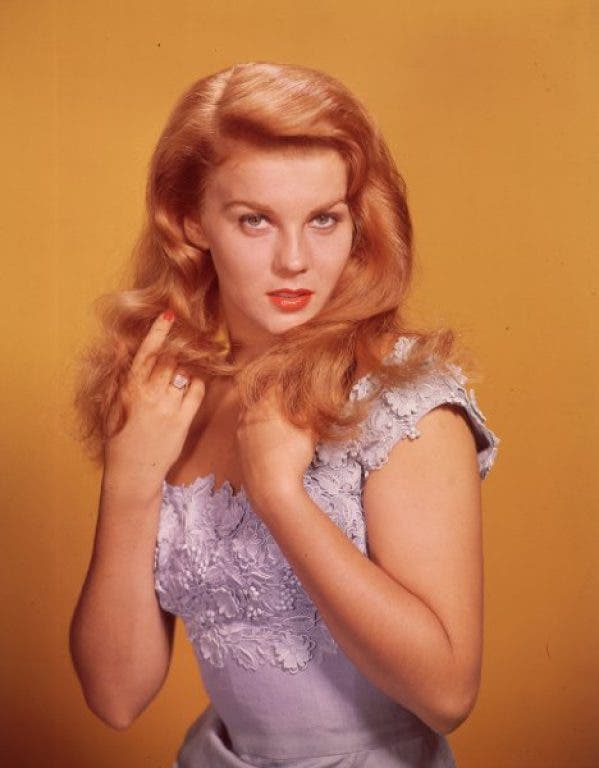


A Brilliant Advertising Campaign, Better than Anything by “Mad Men”
“Does she or doesn’t she?...Only her hairdresser knows for sure.”
Find out what's happening in West Roxburyfor free with the latest updates from Patch.
“Is it true blondes have more fun?”
“If I have only one life, let me live it as a blonde.”
Find out what's happening in West Roxburyfor free with the latest updates from Patch.
“The closer he gets, the better you look.”
If you remember these famous Miss Clairol advertising slogans, and others from the 13-page Life magazine ad buy in 1956, you’re definitely a baby boomer like me. That advertising campaign, scripted by a brilliant copywriter named Shirley Polykoff, was a sensation. It changed the way Americans – especially American men, I suspect, even more so than American women - regarded and appreciated feminine beauty. I also think that it was the real beginning of the so-called “women’s movement,” a topic for another time.
Before the Miss Clairol campaign, advertisements for hair and fashion were high-glam and sexy, probably a 1950s version of the stuff you see today in magazines like Vogue. But Shirley Polykoff insisted that her models not be off-the-runway, but be girl-next-door. “Shirtwaist types instead of glamour gowns,” as she put it in her strategy memo to management.
One of the more famous Miss Clairol print ads featured a strawberry-blond woman lying on the grass, holding a dandelion, and snuggling up to a little girl of eight or nine years of age. Their hair colors are identical. The message stated that mothers, not just fast women, were using Miss Clairol. As one fan wrote to Polykoff, “My mother wanted to be that woman in the picture.”
As Malcolm Gladwell pointed out in a 1999 New Yorker article, hair color was a kind of useful fiction for Polykoff. It was a way of “bridging the contradiction between the kind of woman she was and the kind of woman she wanted to be. It was a way of having it all, to look and feel like Doris Day without being Doris Day.”
The Words We Use
That Gladwell article was a keeper for me. It came back to mind recently when I read my Daily Writing Tips, an e-newsletter on the topic of writing. That newsletter edition was all about the conventions we use for referring to hair color. Why is it that we refer to someone with light-colored hair as a blonde (and, rarely, a blond) but we call someone with red hair a redhead? Why are blonde and brunette spelled two ways?
Blondes
Blond and its feminine form blonde, both from the Latin word blundus (“yellow”) by way of French, may have in turn come from a Frankish word that could be related to Old English blondan, “to mix,” which shares its origins with blend. Blond is usually employed as an adjective, the term as a noun for a man with blond hair, by contrast, is rare. Because blonds and blondes are more likely to be fair-skinned as well as fair-haired, the term is also associated with light complexion.
The presence of both masculine and feminine forms for blond/blonde and brunet/brunette is due to their French (and ultimately Latin) roots, as it were, as opposed to the Germanic origins of black and red, the words for the other major hair colors, which have a neutral form.
Normally, English might have jettisoned one gendered form for blond/blonde. However, the venerable theme in popular culture of the blonde-haired woman as more sexually attractive and available (as well as flighty, shallow, and dimwitted), as compared to females with hair of another color, has caused the noun form blonde and brunette to endure.
The numerous terms for variations in blond hair, not necessarily in order of darkness, include sandy, strawberry, and dirty. Towhead (the first syllable refers to its resemblance to tow, flax or hemp fibers used for twine or yarn) describes a person with yellowish and often unruly hair.
Brunettes
Brunet and brunette, from the gender-specific diminutives of the French brun (“brown”), mean “brown haired.” (Brun and its diminutives originally also referred to a dark complexion.) As with blond and blonde, the male form is rarely used on its own as a noun, though the masculine and feminine variations persist probably because of the same double standard in association of hair color with female sexuality and with personality characteristics as mentioned in reference to blondes above. (Dark-haired women are stereotyped as serious, sophisticated, and capable.) Words for shades of brown hair, from darkest to lightest, are brunet/brunette, chestnut, walnut (the last two as compared to colors of the respective nuts), golden, and ash.
Redheads
Redhead is yet another term for hair color used as a noun; in contrast to the colors mentioned above, it is not gender specific, though as blonde and brunette are much more common in usage than blond and brunet, it is more likely to refer to a woman than a man.
Variations in red hair, listed in alphabetical order rather than according to depth of color, include auburn, copper, ginger, and orange. (Auburn derives ultimately from the Latin word albus, meaning “white,” but thanks to the influence of brun, the French spelling — auborne — changed, as did the meaning, to “reddish brown.”) The prevailing — and long-standing — cultural stereotype about redheads is that they are hot tempered; the hair color has also been associated with a high libido.
Alone among descriptions of people with general hair tones, a black-haired person is never referred to by the word black alone.
Hair-color categories are arbitrary — strawberry blond is sometimes considered a type of red hair, and auburn might be classified as a type of brown hair — though a system called the Fischer-Saller scale, devised for anthropological and medical classification, assigns alphabetical letters and roman numerals to various grades of hair color.
I think you can understand why this post is about two very favorite topics of mine. And I’ll close by asking the ladies: Is it true blondes have more fun?