Health & Fitness
What is a Craft Beer?
Last week's AMDB introduced you to our blog; throughout September, we'll get you started with understanding more about craft beer and craft brewing in Massachusetts and beyond.

Mike Loconto
Area Man Drinks Beer blog
Twitter: @Neighbeers
In to Area Man Drinks Beer, we talked about Why You Should be Drinking a Craft Beer by Now. If you read it (thank you!), you may have noticed that this blog is intended to appeal to a wide audience, including long-time craft beer lovers and supporters of the local Massachusetts brewing scene – but also those new to the craft beer experience and its relationship to the community and other small businesspeople.
Let’s first spend time with readers who fall in the latter category. The next few posts are going to provide an orientation for newer craft beer fans. Today, I am going to talk about how to define a “craft beer,” and what sets the craft industry apart from the familiar names like Budweiser, Miller and Coors.
Find out what's happening in West Roxburyfor free with the latest updates from Patch.
Craft Beer, Defined
The Brewers Association is a trade group that defines American craft brewers as “small, independent and traditional” businesses. Generally, this definition means that the brewer is independently owned and operated. According to the Massachusetts Brewers Guild, there are currently 44 independent craft brewers operating in Massachusetts. Most popular beer brands – often referred to as “macrobrews,” are produced by a handful of large conglomerates like Diageo, which owns Guinness and other popular beer brands, or AB InBev, the Belgian parent company of the Anheuser-Busch beers and other lines (including the recently-acquired Grupo Modelo, with Corona and other Mexican beers).
Find out what's happening in West Roxburyfor free with the latest updates from Patch.
Craft brewing, on the other hand, is a true “art.” Craft brewers are part scientist, part gearhead, part foodie - all in the name of a grand experiment to create interesting and unique beers that define taste, rather than run away from it. For instance, craft brewers do not use adjunct ingredients (e.g., corn or rice) like a macrobrewer often does to lighten and homogenize flavors. Instead, the craft brewer relies on traditional ingredients and often trial-and-error processes to provide a strong basis for his or her creation.
As you have probably heard, the traditional beer ingredients are water, barley and hops, going back to the German Purity Law of 1516 (Reinheitsgebot). While malts and yeast round out the other common ingredients found in beer, many modern craft brewers use other flavors as well – fruit, herbs, coffee, to name a few – to further enhance the profile of a particular beer. With additional efforts like cask or bottle conditioning, aging in bourbon or wine barrels and experimentation with different strains of hops, indigenous yeasts or unique malts (we will discuss these and other types of processes in later posts), often the result is something distinctive not just from label to label, but from glass to glass.
Production output completes the craft brewer definition. The Brewers Association definition caps production at no more than 6 million barrels of beer a year in order to retain the “craft brewer” designation. The Boston Beer Company (whose original brewery is only a few miles away, on Germania Street in Jamaica Plain), brewers of the Samuel Adams line of beers, falls within this definition as the largest craft brewer in America with over 2 million barrels produced annually (the second largest craft brewer by comparison, California’s Sierra Nevada, brews less than half of Boston Beer’s annual output). Budweiser, on the other hand, produced 161 million barrels in 2006, the year prior to the InBev acquisition (statistics are harder to come by since that time).
Why Craft Beer? Quality Counts
I am a 34-year-old married working father of three daughters under the age of 5. In other words, I deeply cherish my evening brew. But that also means I am usually only enjoying one at a time – so I want to make it count, and really – so should you.
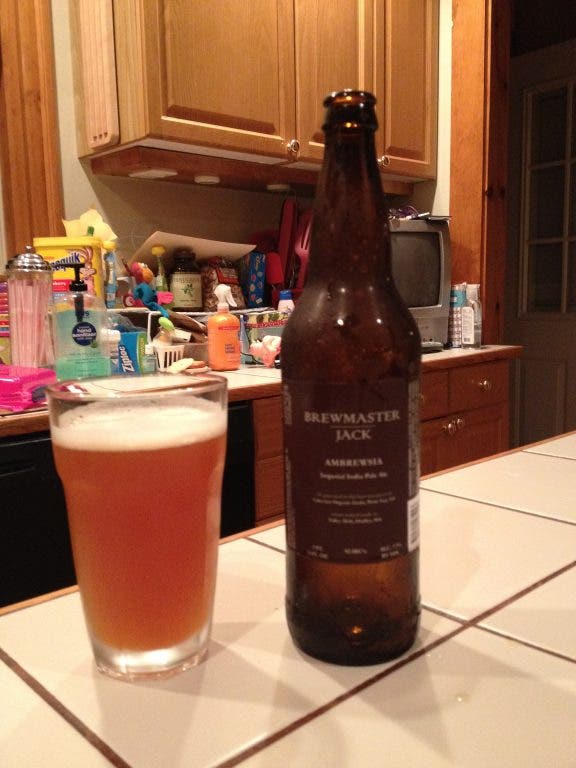
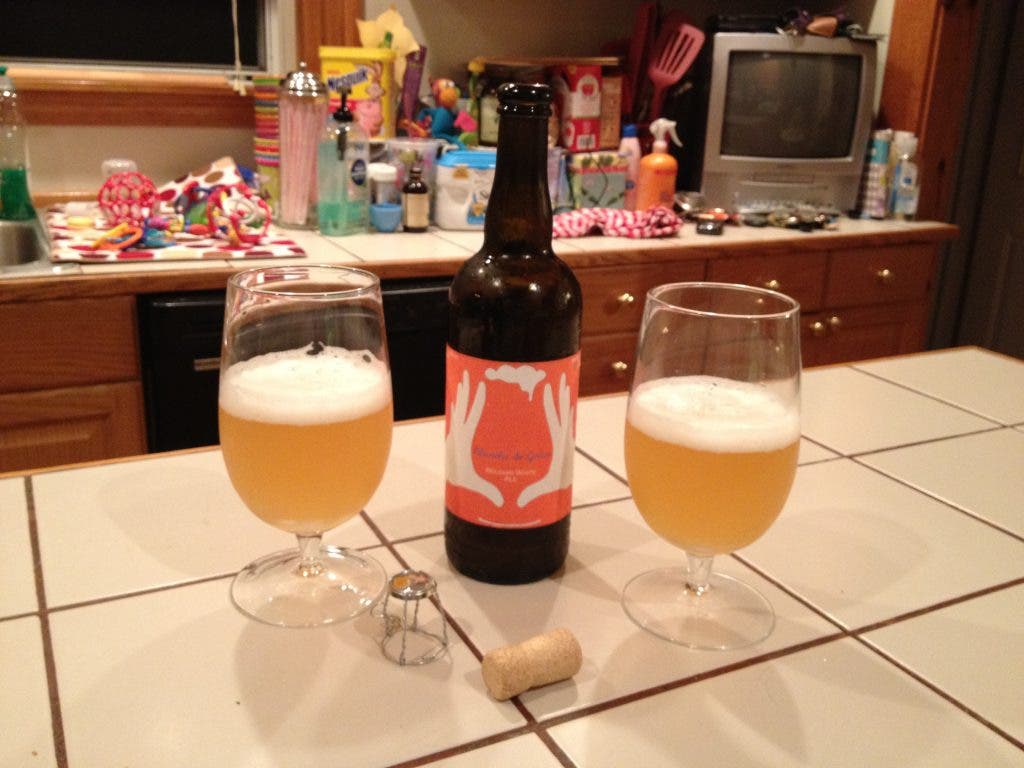
Sure, any mass-produced lager is going to be consistent – you know what you’re getting. But with craft beer, you’re getting an effort to focus on flavor and nuance. This is again the “art” of craft brewing. Case in point: when is the last time you heard someone talking about the flavor profile of Bud Light? If you are new to craft beer, try opening your horizons to perhaps an American Pale Ale, like California’s Sierra Nevada Pale Ale, with its caramel color and sweet hop flavor, or a Belgian-style witbier, like Portland, Maine’s Allagash White, that is full of candi sugar and floral, citrus undertones. My all-time, Hall-of-Fame go-to beer is the Lager from Brooklyn Brewery in Brooklyn, NY – a crisp, sweet amber beer that goes just as well with a hamburger on the grill or an afternoon at a ballgame as it does with a business meeting after-hours.
Each of these flagship beers, to name just a very few in a fast-growing industry, are standards representative of popular styles – not to mention approachable, entry-level brews for someone looking to give craft beer a try. So next time you’re out for a quiet dinner at the Porter Café, or stopping by Blanchard’s to pick up a six-pack on the way to a friend’s house to watch a Pats game, do yourself a favor and give a craft beer a try.
Coming Up
Need a little more convincing, or with so many options, some guidance? In my next post, we’ll discuss how to get started with craft beers.
What’s up next for Area Man Drinks Beer:
- how to get started enjoying craft beer,
- the myths associated with the craft beer scene, and
- the benefits of drinking local craft beer.
We have a rich craft beer constituency in West Roxbury (and beyond), and I want to provide it with a voice and a forum through this blog. Send me your thoughts on the blog, event postings and ideas for future stories or reviews at neighbeers at gmail dot com or through twitter @Neighbeers. And comments below, good or bad, are always appreciated.