Schools
Catholic Memorial Anti-Bullying Meeting Encourages Parents to Talk to Students About Internet Use
Massachusetts Aggression Reduction Center director talks to parents about cyber-bullying.
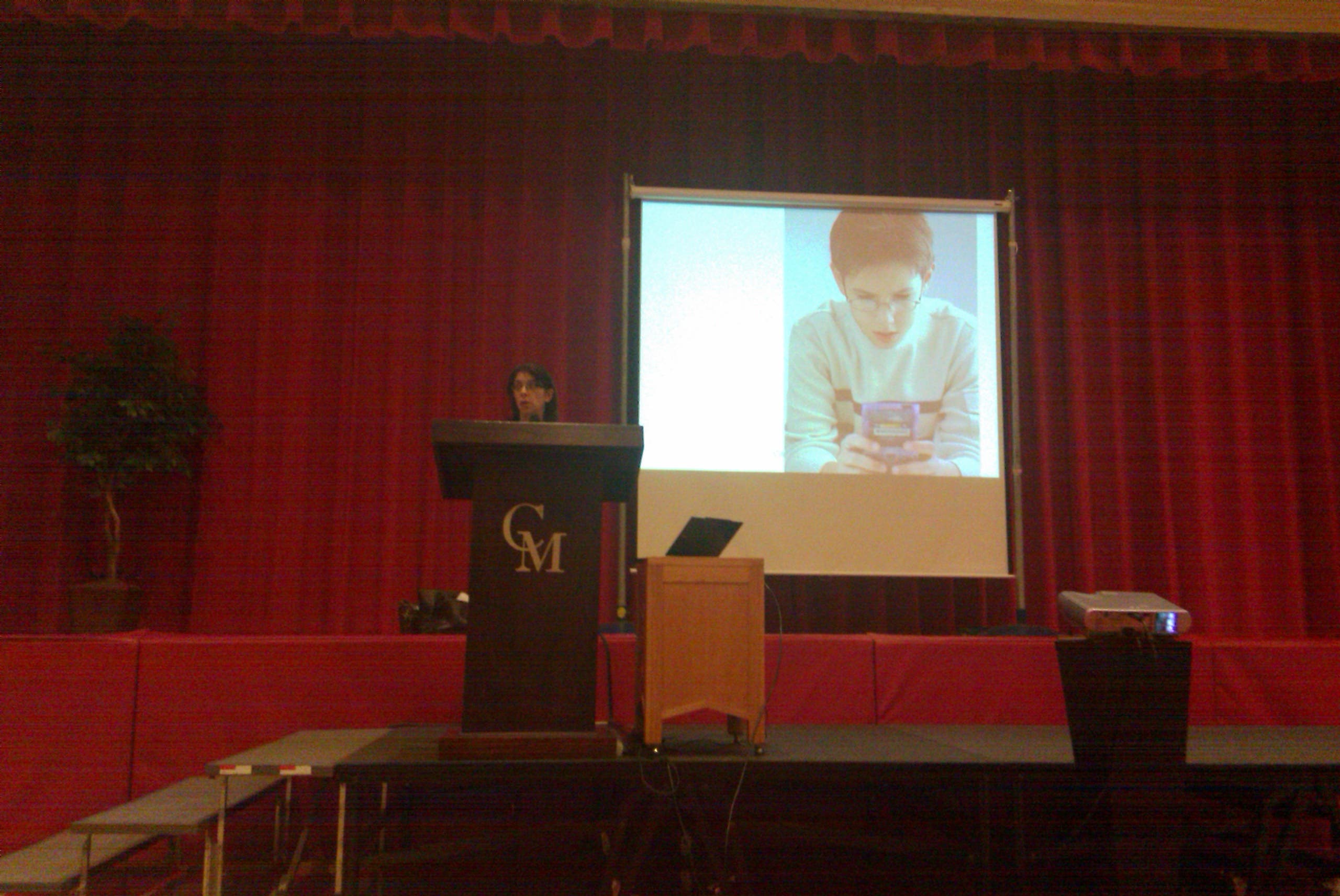
The director of the Massachusetts Aggression Reduction Center at Bridgewater State College offered parents of Catholic Memorial School students cyber-bullying prevention and detection techniques at the school's Ronald S. Perry Gymnasium Tuesday evening.
Dr. Elizabeth Englander, a philosophy professor at BSC, explained to the audience what cyber-bullying is, how it has come to represent the majority of bullying issues today, and how parents can help their children protect themselves online from becoming either a bully or a target.
"Discipline alone won't be enough," she said. "This is an issue where students and adults both need to be informed."
Find out what's happening in West Roxburyfor free with the latest updates from Patch.
During the course of her hour-long presentation, Englander stressed that students don't understand the consequences of what they do online. Parents, she suggested, need to let their children know how they are expected to behave on the internet.
"A lot of kids have a good value system from their families about how to behave, but they have the idea that what the do online somehow doesn't count," she said.
Find out what's happening in West Roxburyfor free with the latest updates from Patch.
Cyber-bullying is defined in Massachusetts's Bully Prevention and Intervention Law as "repeated electronic harassment via computer, cell phone, or any other electronic medium." According to Englander, it has completely changed the landscape of bullying from physical to digital.
"Cyberspace is the biggest reason bullying has changed," she said.
MARC research has shown that students - even those who would seem unlikely to bully - feel more free to do so online is because they overwhelmingly believe that what they do online is anonymous, an idea that Englander vigorously decried.
"It's not private," she said. "Nothing that happens online is private. If you have 587 friends [on Facebook], that's 587 people who can see what you're doing. That's not private. That's not remotely private."
Therefore, Englander said, it's up to parents to train their kids to stop and think before they write anything online. It's important for parents to make such a thought process a habit for their children, she said. If that means that parents have to monitor what their children are doing, she said, then so be it.
"Tell your children, 'Mom and Dad are going to monitor what you do online. If Mom can't see it, you can't do it,'" she said.
Englander also listed five principles parents should instill in children to make sure they are behaving online.
- The first principle is that everything - even cyberspace - counts for bullying.
- The second is that students are not invisible online. Cyber-bullying is not anonymous.
- Third, students should not let their emotions rule their behavior online.
- The fourth principle that MARC suggests parents instill is that nothing that happens on the internet is private.
- Fifth, Englander suggested that parents enforce their child's school's computer and cell phone rules. If a parent knows their student is in school, they shouldn't call him or her.
Parents found the meeting very informative.
James McGee said that he would discuss the suggestions about behaving online with his freshman son, Connor, upon returning home.
Helen Haugh is the mother of seven sons, including Sean, a freshman at CM. She says that some of her sons are more apt to use the computer than others.
"We've got to talk to the ones who are on it more," she said.
The presentation was Englander's second at CM this year after spending three hours with staff and faculty two weeks ago in a workshop, training them to spot bullying and stand up against it. MARC also sent a representative out earlier in the year to speak with students.
CM is in the process of implementing awareness-raising strategies, said Vice Principal of Academic Affairs Brian Scott. In addition to the workshop for faculty and staff, student organizations such as the school's Student Government and the Ambassadors Club, which features sports captains and class officers, are being tasked with spreading awareness through a variety of projects, said Scott.
The Holy Name School held a similar presentation last week. Roxbury Latin will hold its own next Monday, October 25.
Parents can download MARC resources for free at http://webhost.bridgew.edu/marc/parpub.html