Neighbor News
Please vote May 4th at Westwood Town Meeting for my warrant article
Requires each municipal and school building to benchmark (measure) energy and water use and establish energy and water performance score
A building’s energy performance score is determined by comparing its energy use to the building energy performance of many similar buildings. Westwood is a member of the esteemed Massachusetts Green Community program which requires measurement of energy use but does not require building energy performance score.
Tracking building energy and water
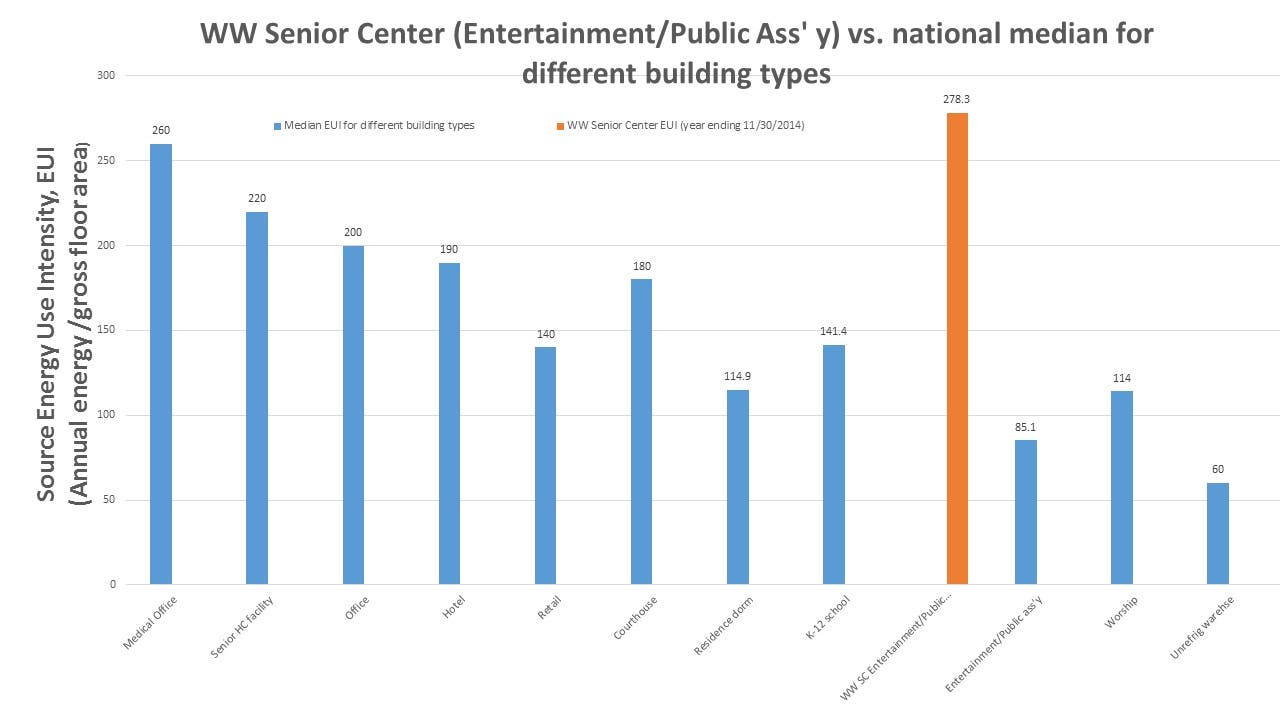
Without a score you won’t know if your buildings are energy- and water- efficient. Tracking a building’s energy use helps to understand its energy efficiency and, in turn, reduces its energy consumption and costs. Here’s a recent example: The Westwood Senior Center consumes more than three times the energy of the typical median entertainment/ public assembly building and more energy than the median medical office and senior health care facility. The Senior Center annual energy bill is $21,823 compared to energy bill of about $8,000 for median entertainment / public assembly buildings.
Find out what's happening in Westwoodfor free with the latest updates from Patch.
Water benchmarking
Find out what's happening in Westwoodfor free with the latest updates from Patch.
Water performance is determined by tracking water utility bills and observing seasonal and historical use and saves water. Water performance does not enter into the building energy performance model. However, wasting water also wastes electricity regardless of whether your building pumps from a well or receives from a utility. Westwood has residential water ban often in summer. There is no water benchmarking or tracking in town or school buildings.
Benchmarking tools and communities that use them
To benchmark building energy performance, Westwood can employ at least two tools
• EPA Energy Star Portfolio Manager
• Department of Energy Resources tool MassEnergyInsight
Both tools are set up to automatically and electronically deposit utility monthly bills into each building’s energy meters. At least two town employees are trained to use MassEnergyInsight.
Needham, Dedham, Newton, and Cambridge are some of the Massachusetts Green Community towns that benchmark building energy performance. They use Energy Star Portfolio Manager and MassEnergyInsight. Cambridge also uses Energy Information System, EIS.
Other communities that benchmark energy and water performance
• 176 buildings in Boston benchmark energy and water in the EPA Energy Star program. Their average building savings is $341,500 / building. Studies have shown that tracking energy use can help reduce building energy consumption and costs. Over 260,000 buildings – representing 40% of U.S. commercial floor space – use Portfolio Manager to track energy performance. Portfolio Manager was developed by the U.S. Environmental Protection Agency (EPA) to allow building owners to track, compare, and understand their energy use. In 2012, EPA analyzed 35,000 buildings that had entered complete data for a four-year period, and found that, on average, the buildings that were tracking their consumption reduced energy use by 7%.
• BERDO- Boston Energy Reporting Disclosure Ordinance
In Boston, energy reporting and disclosure is a key strategy for cutting costs for tenants and owners alike, and reducing greenhouse gas emissions in line with the City’s 2020 targets. In May 2013, the City of Boston enacted the Building Energy Reporting and Disclosure Ordinance, adopted as Section 7-2.2 of the City of Boston Code. In passing the ordinance, Boston joined other U.S. cities that have passed similar policies, including New York, San Francisco, Washington, D.C., and Philadelphia. At full implementation, Boston’s ordinance requires all buildings over 35,000 square feet to report their annual energy and water performance to the City, which will then make the information publicly available.