Neighbor News
A Possible Break-Through in Alzheimer's Research
Photo Credit: David Shank - Alz.org. Just in case you missed in there has been a BIG development in Alzheimer's research from MGH doctors.
[ABSTRACT]
For the last two decades, researchers have been unable to find a drug to cure Alzheimer’s disease. Amyloid protein, also called Abeta, is thought to be the hallmark of Alzheimer’s. There have been many drugs developed that reduce or eliminate Abeta in mice, but that have repeatedly failed clinical trials in humans.
As scanning techniques improved, researchers realized that some people with Abeta accumulations did not develop Alzheimer’s. Some scientists began to question whether Abeta was in fact the key to unlocking the mysteries of Alzheimer’s.
Find out what's happening in Westwoodfor free with the latest updates from Patch.
In an article published two weeks ago in Nature, neuroscientists Doo Yeon Kim and Rudy Tanzi of the MGH reported that they have found a method of growing “Alzheimer’s in a dish”, and that this ability will answer long standing questions and tremendously accelerate the research for a cure.
ALZHEIMER’S IN A DISH?
Find out what's happening in Westwoodfor free with the latest updates from Patch.
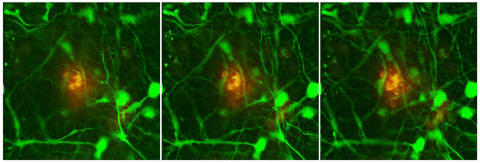
The MGH researchers created human brain neurons with Alzheimer’s in a laboratory, something that has not been done before. They took human embryonic stem cells, and bathed them in chemicals that turned these cells into brain neurons. These cells were grown not in a liquid medium, which has been the standard, but in a three dimensional gel, which closely resembles the environment in the human brain.
The researchers added two genes to the neurons, both of which are associated with early onset Alzheimer’s disease. Within 6 weeks, the neurons had developed Abeta protein clumps. Two to four weeks later, the neurons also had developed tangles. It was Alzheimer’s in a dish, and it could have profound implications for future research.
For the full analysis of this research development visit our blog at: http://whiteoakcottages.com/?p=3656