Politics & Government
Drugs Will Dominate Wilmington Special Town Meeting
The meeting was called to restrict drug treatment facilities, but the town's decision on retail marijuana sales may have a bigger impact.


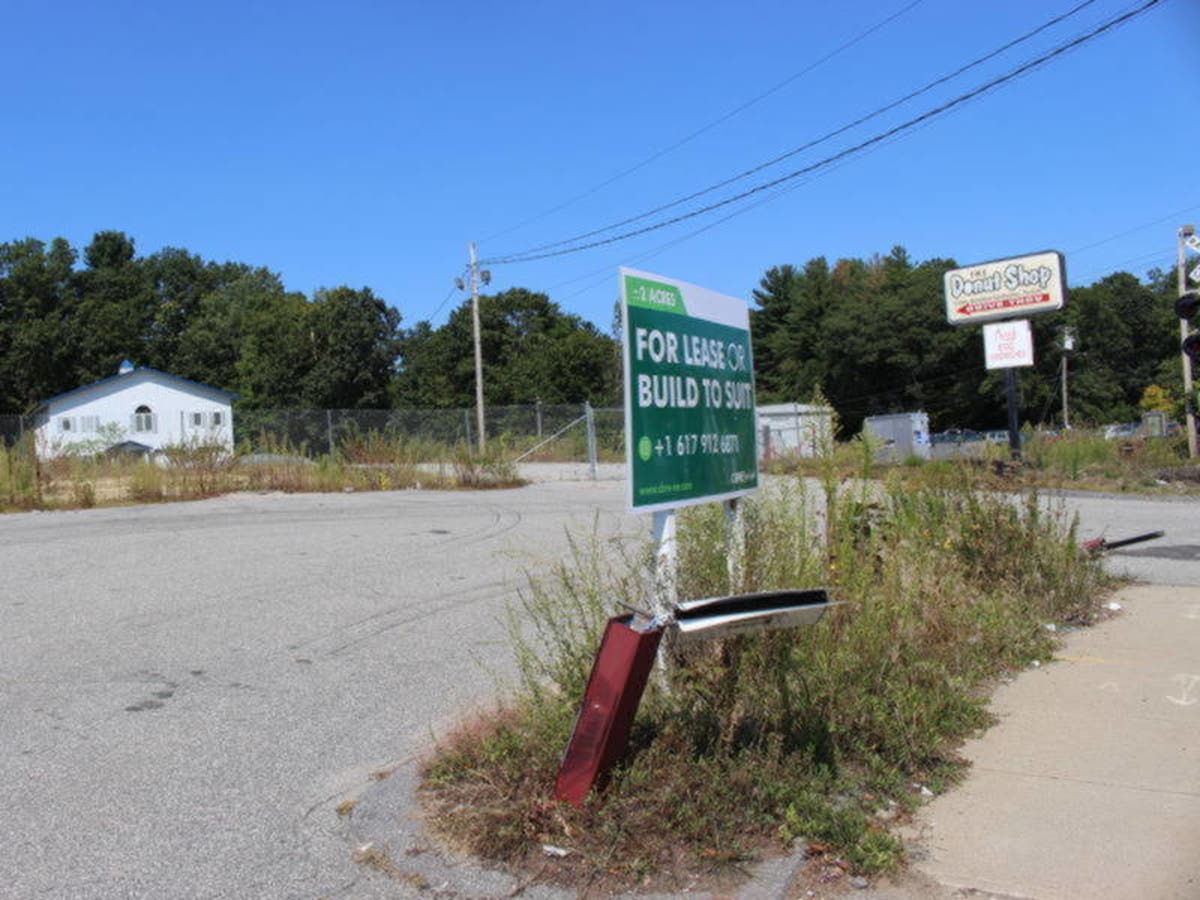
WILMINGTON, MA -- The issue that prompted Wilmington to call a special town meeting -- a proposed detox center at 362 Middlesex Avenue -- may be a moot point. Backers of the proposal have already filed their plan with the town planning board, meaning the center would be grandfathered in under existing rules, and there is a consensus that the state attorney general's office would not uphold the proposed zoning changes if town meeting passes the new rules. Backers of the town meeting article want to change local zoning laws to limit where drug treatment facilities like the detox center can be located.
But since the special town meeting was scheduled, three more articles have been added that, if passed, would ban retail marijuana sales in Wilmington. The complete warrant for the special town meeting, which starts at 10:30 am Saturday in the Wilmington High School auditorium, is available on the town's Website.
Wilmington Joins Other Towns Considering Retail Marijuana Bans
Find out what's happening in Wilmingtonfor free with the latest updates from Patch.
Wilmington officials have until June 30 to decide whether they will make permanent a temporary law that prohibits the sale of recreational marijuana in town. Massachusetts voters approved legalized recreational marijuana with a ballot question in last year's general election. But towns like Wilmington are debating whether or not that yes vote means voters also wanted the drug to be sold in their communities.
Wilmington passed a moratorium at town meeting this year. That moratorium expires on June 30 of next year. In October, Town Manager Jeffrey Hull recommended that Selectmen put forth warrants for town meeting that would make the ban on recreational marijuana sales permanent. The board voted 5-0 to accept Hull's recommendation.
Find out what's happening in Wilmingtonfor free with the latest updates from Patch.
The debate on whether or not to ban recreational marijuana sales in Wilmington mirrors debates playing out for legislative bodies in a band of towns north of Boston that all voted against the last fall's ballot question to legalize recreational marijuana use and sales in Massachusetts. The measure passed statewide, but Wilmington voters were almost evenly divided on the ballot question in last years general election. In Wilmington, just 6,805 voters, or 50.48%, opposed legalized cannabis, while 6,569 voters, or 49.2%, supported the measure.
Almost all of the towns in Massachusetts that voted against question four are considering or have adopted laws that will ban recreational marijuana sales. Statewide, the measure passed by a margin of 1,745,394 to 1,511,747. Earlier this year, the state legislature passed a "compromise bill" that reworked the law to address concerns in the original language of the law. One of the biggest changes in the compromise bill was giving towns where the measure failed more leeway to ban recreational marijuana sales.
But the state has yet to fully figure out how it will implement and regulate legal marijuana sales. And banning sales may cost towns like Wilmington. Backers of legalized recreational marijuana use, sales and possession are pushing for new laws that would penalize towns and cities like Wilmington if they completely bar retail marijuana sales. While their plan is admittedly facing steep odds of working, those legalized marijuana backers are pushing state legislatures to make sure towns that ban marijuana sales do not get any of the state tax revenue that will be generated from the sales.
If town meeting were to permanently ban recreational marijuana sales, Wilmington would lose its chance to collect a three percent, local sales tax on recreational marijuana sales. Opponents of such bans also want to bar towns with bans from tapping into the pool of money that will come from the state's 17% sales tax on marijuana sales.
How much tax revenue will be generated is a question open for debate. Shawn McCormack, a litigation, real estate and environmental attorney in the cannabis group at the Boston-based law firm Davis Malm, said there have been varying estimates of how big the legal marijuana market will be in Massachusetts, so it's impossible to accurately predict how much towns could collect from the 3% sales tax, which would be on top of a 17% state sales tax on marijuana.
"Nobody really knows how large the recreational marijuana market will be, but estimates are between $700 million and $1.3 billion in sales in the first two years, meaning this could be a significant revenue source for municipalities," McCormack told Patch.
Detox Center Divides Wilmington
Whether or not the rule that would limit drug treatment facilities to areas of town zoned industrial will have teeth remains to be seen. But the debate on Saturday is likely to be passionate.
The zoning rule is backed by Selectman Michael McCoy, who has been the most unspoken opponent on the five-member board of a proposal to build a drug treatment center at 362 Middlesex Avenue. McCoy organized residents to get signatures for a petition that forced the special town meeting. As proposed, the rule would limit drug treatment facilities to sections of town zoned for industrial uses.
When selectmen chose a date for the special town meeting in October, Town Manager Jeffrey Hull read an opinion from town counsel noting that the Massachusetts Attorney General's office would likely shoot down the law if it passed town meeting, as it had done to a similar zoning law passed by the town of Millbury. In that instance, the Attorney General said by singling out facilities that serve people seeking treatment for drug addiction, the zoning law violated discriminated against people with disabilities.
McCoy, who earlier called Hull a "sneaky little weasel," accused Town Counsel of trying to make sure the rule he is backing is dead on arrival. McCoy said Town Counsel is biased against the rule and that Selectmen may need to hire a special town counsel to argue the town's case if the proposal is passed.
I may not have "esquire at the end of my name, but I understand how municipal government works," McCoy said. "When residents vote, [Town Counsel] may not like what you for vote for, but he has to fight for it on our behalf. It's not for him to come and assassinate this thing."
Hull pointed out that town counsel was simply retained to give a legal opinion and not advocate for the town when the Attorney General's staff considers the legality of new bylaws approved by Wilmington town meeting.
"Town Counsel is noting the underlying principal that Millbury treated a protected class as separately and distinctive from other people seeking treatment...the proposal here is to carve out one category of individuals seeking medical treatment and [exclude] their facilities from those areas of town. That's the problem that potentially arises.," Hull said.
McCoy's response? He proposed a second article for the special town meeting. This article changes the wording of the previous proposal to replace detox and drug treatment facilities with "hospitals and nursing homes." The rule would not affect existing nursing homes or hospitals, but all future facilities would have to be located in industrial areas. McCoy called his new proposal "a winner."
Minutes after McCoy proposed the change, it lost in a 3-2 vote by selectmen, who declined to add it to the special town meeting warrant. The majority argued they had been given the article to review just minutes before they voted on it. Selectmen Ed Loud Loud and McCoy voted in favor of the second article. McCoy said he would be back in front of Market Basket early Tuesday morning, collecting the 100 signatures he'd need to get his re-worded article on the special town meeting warrant.
What started out as opposition to a specific proposal for a 48-bed drug treatment facility has now expanded to an outright effort to all but ban any drug treatment facilities from locating Wilmington. While the location of the proposal that prompted McCoy to seek an overhaul of zoning laws was always a key flash point, other residents opposed the proposal because of the questionable track record of one of the project's key backers.
Even some of the opponents of the proposal conceded that, like many Massachusetts communities, Wilmington had been hard hit by the opioid epidemic. Many agreed that the town needed treatment facilities but wanted the town to better vet the operators of those facilities and consider the impact of potential locations.
"From the perspective of the police department, we need assistance. We need the help. It's heartbreaking. I sympathize with the folks that live in the neighborhood. I get it - I live in the neighborhood," Police Chief Michael Begonis said at September meeting on the proposal. His comments echoed those of many people in Wilmington when it came to finding ways to address the opioid epidemic.
"I'm not here to tell you if this is the right location or the wrong location," Begonis continued. "My concern...is there are not a lot of people knocking on our door to help Wilmington specifically. I need beds because I've called at 5 o'clock on Friday night to try to get people help and they're your friends and neighbors."
- Wilmington Detox Center Opponents Threatened (12/6/2017)
- Wilmington, It's Not Over: Letter To The Editor(12/2/2017)
- Selectman, Wilmington Resident Battle Over Detox Center Proposal (11/19/2017)
- Wilmington Detox Center Saga To Continue At Special Town Meeting (11/7/2017)
- Wilmington Selectman: Town Manager Is 'A Sneaky Little Weasel'(11/1/2017)
- Wilmington Detox Center Opponents Force Town Meeting: Report(10/27/2017)
- Wilmington Official Who Would Decide Fate Of Detox Center Calls Drug Addicted 'Junkies'(10/16/2017)
- Wilmington Detox Facility Backers Considering Other Sites For Controversial Proposal (10/10/2017)
- Residents Start Petition Opposing Wilmington Detox Facility Proposal (10/5/2017)
- Who Are The Other Partners Behind The Wilmington Detox Center Proposal? (10/4/2017)
- Lead Backer Pulls Out Of Group That Wants To Build Wilmington Drug Addiction Treatment Facility(9/27/2017)
- More Questions, Concerns Raised About Wilmington Detox Facility Backer, Proposal (9/27/2017)
Subscribe to Wilmington Patch for more local news and real-time alerts.
Patch file photo.
Dave Copeland can be reached at dave.copeland@patch.com or by calling 617-433-7851. Follow him on Twitter (@CopeWrites) and Facebook (/copewrites).
Get more local news delivered straight to your inbox. Sign up for free Patch newsletters and alerts.

![Road Closed Due To Fire In Wilmington, Police Say [UPDATE]](https://patch.com/img/cdn20/users/22956225/20260518/080648/styles/patch_image/public/patch-graphics-news-alert-borden-2020___18080640311.jpg)