Arts & Entertainment
Appraising Antiques, Telling Stories Along the Way
At the Winchester Historical Society's Skinner Appraisal Night, appraiser Kerry Shrives entertained and informed.
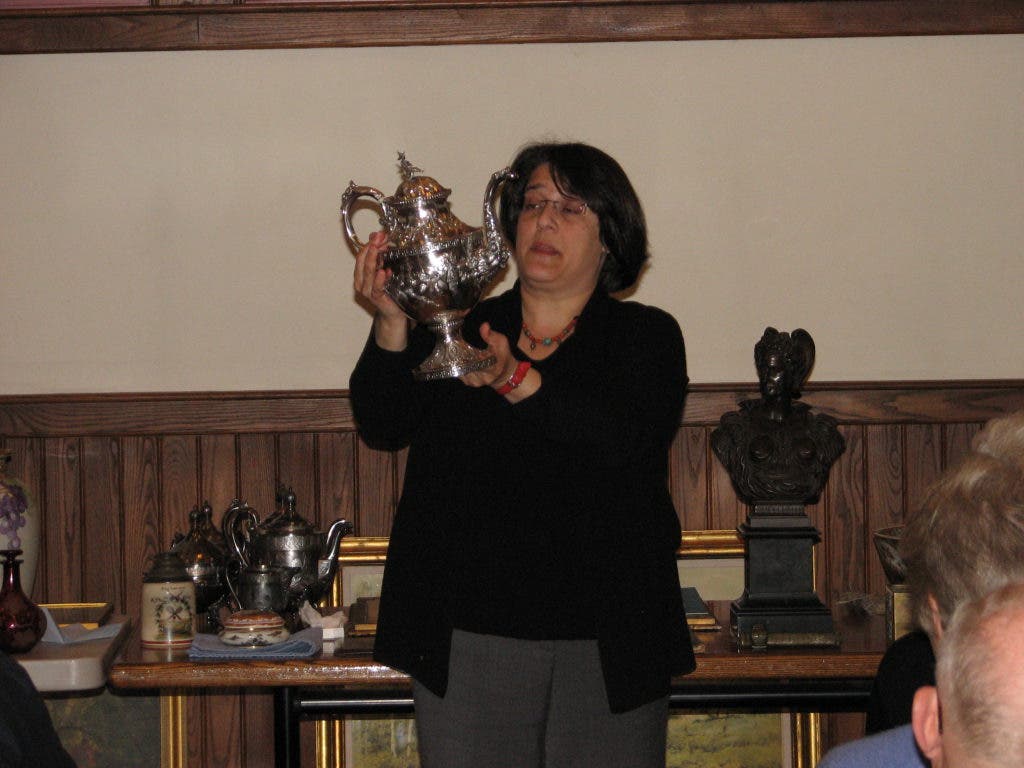


Appraiser Kerry Shrives held up an antique, hand-painted paper fan at and, after examining it carefully, announced its insurance value was close to $1,000.
The fan was the first of many items to be appraised on the night by Shrives, a lead appraiser and auctioneer with Skinner, an auction and appraisal company based in Boston. Shrives is a regular on the PBS series Antiques Roadshow, and has also lived in Winchester.
About 60 people filled the room in, many waiting to hear about their item's value.
Find out what's happening in Winchesterfor free with the latest updates from Patch.
Shrives kept up an animated dialogue throughout the evening, asking for information from the items’ owners, briefly discussing the history and care of items, giving appraisals, and telling stories.
“We do a lot of this kind of thing,” Shrives said, referring to the evening, hosted by the . “What makes it interesting is you never know what you’re going to see.”
Find out what's happening in Winchesterfor free with the latest updates from Patch.
Once, she recalled, a man brought his collection of barbed wire to an appraisal event. Shrives said it was “one of the biggest stumpers I’ve ever encountered.”
She encouraged the audience to share how the item was acquired and any stories they know about it, adding one of her goals is to “confirm or debunk family history.”
She also gave cleaning tips. For one item, she didn’t recommend cleaning at all, saying, “Dust always adds value.”
Some people have brought her antique brass items they’ve cleaned with Brillo pads, Shrives said, eliciting a loud, collective gasp from the audience. If you do want to clean an item, she said, use a soft, grit-free cloth, nothing abrasive.
As an example of stellar cleaning, she held up a tall silver pitcher that had been shined to gleaming. Shrives described the ornate piece as decorated in an “over the top” and “vigorous” style, then pronounced it worth $2,500 to $3,000.
Later, she held up a large porcelain Japanese vase dating to the 1890s-1910 period. She peered inside before turning it over to look at the underside.
“One time,” Shrives said as she examined the bottom of the piece, “I was looking at a vase and I turned it over to check the markings and out filtered some—”
“—ashes?” a man called out.
The audience burst into laughter.
“No, not ashes,” Shrives said, smiling. “I don’t know what it was. Old potpourri or something, but now I always look inside before turning things over.”
Later in the evening, Shrives held up a small folding chair with a cane-like handle. It had come from the 1940 World’s Fair.
“We see a lot of them,” Shrives said. "People held on to them."
“They’re hard to get rid of,” the owner said, drawing more laughter from the audience.
The chair would sell for about $50 at auction, Shrives pronounced.