Politics & Government
Homelessness Rose In America For First Time Since 2010
Here's how the numbers break down in Massachusetts.


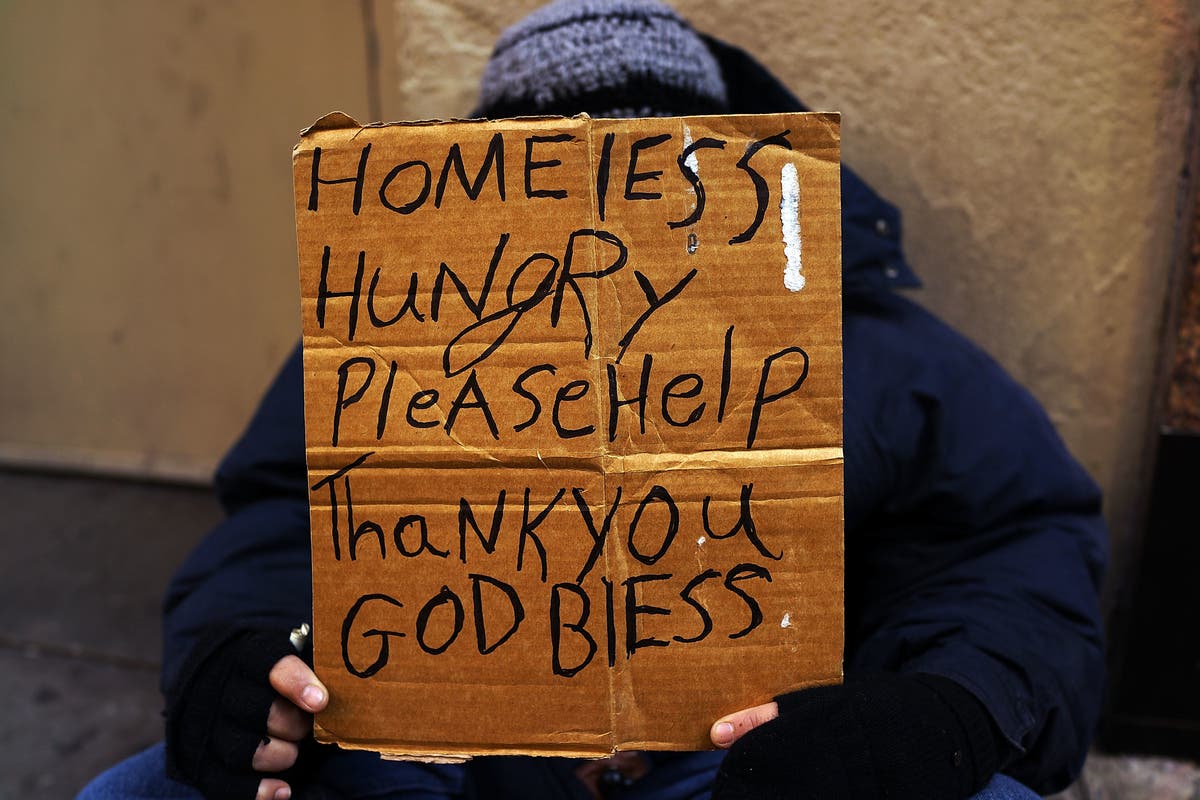
For the first time since 2010, homelessness in the U.S climbed over the previous year, and the increase was largely attributed to a massive spike in homelessness in California, according to new figures from the U.S. Department of Housing and Urban Development. HUD released the data estimates on Wednesday as part of its yearly Point in Time count.
There were an estimated 553,742 people who experienced at least one night of homelessness across the country in 2017 — an increase of .7 percent over last year. Officials calculated the number using local tallies conducted in January. Chronic or long-term homelessness among individuals rose to 95,419 in 2017, a 12.2 percent increase from 2016. That number is still down 18 percent from 2010.
In 2007, the agency estimated there were 647,258 homeless people in the U.S., or 14.4 percent more than today.
Find out what's happening in Winchesterfor free with the latest updates from Patch.
For Massachusetts, the numbers are a little different. The Bay State saw a 10.4 percent drop in total homelessness over 2016, but compared to 2007 that’s up by 16.1 percent.
The number of the state’s unsheltered homeless climbed from 760 in 2016 to 991 this year. During that same period, those who were chronically homeless decreased from 2,325 to 1,914.
Find out what's happening in Winchesterfor free with the latest updates from Patch.
In California alone this year, the total was 134,278 — by far the highest in the country and accounting for about 24 percent of the country’s total homeless population. Furthermore, California had nearly 14 percent more homeless people this year compared to 2016, and nearly 18 percent more than it did in 2014.
The report supports what many on the West Coast have seen: more encampments along freeways and rivers and local governments struggling to find money for long-term solutions, as well as conflicts over cracking down on street camping and even feeding the homeless.
At least 10 city and county governments in the West have declared states of emergency over the last two years due to the spike in homelessness.
“In many high-cost areas of our country, especially along the West Coast, the severe shortage of affordable housing is manifesting itself on our streets,” HUD Secretary Ben Carson said in a release. “With rents rising faster than incomes, we need to bring everybody to the table to produce more affordable housing and ease the pressure that is forcing too many of our neighbors into our shelters and onto our streets. This is not a federal problem-it’s everybody’s problem.”
While higher compared to 2016, the national rate is still 13.1 percent less than 2010, the agency said.
New York had the second highest number of homeless people this year at 89,503, a slight 4 percent increase over 2016, but 43 percent higher than the 62,601 the state had a decade ago.
Other states that saw big percentage increases this year over 2016 include North Dakota at 18 percent and New Mexico and Vermont at nearly 10 percent.
However, the agency said in a release that 30 states and the District of Columbia saw decreases in homelessness between 2016 and 2017. The states that saw the most dramatic declines were South Carolina, Georgia, Louisiana and Mississippi, which saw homelessness fall 22.5 percent, 21.2 percent 17.3 percent and 15.3 percent, respectively.
The survey is based on counts at shelters and on the streets. While imperfect, it attempts to represent how many people are homeless at a given time. Those who work regularly with the homeless say it is certainly an undercount, although many advocates and officials believe it identifies trend lines.
The report is sent to Congress and is used to decide where money should be sent for programs intended to help the homeless.
The Associated Press contributed to this report.
Photo credit: Spencer Platt/Getty Images
Get more local news delivered straight to your inbox. Sign up for free Patch newsletters and alerts.