Local Voices
Plastic Bags Myth vs. Reality
Winchester Town Meeting member says banning plastic bags will not reduce overall litter or waste.


A Letter to the Editor from Town Meeting member Anthony R. Conte:
Contrary to the one-sided views presented by proponents of the proposed ban on plastic bags has received, banning plastic bags will not reduce overall litter or waste.
Find out what's happening in Winchesterfor free with the latest updates from Patch.
Fact: Banning plastic retail bags will always result in fewer plastic retail bags. But fewer bags isn’t what most towns are after. Communities are looking for broader waste and litter reduction, something bag bans have never been shown to deliver. Plastic retail bags comprise such a small percentage of overall waste that meaningful waste reduction is never achieved through local bans.
Find out what's happening in Winchesterfor free with the latest updates from Patch.
- Per EPA, plastic retail bags make up one half of one percent of the nation’s solid waste.
- 2016 Ocean Conservancy data shows plastic grocery bags account for 1.23% of the items collected from Massachusetts’ shores and waterways. Cigarettes, food wrappers, bottle caps and bottles represent greater marine litter challenges.
- According to a 2010 Woods Hole Oceanographic Institute study investigating 22 years of plastics in the Atlantic Ocean, although plastic production had risen over this time frame, the amount of plastic in the ocean did not.
Proponents claim bag ban “success” simply because fewer bags are used at the checkout. But bag bans leave consumers with replacement bags – often made of thicker, heavier plastic – that contribute more to waste than the typical plastic grocery bag. In Austin, TX, a study commissioned by the city found that a March 2013 ban resulted in an increase in the tonnage of reusable bags in the waste stream, canceling out any broader waste reduction benefits from the loss of other bags.
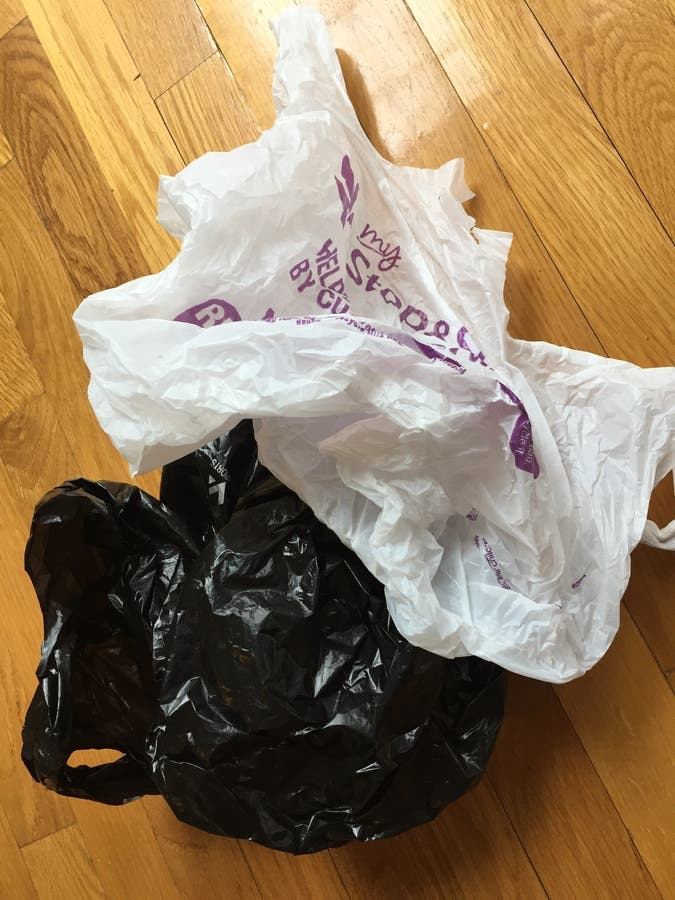
Most people also reuse the supermarket bags as trash bags or waste basket liners and will have to buy other plastic bags to replace the banned bags resulting in the use of more plastic bags.
Plastic bag alternatives are significantly tougher on the environment.
Fact: Unlike plastic retail bags, which are derived from byproducts of the domestic natural gas refining process, the standard nonwoven polypropylene (NWPP) reusable bag is made in China from foreign oil. Additionally, NWPP bags are not easily recycled in the U.S., so more than 95 percent end up in landfills.
- According to a 2018 study by RECYC-QUÉBEC, bags made of non-woven polypropylene, or “reusable bags, must be used 11 to 59 times to have a lower environmental impact than a plastic bag.
- Paper bags use 17.3 x more water and emit 2x more greenhouse gases than plastic bags.
- In a February 2018 study, Denmark’s Environmental Protection Agency concluded that lightweight plastic carrier bags provide “the absolute best environmental performance.
- According to the UK Environment Agency, canvas grocery bags must be reused 131 times “to ensure that they have lower global warming potential” than a single plastic bag used once.
Plastic bags are 100 percent recyclable and consumers have access to a country-wide network of recycling infrastructure.
Fact: More than 90 percent of Americans have access to plastic bag recycling programs through retail take-back programs – more than 75 of which are located within 20 miles of Winchester at stores such as MarketBasket, Whole Foods, Lowe’s, Shaw’s and Target. A recent study by Recyc-Québec concluded, “Thin and light, [a plastic bag’s] production requires little material and energy,” and it found that plastic bags have a 77.7 percent reuse rate as garbage bag/bin liners. Collected bags, film and wraps are used to make eco-friendly material for the manufacture of items such as playgrounds, construction materials and more.
Fact: Reusable Bags are also potential germ havens unless frequently washed which uses more energy and water defeating the aims of conservationists.
So, I urge Town meeting members to again reject this unnecessary and potentially harmful remedy to a non-existent problem.
Anthony R. Conte
Town Meeting Member, Precinct 2
Get more local news delivered straight to your inbox. Sign up for free Patch newsletters and alerts.