Crime & Safety
Few Police Wear Body Cams In MA; Cost, Privacy Are Concerns
Just a handful of departments across Massachusetts use body cameras. Some impediments include cost and concerns about public records laws.


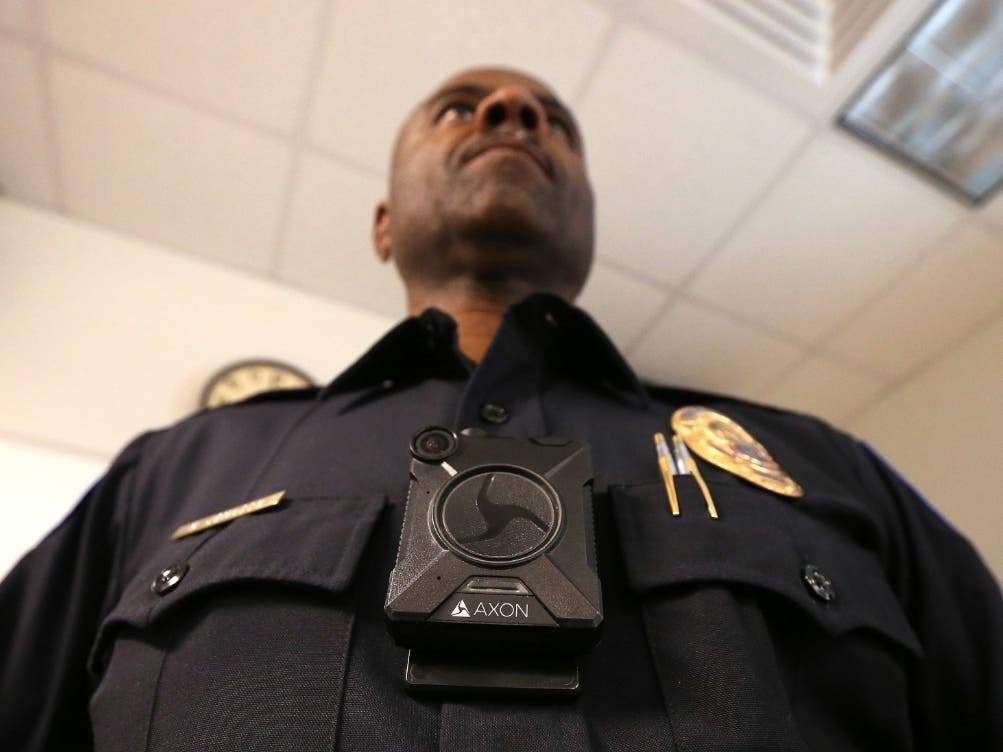
WORCESTER, MA — As the nation again debates police reform following the death of George Floyd in police custody in Minneapolis, body cameras have reemerged as a way to hold officers accountable for conduct on the job.
But in Massachusetts, the use of body cams is scarce. As few as seven police departments across the state use body-worn devices, and most are small towns. Police officials say other departments are hesitant to adopt the technology due to a host of issues, from collective bargaining agreements to concerns about the state's public records law to cost.
The seven communities using body cams right now are West Brookfield, Lakeville, Methuen, Boston, Sherborn, Ipswich and Springfield, that latter of which began using the cameras June 3 at the height of unrest over Floyd's death.
Find out what's happening in Worcesterfor free with the latest updates from Patch.
Worcester tested body cams for six months in 2019, but officers no longer wear them.
In 2016, the ACLU of Massachusetts asked 40 large police departments around the state to consider adopting body cams "because of a history of abuses experienced by historically vulnerable and disenfranchised" people in those communities.
Find out what's happening in Worcesterfor free with the latest updates from Patch.
"Technology like body-worn cameras can help to bridge this divide, because relatively objective video documentation can hold both police and civilians to account for their behaviors," the ACLU wrote in a 2016 proposal to departments. "Body-worn cameras can protect people on both sides of a police badge."
But only three of those 40 departments — Methuen, Boston, and Springfield — use body cameras today.
And while video evidence can help prove police misconduct — and in some cases exonerate officers — not all departments have the ability or will to use body cams.
Cost might be the biggest issue. Boston spent about $2 million to buy 400 body cams, but there are also steep costs for storing all the footage. During Worcester's six-month pilot, officers recorded more than 4,000 gigabytes of data.
READ: Practical Barriers Block Police Body Cam Use In Salem
"We certainly see that they can be useful tools, but they do have limitations, including the cost issues of storing the footage," Essex County District Attorney spokeswoman Carrie Kimball said this week.
Seattle-based Axon, one of the largest body cam providers, sells packages to departments that include cameras, Tasers and data storage for $149 to $199 per officer per month. Cloud storage of footage was a $129 million business for the company in 2019.
In Worcester, the 20 officers who wore body cams during a six-month period recorded about 1,100 hours of footage, including use-of-force encounters, arrests, traffic stops and investigations.
Lakeville police Chief Matthew Perkins said the state's public records law is a big question for him. If an officer films someone during a medical situation, the state public records law may require that encounter to be redacted. Software that can redact videos is too expensive for smaller departments, he said.
"That's the problem," he said. "A lot of police departments look at it and see problems with the manpower it would take to edit video and redact certain things."
Warning: graphic video
An example of how body cams capture use-of-force encounters by police. In Seattle, the department typically releases footage of deaths caught on camera within 24 hours, per department policy.
About 10 percent of Lakeville police officers wear body cams, primarily to gather evidence, Perkins said. Lakeville uses cameras made by the company WatchGuard, and Perkins buys his own hard drives to store video data. An external drive capable of storing 10,000 gigabytes costs as little as $200.
Some departments are willing to invest in the technology. Sherborn police Lt. David Bento said the town upgraded to body cams after having difficulty with dashboard cameras in police cars.
"The dash mount cameras had some mechanical issues and the new technology coming out with body cams was far superior in video quality and gave us the ability to store the video in a cloud-based system," Bento said.
Sherborn officers actually advocated for getting the cameras, Bento said.
Officers in Brookline are interested in getting cameras, but officials say the cameras will have to be part of the next police union contract negotiation.
Recent protests over Floyd's death have spurred some action on body cams. Democrats in the U.S. House introduced the Justice in Policing Act of 2020 this week that would, among other measures, mandate that local police departments "use existing federal funds to ensure the use of police body cameras."
But body cameras might not provide the transparency and accountability advocates are looking for.
Two experiments involving police in Washington and Florida found cameras had little effect on behavior. Many of the worst examples of police misconduct — Eric Garner in New York, Floyd, Rodney King, Walter Scott in South Carolina — have been captured by bystanders, not body cams. And owing to the cost of the cameras, buying them runs counter to recent calls to reduce police budgets.
Last Friday at a protest outside Brookline police headquarters, a group of demonstrators confronted Norfolk Sheriff's deputies dressed in riot gear. Brookline officers got in between the two sides.
One woman asked a Brookline officer, who is black, why he wasn't wearing a body cam. He told her it was up to the town, and so she asked why he didn't just buy his own.
Too expensive, he told the protester.
Patch reporters Dave Copeland and Jenna Fisher contributed reporting to this story.
Get more local news delivered straight to your inbox. Sign up for free Patch newsletters and alerts.