Schools
Learning 2.0: Birmingham Introduces Wireless District, Revamped Classrooms
Birmingham Public Schools spent $2.19 million to make the district wireless this year and install interactive whiteboards, video projects and more in nearly every classroom.
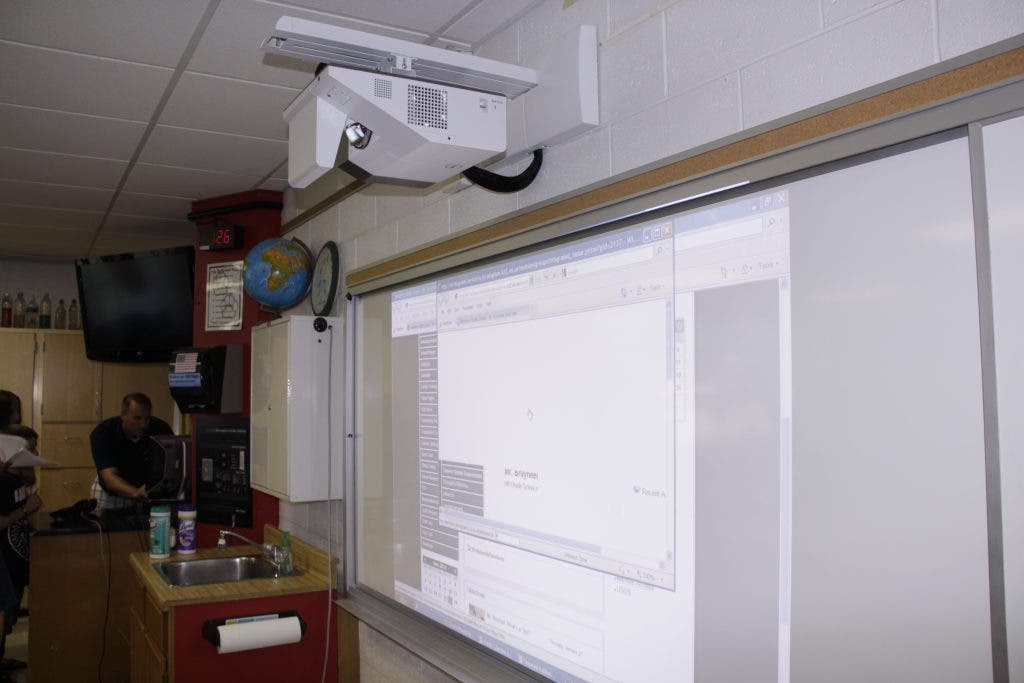
The classrooms of will be getting a digital makeover during the first months of the new school year.
Hundreds of thousands of dollars have been spent to equip Birmingham classrooms this fall with new interactive whiteboards and video projectors as well as learner response systems—all of which is intended to promote greater interactivity in the classroom.
In total, the district spent $2.19 million out of its capital projects fund to pay for the new technology.
Find out what's happening in Birminghamfor free with the latest updates from Patch.
“This whole investment is not just we’re providing (students and teacher) with tools and technology,” said Birmingham executive director of technology Joe Hoffman. “We’re looking to find ways to change the way teachers teach, and the way students learn.”
What will students notice first on the first day of school? The entire district is now wireless.
Find out what's happening in Birminghamfor free with the latest updates from Patch.
Birmingham superintendent David Larson, , said that every classroom in the district will now have wireless accessibility—a perk once reserved for the district’s media centers. Wireless that already existed will then be upgraded with quicker connections.
Larson said having wireless means students can bring their laptops to school and conduct research in the classroom.
“We have talked about incorporating wireless everywhere off and on over the last couple of years,” he said. “That has been a goal as technology starts to be more and more a part of our world.”
Hoffman said around 95 percent of Birmingham’s teachers will be using either the interactive whiteboards, video projectors or learner response systems. The principals, he said, led much of the effort to bring the new technology into the classroom.
“It was a principal-led opportunity,” Hoffman said. “He or she were the ones to work with the teachers to identify who would be interested.”
While installation has already begun, all whiteboards and projectors should be installed by mid-November while all the learner response systems will arrive by the end of December.
What else should students expect this year?
Promethean Learner Response Systems
Commonly known as “clickers,” the learner response systems allow teachers to poll students instantaneously. Each of the 270 units the district ordered comes with 32 handheld clickers, as well as ActiVote and ActivExpression response systems. ActivExpression allows students to type out short answers while ActiVote allows student to choose a number or letter.
The cost for the system was $547,200.
How each teacher incorporates the learner response systems into his or her lesson plans is up to them, Hoffman said.
“The devices allow the teachers to take quick snapshots of what material was absorbed,” he said. “For instance, if they just got done with a lesson, they could do a quick assessment with the technology to see how many students understood.”
Interactive Video Projectors and Promethean Interactive Whiteboards
These teaching tools involve a computer-like screen that is either affixed to or projected onto the wall and a touch-detection system, allowing students to interact directly with the material.
The district ordered 315 video projectors and 80 whiteboards at a combined cost of $1.6 million—$1.1 million for the projectors and cabling and $523,000 for the software.
“We chose this software because it suited us best,” Hoffman said. “Teachers are able to interact with it really well. It’s very functional and has instructional pieces as well.”
- For more:
- For more: