Crime & Safety
Man Gets 17 Years in Racially Charged Porch Shooting
Shooting of Renisha McBride, who banged on Michigan man's door after crashing her car, was often compared to the killing of Trayvon Martin.


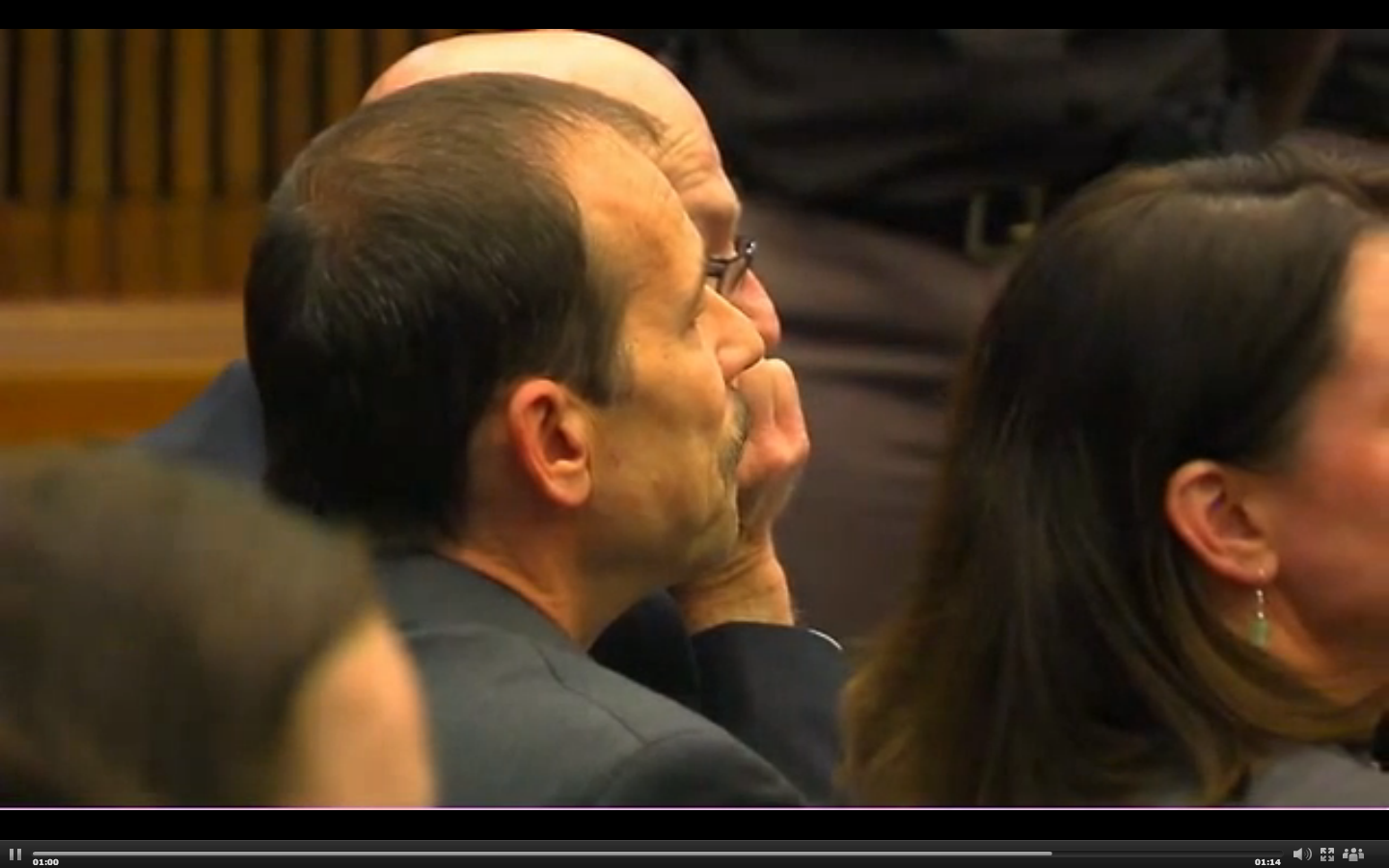
Theodore Wafter, 55, listens as the jury was polled Aug. 7 after returning guilty verdicts three charges in the Nov. 2 porch shooting of Renisha McBride. (Screenshot: WDIV video)
__________________________
A suburban Detroit man convicted of shooting and killing a teenager on his porch last November in a case that has been compared nationally to the racially charged Trayvon Martin case was ordered to prison for at least 17 years Wednesday.
Find out what's happening in Dearbornfor free with the latest updates from Patch.
Theodore Wafer, 55, of Dearborn Heights, was sentenced Wednesday on charges of second-degree murder, manslaughter and using a firearm in the commission of a felony in connection with the death of Renisha McBride, 19, The New York Times reports.
Wayne County Circuit Court judge Dana Hathaway ordered Wafer to a term of 15-20 years in prison, with another two years tacked on for the weapons conviction. The Deteoit News reports that as Wafer stood before Hathaway, he apologized in a low voice to McBride’s family:
Find out what's happening in Dearbornfor free with the latest updates from Patch.
“I apologize from the bottom of my heart.I am truly sorry for your loss,” he said, adding that McBride was “too young to leave this world.”
“I only wish that I could take this horrible tragedy back,” he said.
Wafer claimed he acted in self-defense and testified during his 11-day trial that ended Aug. 7 that he was afraid for his life as McBride, bloody and dazed after crashing her vehicle nearby, banged on his front and side doors about 4:30 a.m. on Nov. 2, 2013. He said he was jolted awake and scrambled in his confusion for his shotgun, which he kept stashed in the closet.
Taking the stand in his own defense, Wafer said he shot McBridge through a closed door “to protect myself, to save myself,” he testified. “It was them or me.”
According to court records, Wafer had previously been the target of some neighborhood vandals who had damaged his vehicle with paint balls.
“I was upset,” he testified. “I had a lot of emotions. I was scared. I had fear. I was panicking.”
Wafer also testified that he didn’t open the vertical blinds to determine who was banging at his door because he didn’t want to reveal his position inside his home.
Prosecutors argued that Wafer should have called police to report an intruder. Toxicology reports showed that McBride was drunk and had marijuana in her system, but police said there was no evidence that she tried to break into Wafer’s home or that she was armed.
Wafer is white and McBride was black. At the time of the shooting – which occurred just a few months after George Zimmerman was acquitted of second-degree murder and manslaughter charges in the death of Trayvon Martin – comparisons were made about the striking similarities of the Martin and McBride cases.
Both involved young black victims whose killers claimed self-defense, but the two cases were starkly different in other respects, including gender, which raises other questions,
Brittney Cooper, assistant professor of Women’s and Gender Studies and Africana Studies at Rutgers University, told The Huffington Post.
“While there is a historical narrative that shows black men have faced violence from their white counterparts, we don’t often acknowledge that “black women have these violent encounters with white folks too,” Cooper said. “I don’t know that we know how to think about, fully, what happens when the kind of violence that we’d usually think would happen to a black man, then happens to black women.”
Get more local news delivered straight to your inbox. Sign up for free Patch newsletters and alerts.