Health & Fitness
Carlo's Story: Detroit Man Overcomes Epilepsy With Technology
Epilepsy Used To Control Him, Now A Little Box Implanted In His Brain Keeps The Disorder In Check


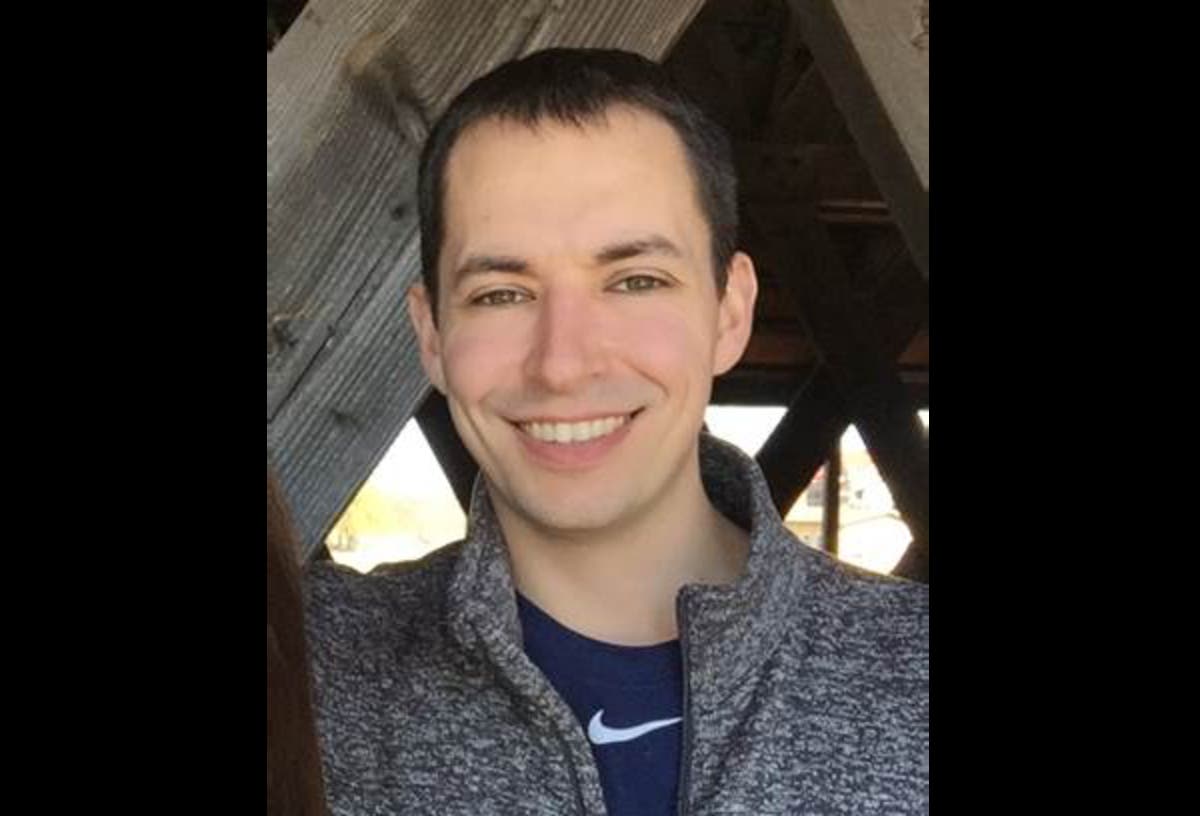
DETROIT, MI–Carlo Zoccoli is a changed man these day. The Detroit man is married now. Has a 6-month-old daughter. And, at 29 years old, is almost free of a disorder that’s been chasing him most of young life: epilepsy.
The change comes due to an electronic device that was implanted into his skull more than a year and half ago. So far, the results have been life-changing, he tells. So impressive, he now serves as an ambassador for company that sells the device.
Zoccoli, a Garden City, Michigan native, has dealt with epilepsy since he was a 6-year-old child. For the most part, the seizures came and went, and were not severe. He continued to monitor the seizures through high school, and treated them with medication.
Find out what's happening in Detroitfor free with the latest updates from Patch.
During college, he and his doctors actually thought he had grown out of the seizures and was weaned from the medication.
But, the seizures were not gone for good.
Find out what's happening in Detroitfor free with the latest updates from Patch.
He graduated from college with a business information systems degree and got a job as a field service tech providing technical support for automotive paint shops. The job occasionally required he overnight out in the field. It was while he was on one such trip that his seizures made a dramatic return.
Fortunately, he was not on the job site, but at his hotel room and avoided a potentially disruptive episode. He scheduled an appointment his doctors. Reality landed hard.
“My seizures were coming back. From what? I don’t know," Zoccoli said. "They just came back for some reason.”
Zoccoli’s seizures are not the type where a person falls to the floor shaking as his muscles spasm uncontrollably, but rather what he termed as “complex partial seizures.” Zoccoli explained during his seizures “he’d completely blank out” and would “do weird stuff” where his behavior would change. After a couple minutes, and then he’s back, he said.
Despite being put back on several medications, the seizures continued. Some weeks, he had three to five episodes, but other weeks he had up to 15 seizures. After trying various medications with limited results, Zoccoli was referred to Dr. Andrew Zillgitt, a neurology specialist at the Henry Ford Hospital in Detroit.
In an interview with Patch, Zillgitt explained that patients that have been on at least two medications to control their seizures and still are unable to control their seizures generally get referred for surgery. The best way to cure epilepsy is by identifying the part of the brain where the seizures are coming from and removing that small part, Zillgitt said.
And that, understandably, scared Zoccoli: “The first thing I thought was that they were going to have part of my brain chopped out,” he recalled. “It freaked me out.”
Well, it’s not quite that bad, Zillgitt said. However, in Zoccoli’s case, because his seizures originate in both his left and right temporal lobes, such surgery could have led to a devastating loss of memory and the ability to form new memories.
Thus, a newer technological option was available for Zoccoli.
It involved a small neurostimulator device developed by the Mountain View, California-based biotechnology firm, NeuroPace. Doctors implant the device into a patient's brain and tiny wires and sensors connect to where the epileptic activity originates. When the device detects abnormal activity that typically precedes a seizure, the device responds with imperceptible electrical pulses to counteract the seizure and normalize the brain activity.
How the technology works
The decision to get the device was a simple one, Zoccoli said. “When you have high-level doctors saying this is going to help… I’m on board with that.”
The system costs roughly $37,000 for the device and implementation. According to Zillgitt and the company, health insurance plans do pay for the bulk of the costs.
Zoccoli went ahead the surgery and is not looking back. That surgery was in January 2016 (and a mere three weeks before Zoccoli was to be married.)
“I’m pleased with his progress,” Zillgitt said. Down to a couple of seizures a month from as many as 18 a month, that’s a “really significant improvement.”
Meet Dr. Zillgitt
Zoccoli is very pleased, too. He and his wife, Lena, had their daughter in April. The epilepsy no longer defines him, his family does.
“Do I feel like I’m a normal person? Yep,” says Carlo. “I go to work 40 hours a week. Can I drive? No. But I’m playing the game of life now.”
Image courtesy of NeuroPace
Get more local news delivered straight to your inbox. Sign up for free Patch newsletters and alerts.