Schools
Kicking Kids Out Of School Will Be Harder In Michigan
Michigan expels more students than any other Midwest state, but that will change under new law to stem school-to-prison pipeline.


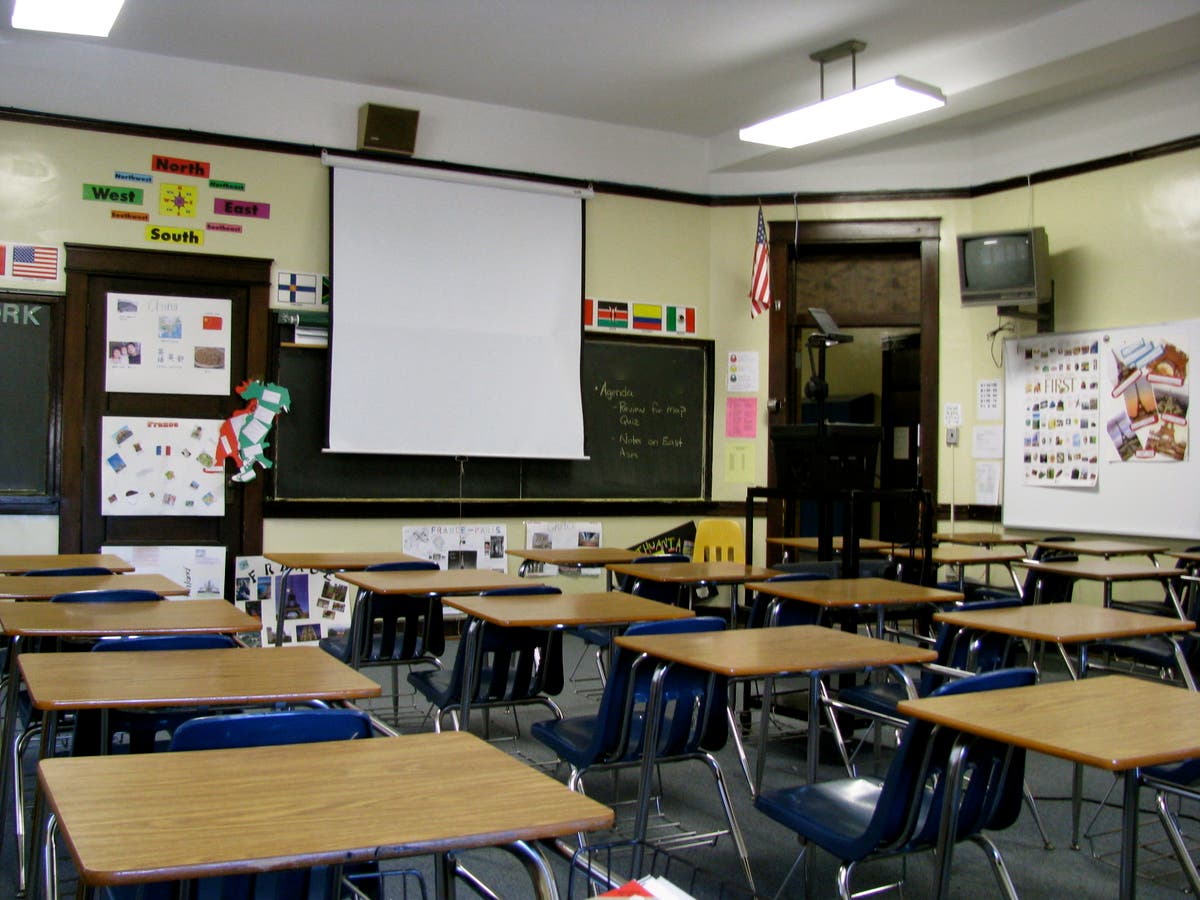
It’s easy to kick kids out of school under Michigan’s current zero-tolerance policy, but that will change this fall when a new set of rules aimed at stemming what’s known as the school-to-prison pipeline take effect. Michigan’s suspension and expulsion rates are higher than other Midwest states, and kids who have been expelled are at increased risk to become involved in the juvenile justice system the next year.
When justified, educators can still expel or suspend a student, but under new rules, must start with the presumption that neither consequence is justified. In 2011, the latest year for which statistics are available, Michigan schools expelled 1,284 students under the zero-tolerance policies, more than any other Midwest state, according to the U.S. Department of Education.
(For more local news, click here to sign up for real-time news alerts and newsletters from Detroit Patch, click here to find your local Michigan Patch. Also, like us on Facebook, and if you have an iPhone, click here to get the free Patch iPhone app.)
Find out what's happening in Detroitfor free with the latest updates from Patch.
The effort to replace the get-tough approach was led by state Rep. Andy Schor, a Lansing Democrat whose son was suspended for three days after he brought a Swiss Army knife to school to sharpen his pencil after the classroom sharpener broke, according to a report by the Council of State Government’s Midwest Division.
In other cases, rural Michigan kids who spent the weekend hunting may be suspended or expelled because of a forgotten hunting knife in their backpacks, Schor said.
Find out what's happening in Detroitfor free with the latest updates from Patch.
In other cases, like the one involving Gabby Collins, a Romulus middle school student with a learning disability, horseplay with classmates earned her a 180-day suspension. She had been in trouble at school before, but her eighth grade year started well. In December, she and some of her classmates were tossing an empty water bottle when Gabby lobbed it at some boys down the hall, hitting a teacher.
She was permanently expelled for the year for “assault committed against school personnel,” according to documents obtained by Michigan Radio. Michigan’s zero-tolerance law requires an automatic 180-day expulsion for assaults on teachers, and it also means students can’t attend other public schools in the state.
Her older sister LaTaysia, a sophomore who also has a learning disability, was also expelled for assault on a teacher. The expulsions were withdrawn after lawyers with the Pediatric Advocacy Clinic at the University of Michigan Law School got involved, but the settlement included home schooling for the girls and a requirement that they enroll in a different district next year.
Under the new law, schools will not only operate under a “rebuttable presumption” system that requires a finding that suspension or expulsion is the only recourse, but also consider restorative practices, such as a conference between the victim and the offender to correct the harm by a student’s misconduct. Such reconciliation efforts would also address bullying, class disruption, damage to property, harassment or other situations that have in the past been grounds for expulsion or suspension.
The mandated discipline under zero-tolerance policies adopted nationwide in some form or another in the 1980s and 1990s have not only failed students, they also disproportionately target black students, according to research from the U.S. Department of Education’s Office of Civil Rights. The agency found that black K-12 students are 3.8 times more likely to receive one or more out-of-school suspensions as white students. While 6 percent of all K-12 students were suspended in the 2013-2014 school year, 18 percent were black boys, 10 percent were black girls, 5 percent were white boys and 2 percent were white girls
Most kids who enter the juvenile justice system have had academic failure, disengagement from school and/or school disciplinary problems, according to the government website youth.gov.
“Public education is a great way to improve people’s lives, but that requires them to be in school,” Rep. Adam Zemke, an Ann Arbor Democrat, said in the CSG report.
Photo by Ryan Stanton via Flickr Commons
Get more local news delivered straight to your inbox. Sign up for free Patch newsletters and alerts.