Politics & Government
LGBTQ Advocates Seek Interpretation From Civil Rights Commission
Equality Michigan and other groups are asking the state Civil Rights Commission for an interpretative statement on rights protections.


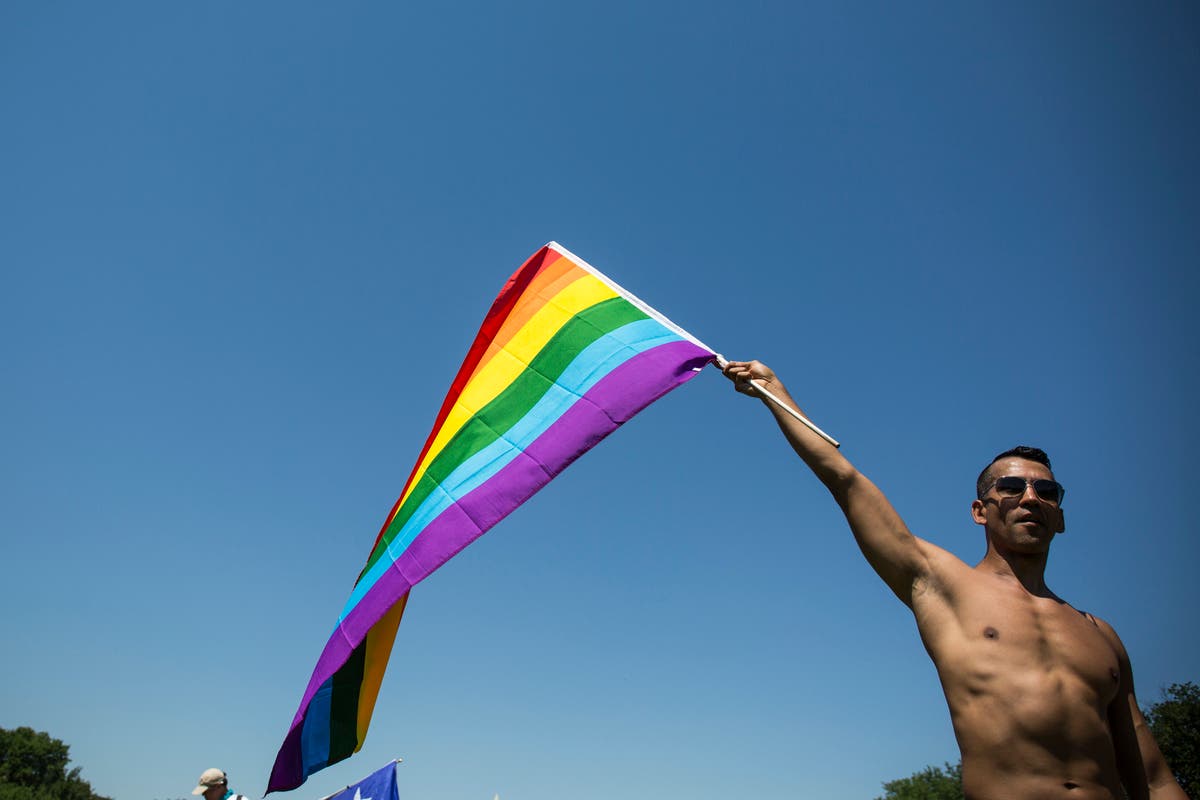
The gay rights advocacy group Equality Michigan is asking the state Civil Rights Commission for an interpretative statement it says will clear up “glaring ambiguity” in the 1976 Elliott-Larsen Civil Rights Act and protect gay and transgender residents from discrimination in employment, housing or public accommodations based on an individual’s gender identity or sexual orientation.
The request hinges on the interpretation of “sex” discrimination in the code. Equality Michigan thinks it should provide protections gay and transgender residents have long sought in what they say is a necessary expansion of the civil rights law — something Michigan lawmakers have steadfastly refused to do for the past 33 years. Absent legislative action, Equality Michigan says an interpretive statement could have the same effect as a statutory change because it would give individuals the right to file discrimination complaints and give the Civil Rights Commission legal standing to act on them.
The Civil Rights Commission will take public comment until Aug. 15, then take up the request at its Sept. 18 meeting. (For more local news, click here to sign up for real-time news alerts and newsletters from Detroit Patch, and click here to find your local Michigan Patch. If you have an iPhone, click here to get the free Patch iPhone app.)
Find out what's happening in Detroitfor free with the latest updates from Patch.
Like Detroit Patch on Facebook, then continue reading below.
Find out what's happening in Detroitfor free with the latest updates from Patch.
Thirty-seven other LGBTQ groups from across the state have joined in Equality Michigan’s request for an interpretative statement. They include the American Civil Liberties Union of Michigan, Affirmations of Ferndale and LGBT Detroit.
A finding that the civil rights law already protects gay and transgender residents wouldn’t derail efforts to cement permanent change in Elliott-Larsen, Equality Michigan’s Nathan Triplett told The Detroit News.
“We feel strongly that after 30 years of attempting to get the Legislature to acknowledge discrimination is a problem in our state, and 30 years of (gay and transgender people) not having a remedy when they face discrimination, this incremental step is an important one to take while we continue to work” on legislative changes, Triplett said.
More than 40 Michigan communities have adopted their own gay rights ordinances prohibiting discrimination based on sexual orientation and gender identity, and courts are increasingly siding with LGBTQ advocates on the interpretation of civil rights laws. Chicago-based 7th U.S. Court of Appeals ruled in April that the federal civil rights law protects LGBTQ individuals. The 6th U.S. Circuit, which includes Michigan, has twice said that sex discrimination covers that based on gender identity.
However, the tide may be changing, creating rising uncertainty among gay and transgender advocacy groups, who fear protections gained during the Obama White House years are being undermined by the Trump administration.
Last week, the same day President Trump said on Twitter he was banning transgender people from military service, the Justice Department inserted itself in a federal employment discrimination lawsuit in New York, arguing the landmark 1964 Civil Rights Act does not protect gay and transgender individuals.
In a friend-of-the-court brief filed in the case, the Justice Department said it “has been settled for decades” that Title VII protections against workplace discrimination don’t protect gay and transgender people and that “any efforts to amend Title VII’s scope should be directed to Congress rather than the courts.” Despite “notable changes in societal and cultural attitudes,” every Congress since 1974 has declined to add sexual-orientation protections to Title VII, the Justice Department said.
A finding that the current language in the Michigan civil rights law forbids discrimination based on sexual orientation would likely be challenged because it would “be exercising law-making authority,” which is the province to the state Legislature, state Rep. Gary Glenn, a Midland Republican, told The Detroit News.
Glenn, who filed a brief opposing gay marriage in the landmark U.S. Supreme Court case that legalized same-sex marriage in all 50 states, said a finding that Elliott-Larsen protects gay and transgender individuals from discrimination would be discriminatory in itself.
“So-called ‘sexual orientation’ and ‘gender identity’ laws in other states and jurisdictions have proven themselves to be discriminatory and punitive against individuals, churches, and civic organizations which believe as a matter of sincere religious conviction homosexual behavior is wrong,” Glenn told the newspaper.
In a 2013 report on LGBTQ inclusion under Michigan laws, the Civil Rights Commission said discrimination based on sexual orientation and gender identity “exists and is significant,” and that it has “direct negative economic effects on Michigan.”
Photo by Zach Gibson/Getty Images News/Getty Images
Get more local news delivered straight to your inbox. Sign up for free Patch newsletters and alerts.