Community Corner
Book Traces Farmington Hills Woman's Journey Back from Suicide
Rebecca Lombardo, who has struggled with mental illness for years, wrote a blog and now a book, "It's Not Your Journey."


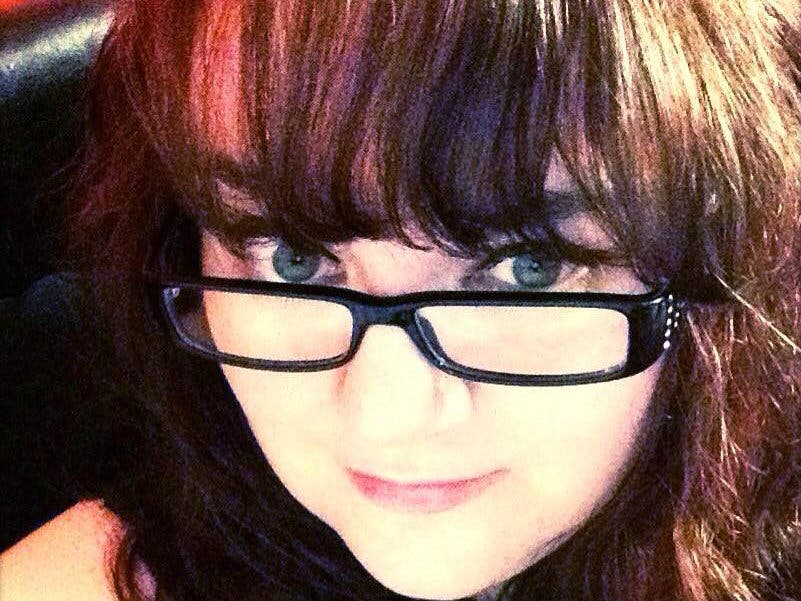

FARMINGTON HILLS, MI – The sheer terror engraved on her husband’s face the last time she tried to kill herself is like a choke collar for Rebecca Lombardo.
It pulls the Farmington Hills author back from the brink of dark depression to the light of the present, where she has every reason to live and none to die.
The look of confusion, hurt and betrayal on Joseph’s face — "Why?" her husband seemed to question. "What did I do wrong?" — terrifies Lombardo as well.
Find out what's happening in Farmington-Farmington Hillsfor free with the latest updates from Patch.
She might have glimpsed Joseph’s face for the last time.
She might well have gotten it done this time.
Find out what's happening in Farmington-Farmington Hillsfor free with the latest updates from Patch.
That day, in late June 2013, is fuzzy and surreal.
Lombardo, 43, a cutter since her early 20s, doesn’t remember much about what led up to the moment she sliced deep wounds in her wrists, then swallowed a bottle of pills. Joseph knew from a text message his wife sent to him at work that someone better get to their Farmington Hills home quickly.
What Lombardo does remember is her father and sister banging frantically on the door. Lying semiconscious on the floor, where she had cried herself to a numbed state, she remembers trying to convince them to go away, but knowing they wouldn’t.
She was rushed to the emergency room. Bleeding profusely, she might have died from the cuts alone if they’d left her alone long enough. She kept the pills she'd taken a guilty secret. Then she looked into her husband’s hurt and confused eyes.
“I don’t think I’ve ever seen him that afraid before,” Lombardo told Patch.
The husband of a close friend of Lombardo’s had killed himself.
“She told me what that does to a person,” Lombardo said. “I could have done that to my husband, to my family. I could have left them behind wondering why.
“It feels like a knife in my heart when I think about it,” she said, her voice lowering to quaking whisper. “It’s like nothing you have never experienced when your spouse looks at you like he doesn’t know if you’re going to live die.
“I couldn’t get that look out of my head,” she continued. “I knew it was my job to get myself back together. I can’t rely on others.”
Blog Became a Book
Blog Became a Book
Lombardo began writing a blog, “It’s Not Your Journey,” as a way to cope with the demons of her bipolar disorder, to chase away memories of where she’d hidden razor blades and other instruments of self injury, and shut down the old standby: If the pain became unbearable, she could always kill herself.
“When you’re suffering depression, suicide’s always an option,” she said. “My brain has finally realized that’s off the table, and I just don’t think about that. It’s hard work to get to that point, but it’s a very freeing feeling. Suicide is not the answer.”
The World Health Organization says that 34,000 people commit suicide a year — about twice the number who die by homicide — and die at their own hand at a rate of about one person every 15 minutes. The WHO says that by 2030, disability and death from depression will outpace deaths resulting from cancer, stroke, war and accidents.
The blog resonated with a wide audience.
“I started hearing from people from all over the world who said, ‘Your blog helped me understand what is going on with me,' and ‘it made it easier for me,’ and they started sharing it with friends, who said I should turn it into a book,” Lombardo said.
She did, and now her books are available on Amazon.com, Barnes & Noble, Book Depository and other online stores.
Three Earlier Suicide Attempts
Lombardo's long journey with mental illness and the various ways her disorder manifested itself began long ago.
Doctors finally diagnosed her with bipolar disorder when she was 19. Before that day she cut her wrist and took the pills, she had tried to kill herself three times.
Once, the sister of a former boyfriend who had been through EMT training stitched her up at the kitchen table of her apartment.
She has so many scars from cutting that she doesn’t show her limbs, even on hot, humid summer days when shorts and sleeveless tops would be more comfortable.
“That’s the paradox of self-injury,” Lombardo said. “Cutters want people to know — see, I am in pain, see I am bleeding — but at the same time, there is shame. I didn’t show my scars to anyone for years, but kept doing it until I finally realized I had to tell somebody.”
One of the toughest things for the families and friends of cutters to understand is that displaying anger over the behavior may only exacerbate it, Lombardo said.
When her husband saw fresh cuts, his first response was anger.
“He didn’t realize I was already beating myself up,” Lombardo said. “He had to learn to say the right thing — I know how much pain you are in; you don’t have to hurt yourself.”
“You're So Much Trouble”
In 2001, when she and Joseph married, she thought the bad times were behind her, and for several years, they were. She had learned to cope with the cycle of depression that comes with the disorder, as well as physical ailments like migraines, weight gain and other problems.
But then her mother died in 2008, a brother followed three years later in 2011 and her life spiraled out of control until she hit rock bottom in 2013 and saw her husband’s hurt, betrayed face.
“Having him by my side made me realize it’s not worth all the pain I was going through,” Lombardo said. “That was the starting point. It was what snapped me back to reality — knowing people weren’t going to be better off without me, knowing I wasn’t useless and knowing I wasn’t hopeless.
“That’s what your disorder tells you, that you’re so much trouble.”
Lombardo's disorder is part of who she is, and she has accepted that.
“You have to come to terms that this is not a curable disease; it’s a disease like any others, like diabetes or cancer; it’s just a disease of the mind,” she said. “You shouldn’t be ashamed, because you have no control over it.”
Lombardo said she will probably always be on medication, and will probably always have some bad days.
“I go up and down,” she said. “Every day is kind of different. I could wake up on Monday and feel fantastic, and come Wednesday I may be barely able to function or get in shower. It’s a rollercoaster, constant battle between doing OK and wishing I was doing better.”
She’s learned to be kind to herself and develop other coping skills. She's teaching herself to live life again.
“You can’t rely just on doctors and medication, because they’re not always going to be able to help you,” Lombardo said.
Not a Self-Help Book
“It’s Not Your Journey” is not a suicide survival guide.
“The book is a memoir. It’s not self-help, it’s not a textbook,” Lombardo said. “I have always called it a cautionary tale. Don’t follow my footsteps. I want people to read it and not feel alone, and maybe learn a little about what they need and apply to their lives. It’s just out there to show people if they have gone through it, they’re not the only one. I have come out on the other side OK.
“Others can take whatever piece they need out of that to help themselves.”
Here are some of the things that help Lombardo cope:
“The very first thing is to be nice to yourself,” she said. “When you start feeling depressed and can’t get things done, you start the guilt trip on yourself, but it’s OK if all you do is just exist.
“You have to be kind to yourself and remember how far you’ve come with your battle with depression. Keep fighting. Talk to people. Don’t isolate yourself. Don’t go shut yourself in your room and not talk to anyone. It’s hard, and it’s a lot of work, but you can do it.”
Also, she said, find a coping mechanism. In Lombardo’s case, it’s writing
“As soon as I realize I’m getting down, I will write sentences, or just words until it becomes a more clear thought and I can just purge it all out,” she said. “Whatever you can find are coping skills and are comforting, that’s what you can do. Find what works for you.”
And most important: “If symptoms are worse than usual or you are feeling remotely suicidal, call you doctor. If that doctor doesn’t listen, talk to another one who will. You have to have someone by your side — whoever you can rely on, whoever you trust. Tell somebody.”
Get more local news delivered straight to your inbox. Sign up for free Patch newsletters and alerts.