Politics & Government
How Merrick Garland Could Reach High Court Without Senate Hearings
University of Michigan legal scholar argues Senate's silence on President Obama's Supreme Court nominee could be evidence of its consent.


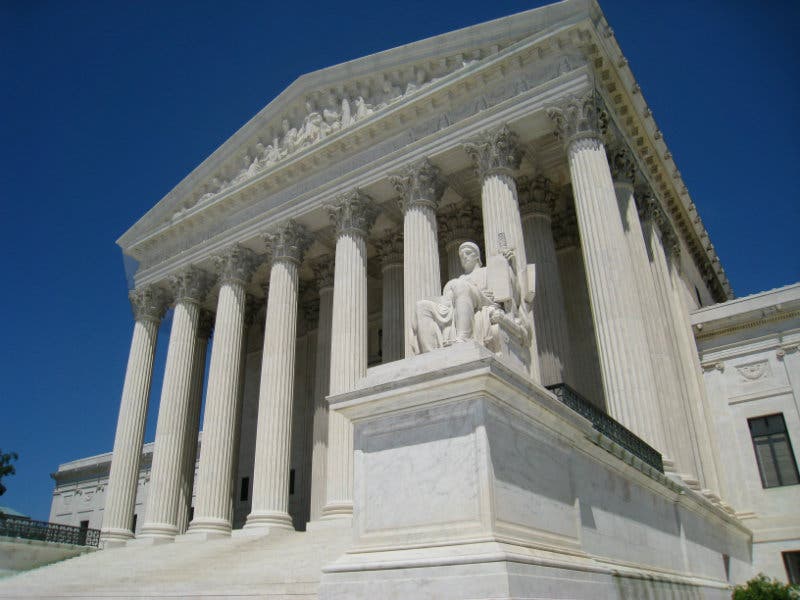
President Obama is well within his constitutional authority to end the stalemate over Senate confirmation hearings to consider his nominee to fill the vacancy left on the U.S. Supreme Court with Justice Antonin Scalia’s death in February, according to a Michigan legal scholar.
Senate Majority Leader Mitch McConnell of Kentucky and Senate Judiciary Committee Chairman Charles Grassley of Iowa have shown no signs they’ll bow to unrelenting pressure to hold hearings on federal Appeals Court Judge Merrick Garland’s confirmation.
Though the Senate has a long history of rejecting nominees, an outright refusal to hold hearings is an unprecedented nuance in what has become a bizarre election cycle. If the appointment is delayed until 2017 when there is a new president in the White House, no nominee will have waited as long for confirmation.
Find out what's happening in Farmington-Farmington Hillsfor free with the latest updates from Patch.
University of Michigan Law School professor Richard Primus, who clerked for Justice Ruth Bader Ginsburg before joining the U-M faculty, wrote in an essay for Politico Magazine that the Senate’s silence on Garland’s nomination could be construed as implied consent, just as it is in other areas of the law.
"The Constitution doesn't actually say that the Senate needs to vote to confirm a judicial nominee," Primus wrote, only that appointments must be made “with the advice and sent of the Senate.”
Find out what's happening in Farmington-Farmington Hillsfor free with the latest updates from Patch.
Traditionally, that has meant the Senate votes up or down on a nominee.
“But voting on the nominee is just a convention — a shared understanding among the players in the game that we do things a certain way,” Primus wrote. “This is where the fragility of conventions comes into play. Just as there’s no rule that the Senate needs to consider the nominee quickly, there’s no clear reason why the Senate’s consent to a nomination must be signaled with an affirmative vote.”
Primus believes that interpretation puts Obama on firm legal and constitutional ground to go ahead and appoint Garland.
And, the law professor argued, it may be prudent for the president to end the stalemate now.
Waiting could result in deadlocks on key issues before the court. That happened March 22 when the justices handed down a 4-4 decision in a relatively low-profile bankruptcy case that had been pending before the court since the beginning of its current term in October.
And it happened again on March 29, when the court split 4-4 on a First Amendment case questioning whether a California teacher union can collect dues from non-members for collective bargaining agreements.
But that’s not the greatest threat, Primus argued.
If Hillary Clinton wins the presidency and Republicans maintain control of the Senate, the same ideological reasons for blocking a Democratic nomination will remain in play, he wrote. And the conflict could spill over into hearings to confirm other nominees, from the cabinet level to federal judgeships.
“It’s hard to foresee what might follow,” Primus concluded. “It might not be pretty. And maybe we will never get that far. But whether a continued stalemate into 2017 produced this particular escalation or a different one, the important point is that escalations in the separation-of-powers game are likely to produce further escalations.”
Image credit: Wikimedia Commons