Community Corner
Fish Hatchery Gave Northville National Prominence
Fish Hatchery Park named for one of community's most important industries.


, located on Seven Mile just outside the city limits, has for years catered to Northville residents seeking baseball and tennis facilities. Its ball field, tennis courts and playground, under the supervision of , offer endless warm weather activity.
So what about the fish?
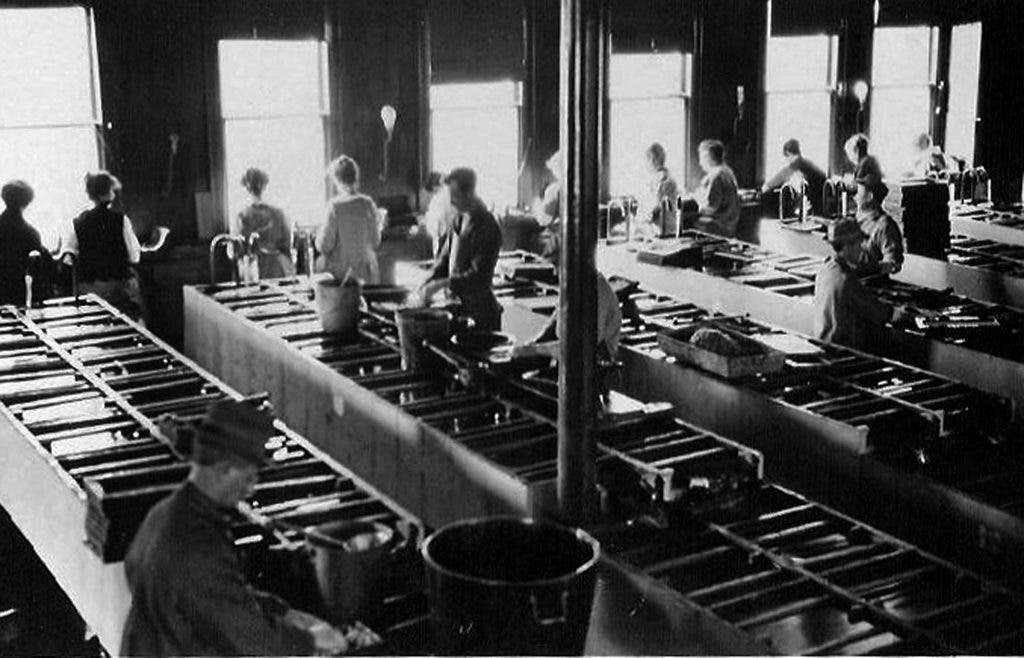
The site of the park sits on property once occupied by one of the largest and most successful fish hatcheries in the United States. In fact, the Northville Fish Hatchery was the first federal fish hatchery in the nation.
Find out what's happening in Northvillefor free with the latest updates from Patch.
Its importance in Northville’s history cannot be over emphasized. It was one of several industries in the last quarter of the 19th century that elevated Northville to national prominence.
The fish hatchery had its beginnings in 1874, when Nelson W. Clark, a prominent fish breeder from Clarkston, leased springs above the village and waste water from the Ambler Pond to breed salmon, trout, whitefish, etc. The Cold Springs Cream and Butter Company owned the property.
Find out what's happening in Northvillefor free with the latest updates from Patch.
An article in the October 9, 1875 Northville Record stated: “Mr. Clark, proprietor of the fishery, is agitating the idea of an aquarium on a grand scale, the buildings are to be erected on the grounds south of the terminus of Rogers Street. This scheme, as planned by Mr. Clark, would be truly grand and prove of great benefit to our town . . . “ The buildings were actually constructed west of Rogers on both sides of Fairbrook. The hatchery covered 17 acres, five of which were under water.
Clark’s untimely death just two years later in 1876 put the fish hatchery in the hands of his son Frank, who turned the fledgling operation into a flourishing industry.
By 1880, the business had grown to be one of the most successful fish hatcheries in the United States. In that same year, the federal government leased the buildings and made Clark superintendent of the new U.S. Fish Hatchery, the first federal fish hatchery in the nation. He also oversaw substations at Detroit and Alpena.
A History of Detroit and Wayne County and Early Michigan, published in 1890 by Silas Farmer, detailed the scope of Northville’s fish hatchery operation.
It noted that the hatchery “is located on grounds that contain innumerable springs of the purest water, the two principal ones furnishing about 375 gallons per minute. In winter, these springs are utilized for the hatchery alone, supplying about 30,000 barrels per day.”
The book further stated that the grounds contained “two large buildings, one used for packing, the other a hatching house... containing fifteen feeding tanks or nurseries. Outside are thirteen ponds so divided as to be made into twenty, if needed.”
In the winter of 1889-90, the hatchery contained 2.1 million lake trout eggs, 207,000 brook trout, 120,000 lochleven trout, and 57,500 rainbow trout.
Farmer noted in his book that from that supply, “one shipment was made to the City of Mexico, consisting of 10,000 brook and 10,000 California trout eggs. Of these, all but twenty-five percent of the former and about twenty–five percent of the latter hatched out.”
He further stated, “Twenty-five thousand brook trout were sent to Wm Burgess, London, England, most of which hatched. Scores of millions of fish have been hatched here, and shipments are made to various parts of the United States, France, Germany, South America, New Zealand, and other places.”
The transport of fish from the nation’s hatcheries was primarily by railroad for domestic shipments and by ship for international orders. The growth in the fish hatchery industry brought about the “Fish Car Era,” with federally raised fish traveling first class in railroad cars along with their attendants.
Railroads were the dominant mode of fish transport for more than 60 years until the advent of the truck made delivery more efficient and cost effective. Air travel also played a role in the delivery. In fact, one of the first successful air transports was made in 1928, when 27,000 brook and rainbow trout were transported by airplane from Northville to Dayton, Ohio, without a single loss.
In 1896, the federal government erected a new fish hatchery building at its Northville facility along with a superintendent’s residence.
Frank Clark, who would serve as president of the National Fisheries Association, continued as Northville superintendent until his death in 1910. William W Thayer, one of the community’s most prominent residents, took over as superintendent upon Clark’s death. He would serve in that capacity for 20 years.
Following Thayer’s death in 1930, F.L. Snipes took over as superintendent followed by E.R. Widmyer in 1933.
The U.S. Fish Hatchery in Northville was the only federal fish hatchery still in existence in Michigan in 1935. By the late 1930s, the operation was closed. The last remaining hatchery building was razed in 1968. The stately Victorian superintendent’s “cottage” built in 1896 for Frank Clark is the only remaining structure from Northville’s fish hatchery industry. It is a private residence today.