Schools
ICYMI: No Tax Increase with $185M Bond Proposal
Rochester Community Schools will vote on a $185 million bond proposal that would continue existing tax rate.


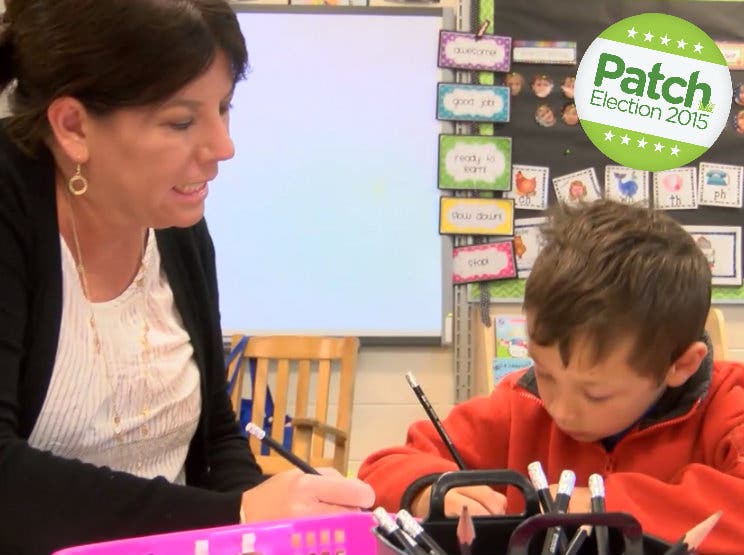
Rochester Community Schools voters will be asked to approve a $185 million proposal to improve aging schools in the Nov. 3 election.
The proposal wouldn’t require a tax increase, but would replace expiring millages, effectively extending the current tax rate for five years.
The district has 22 school buildings on 521 acres of property, 2.8 million square feet of asphalt and 33 miles of fiber connecting the district’s technology networks, according to the Citizens Committee for Rochester Community Schools.
Find out what's happening in Rochester-Rochester Hillsfor free with the latest updates from Patch.
Stay Connected
- Subscribe to the free daily Rochester-Rochester Hills Patch newsletter and news alerts.
- Like Rochester-Rochester Hills Patch on Facebook.
The proposed funding would be used to keep the district’s facilities, equipment and technology in good working condition, and would enhance student safety and security, the group said.
Find out what's happening in Rochester-Rochester Hillsfor free with the latest updates from Patch.
Improvements would be made throughout every level of the district, most notably:
- Five buildings need new roofs at a cost of approximately $1 million each;
- The district’s data backup system is 98.6 percent full, requiring extensive upgrades;
- The bleachers at Rochester High School have urgent foundation problems;
- Seventeen portable classrooms would be removed and relocated inside permanent buildings;
- Sixty-four buses will need to be replaced within five years.
“We have superb teachers, high-achieving students, and outstanding programs, but we need to deal with the reality of our aging buildings and infrastructure, Rochester Superintendent Robert Shaner said in a statement. “Our critical needs are costly, but necessary, and expected, given the age of our schools. We are fortunate to have an opportunity to remedy these issues while maintaining our current tax rate.”
The district underwent a thorough assessment process and issued the Technology & Infrastructure 2020 Report (TI2020), which prioritized and designated needs as either: critical (needing attention in one-three years), deferrable (to be addressed in fou-sixyears), or property enhancement (targeted for seven -10 years).
Although every building has its own specific needs, certain upgrades would be made to all facilities across the district.
School board member Michael Zabat, a mechanical engineer and member of the nearly 50-person TI2020 committee, said the district-wide assessment originally identified $236 million in needs, but the committee studied and prioritized the proposed projects to agree upon the $185 million total.
“We are looking to improve equity and efficiency in every school,” he said.
TI2020 committee member Barb Anness, who has two children in the district, said the planned improvements would increase safety by securing entrances.
“Regarding safety, RCS would use the bond to reconfigure building entrances, so all guests would enter into a secure office or vestibule to be screened before being granted access to public hallways,” Anness said.
She also welcomes technology upgrades to support burgeoning use of wireless communications devices.
“RCS needs to increase its network reach, bandwidth and efficiency to accommodate more users, more applications, and more opportunities,” she said.
The proposed bond-funded projects fall into seven basic categories:
- Improve student safety and security.
- Address critical needs in roofs, electrical and mechanical areas.
- Upgrade technology and technology infrastructure.
- Establish permanent spaces for Pre-K, adult and special education.
- Improve classroom and school interiors.
- Improve playgrounds, school sites, athletic fields and fine arts facilities.
- Replace school buses as they reach the end of their useful life.
“These comprehensive improvements will benefit every student, in every grade, and every building,” said Lisa Kowalski, who leads the Citizens Committee for Rochester Community Schools. “We are excited that programs from preschool all the way through adult education are valued and represented in the bond upgrades. The TI2020 plan supports ALL students in the district.”
Rochester Mayor Jeffrey Cuthbertson endorsed the RCS bond and said that high-quality schools are a major reason people choose to live in this community.
“Rochester is a vibrant place to live, and we need to continue attracting young families who will raise their children here and educate them in Rochester Community Schools,” he said. “Our nationally acclaimed schools help us attract businesses, residents, and a well-educated workforce. There is a direct correlation between high-performing schools and local property values.”
Jenny McCardell, who moved to Rochester Hills five years ago so her children could attend University Hills Elementary, said investing in schools is important not only to parents with children in the district, but also for the community.
“A quality school district is a major resource and indicator of a quality community overall,” McCardell said. “Plus, well-maintained school grounds and buildings look welcoming to newcomers, especially when the portable classrooms are removed with this bond. RCS students are already receiving a quality education; I think they deserve a quality learning environment as well.
“I feel very blessed to be part of this community and I feel responsible for helping to sustain it,” she said.
If the bond does not pass, the proposed projects will be cancelled, since there is no alternate funding source. There is no money in the district’s general fund to accommodate these updates, so projects would only be paid for in dire emergency situations, like storm damage or unexpected total equipment breakdowns.
By law, the bond may not fund teacher salaries or benefits. The bond revenue must be used solely for the outlined purposes and must be independently audited. Teacher salaries may only be paid from the general operating budget, which receives its income primarily from federal education funds and state payments, which vary each year, based on student enrollment and state budgets.
More information about the bond proposal, including detailed building breakdowns, costs, and voter instructions can be found at www.rochester.k12.mi.us. Click the TI2020 Voter Information button. You can also visit the Citizens Committee website at: www.cc4RCS.org or go to Facebook and follow the Citizens Committee for Rochester Community Schools.
Get more local news delivered straight to your inbox. Sign up for free Patch newsletters and alerts.