Home & Garden
Warm Winter Means Ice Isn't 100 Percent Safe
Ice is forming late this year. Here are some tips on remaining safe on the ice when you do venture out.


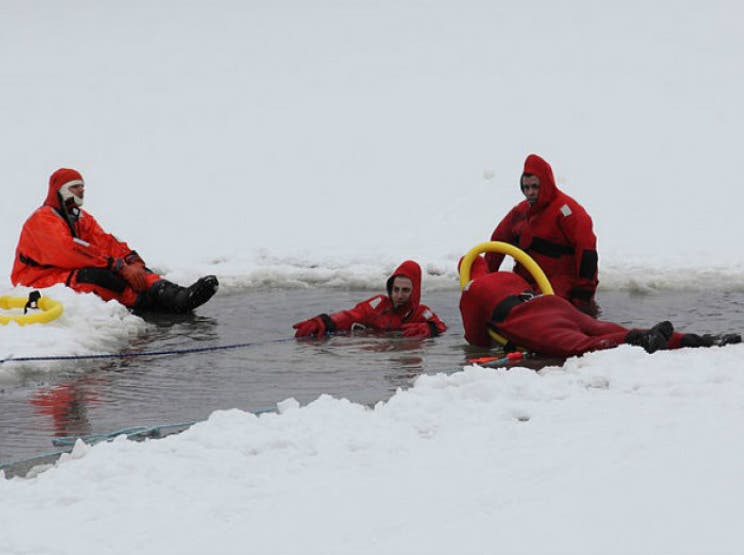
OAKLAND COUNTY, MI – Warm temperatures have so far robbed Oakland County residents of some of their favorite winter sporting activities: ice fishing.
“We want to prepare you to keep your family, friends, and neighbors safe when out on the ice,” Oakland County Sheriff Michael Bouchard said in a statement. “Being equipped and knowing the risks can help prevent a tragedy from occurring.”
Find out what's happening in Royal Oakfor free with the latest updates from Patch.
The following guide helps you judge recreational use of clear, solid blue ice and help you minimize risk:
- 5 inches thick minimum for general use (fisherman, ice skaters, and foot traffic)
- 8 inches thick minimum for travel by snowmobile, off road vehicle (automobiles should never be driven out on the ice; doing so would void any automobile insurance claim).
Bouchard said it’s important to survey the ice, keeping in mind that ice conditions change day by day, lake by lake, and location by location on the same body of water.
Find out what's happening in Royal Oakfor free with the latest updates from Patch.
Some signs of changing ice conditions can be, but are not limited to: moving water near a stream or river, an unseen spring or inlet, slushy areas, depressions in the snow, heavy snow, white “milky” or black colored ice as well as “frazzle” ice which has been weakened by the freeze-thaw cycles. Frazzle ice is pocketed with tiny air pockets and often looks like frozen slush.
Additional tips to remember:
- Do not go out alone on the ice. Always take a partner or someone who can call 911or obtain help in an emergency.
- Do not make the first tracks on the ice. Check with someone who has experience with a particular lake or pond before you venture out on the ice.
- Always leave a travel plan with someone who can call for help and direct a search party if you do not return.
- Plan ahead by dressing appropriately for changing weather conditions. Dress in layers to protect all exposed parts of your body. Consider wearing a personal flotation device (PFD) as part of your overall protective clothing or a flotation jacket or suit. Ice creepers attached to boots will help to keep you stable on the ice and can assist in self-rescue.
- Bring safety items which may include: cell phone, whistle, rope, ice pick or awls, screwdriver, hand flares, flashlight, throwable personal floatation device.
- Check and double check the ice thickness with an ice spud, auger or cordless drill. If you discover a weak spot, retrace your route off the ice. Keep a distance between others in your group.
- If you hear the ice crack or detect unsafe ice you should stay spread out, immediately lie down (which will distribute your weight) and crawl back to safer ice by the same way you came.
- If someone falls through the ice, do not run to the hole. First call 911 and get help on the way. After contacting emergency responders, use a pole, branch, rope or any other handy object, which can be extended to the victim from a safe position.
- You cannot help if you also become a victim. If you fall through the ice, do not panic, because this will only hinder your self-rescue actions. Call out for help and kick your feet while getting your hands and arms up onto safer ice. This is when the ice awl or screwdriver will help you with your self-rescue. Continue to “swim” up onto the ice far enough to crawl or “roll-out” to safer ice.
- Snowmobiles, off road vehicles and vehicles on the ice increase your risk of falling through, especially at night. Many accidents occur when operators are driving at a high rate of speed and are unable to slow or stop in time to avoid open water or unsafe ice.
- Pets that venture onto unsafe ice are another major cause for many near drownings and deaths. If you find your pet has ventured out onto the ice, resist the urge to go out after them. Stay at a safe position on shore and persuade them back to safety.
- Wildlife that ventures onto unsafe ice is a natural occurrence. Wildlife, such as deer, are strong swimmers that are prepared for cold weather, and find their own way off the ice. Most often, wildlife discovered in the water are injured and succumb to injuries from predators or natural forces.
Oakland County offers many outdoor recreation opportunities with our lakes ponds, and rivers. However, before you step out onto the ice we strongly urge you to plan ahead and consider the risks involved.
“When in doubt, don’t go out,” Bouchard said.
Get more local news delivered straight to your inbox. Sign up for free Patch newsletters and alerts.