Health & Fitness
March is Reading Month!
During this month remember the many skills involved in learning to read which then leads to literacy. A reminder of the need to engage in reading with a learner.
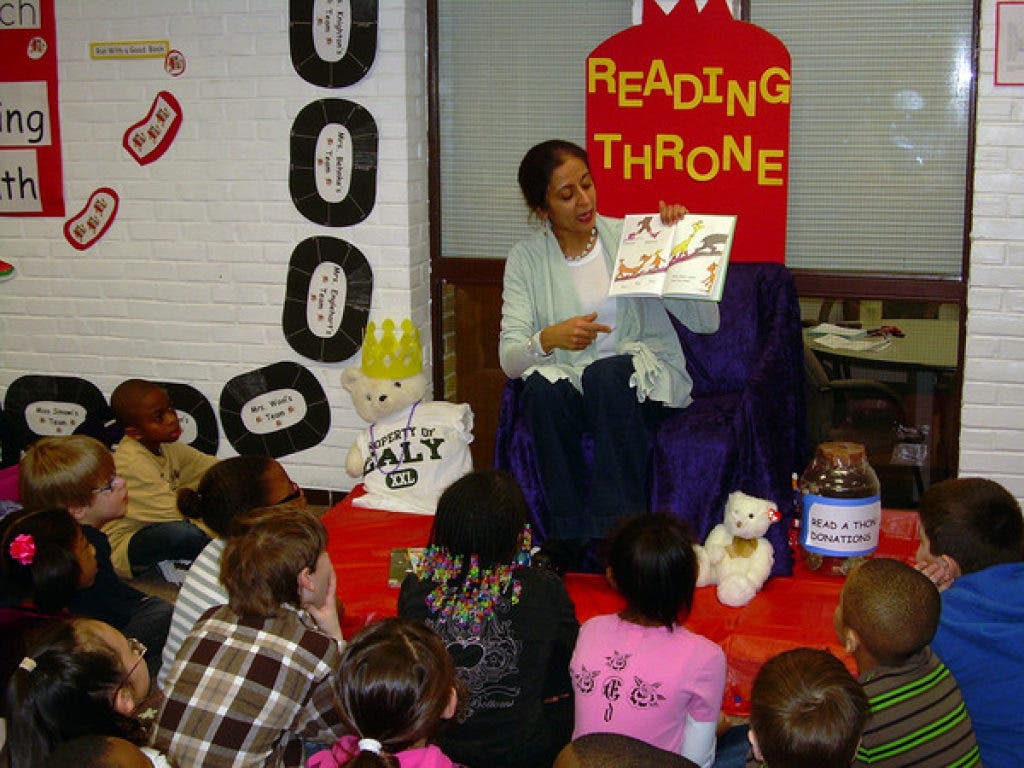
As we all know, reading is an essential skill — the foundation for learning. Learning to read is the very beginning of developing strong literacy. Like any set of skills, reading starts way before a person becomes proficient. Everyone watches children try to crawl by starting to rolling over, being on the tummy (tummy time), learning to move arms, grabbing, eye developments, rocking on all fours, realizing cause and effect, stand by pulling up, wobble, hang on, and take the first steps by walking with help, fall and try again, developing balance, fall, walk a few steps, walk, and finally run, then jump, slide, and skip: practice and persistence all the way.
A long sentence to point out the number of accomplishments involved along the way. The same holds true with reading. There are multiple pieces that need to be included for building toward that “goal” of reading, which then builds toward understanding and expression literacy).
People are very patient and encouraging to a child as he/she learns to move and become fluid in motion and perhaps then becoming even more physically adept. Adults need to be just as patient, encouraging, and helpful with anyone learning to read. It takes lots of time, support, and encouragement as a child becomes a successful reader. The concept that pictures tell a story is an early skill, as well as the idea that the letters (symbols) have sounds that when combined make words like those used in speech.
Find out what's happening in West Bloomfieldfor free with the latest updates from Patch.
Without going into detail, there are numerous concepts a child learns prior to entering into “formal” reading. A renowned educational researcher, Patricia Cunningham, refers to the need to be read to over a thousand hours as pre-reading to support many essential skills that then combine to become a reader. This includes lots of conversations about letters, realizing connections, exploring time, experiences and having fun. These steps are just as important for a child as the crawling, pulling up, and practicing to walk.
As with learning any set of skills, everyone has areas of difficulty, strengths of different kinds and therefore conquer these areas at various times. In other words, not everyone will be at the same place in learning at the same time. As we teach our young children: everyone is different, unique.
Find out what's happening in West Bloomfieldfor free with the latest updates from Patch.
Reading with a child has so many benefits for everyone: emotional connections and relationships and fun that cannot really be measured with data. While sharing an experience, reading with a child there is conversation and time together. In the car, at a store, on clothing, children can become more aware of print in many places. The setting is casual and comfortable. Some of the concepts that emerge include front to back, left to right, developing eye sweep, recognizing letters, learning the importance of “reading” a picture, being observant, learning a relationship between text and picture. These are the foundations for success at many levels of reading and literacy. Down the road that picture may become a labeled illustration, graph, or chart, (all important for understanding).
For families with older children it continues: family reads and discussions. A friend in college would talk about her family dinners. It started with an article or cartoon being put on the kitchen table during the day. It was the responsibility of everyone in the family to read the article before supper. It became the topic of conversation for part of supper. Skills like conversation, inference, comprehension, persuasion, cause and effect, are literacy ideas that were casually covered. The same for a family book read. Again time together and time to interact.
Please note: For many adults there is an unwritten rule that a book should only be read once. Not true - as a matter of fact when a child asks for the reread of a book it’s because he/she likes it, it makes him/her feel comfortable, and it is the familiar. From a learning point of view the child is beginning to make connections, learning the idea of story, and remembers the enjoyment of sharing it. Often this becomes the first book the child attempts to read on his/her own. If the child has memorized part of the text, that is wonderful.
So enjoy reading newspapers, magazines, computer articles, electronic readers, books, signs, menus, instructions, directions, contracts, t-shirts, etc. Spending time at the library or at home just losing one’s self in a book - old favorite or new is wonderful and healthy. Sharing with another person is fun.
As many of you realize, March is Reading Month. In elementary schools and
libraries across the country it is a time of celebration. Join the Celebration! What have you read recently? It’s a great habit (and skill) to enjoy - make it personal. Consider it.