Neighbor News
2026 Kitchen Trends That Actually Work in Apple Valley & Rosemount Homes (and Winters)
Warm woods, seamless backsplashes, better lighting, and practical permit tips for Apple Valley & Rosemount remodels.

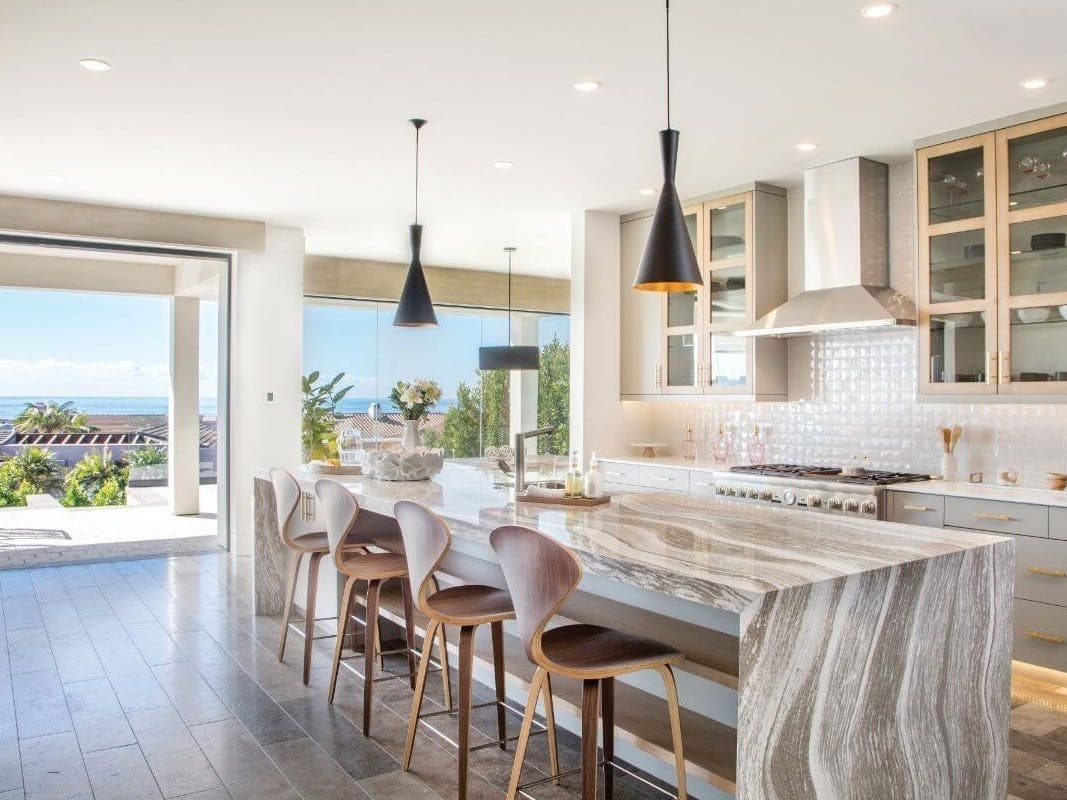


There’s a particular kind of quiet that happens in an Apple Valley or Rosemount kitchen on a January morning. The furnace hums. Boots dry by the door. Someone is packing a lunch, someone else is hunting for a travel mug, and the coffee maker is working overtime. This is not a room that can afford to be “pretty but precious.” In Dakota County, a kitchen has to earn its keep.
That’s why the most useful “2026 kitchen trends” aren’t the ones that photograph best. They’re the ones that make daily life smoother: fewer bottlenecks, less cleanup, better light in the dark months, and surfaces that feel calm when the calendar isn’t. National trend research is pointing in the same direction: more warmth, more personalization, and more function—not bigger kitchens, just better ones.
What follows is a local-reader-first guide to what’s changing in kitchens right now, what’s worth borrowing, and how to translate it into an Apple Valley–Rosemount home without getting trapped by a trend that ages badly.
Find out what's happening in Apple Valley-Rosemountfor free with the latest updates from Patch.
The Apple Valley–Rosemount trend filter
Before you fall in love with a finish, run it through five questions that matter here:
- Does it work in winter lighting? Our daylight can be brilliant off snow but short-lived. A color that looks creamy at noon might look gray by 4 p.m.
- Does it reduce friction at peak hours? If two people can’t move past each other at breakfast, no tile choice will fix the stress level.
- Is it easy to clean after real cooking? Think splatter, steam, sticky fingers, and a sink that never seems empty.
- Does it respect your home’s bones? The best kitchens feel like they belong to the house—whether that’s a split-level, a townhome, or a newer build.
- Would you still like it when the next trend arrives? Kitchens outlast mood boards.
If a trend fails two of these five, it’s not a trend—it’s a future regret.
Find out what's happening in Apple Valley-Rosemountfor free with the latest updates from Patch.
1) Wood cabinets are back—and they’re not “rustic”
White cabinetry isn’t disappearing, but it’s no longer the default. In the 2026 Houzz Kitchen Trends Study, wood claimed the top spot for cabinet color among renovating homeowners: 29% chose wood cabinets vs. 28% choosing white, and medium wood tones led the pack.
Why this matters in Apple Valley and Rosemount:
- Wood hides life better than bright white. Fingerprints, scuffs, and the “how did that happen?” moments blend more gracefully.
- Warmth offsets long winters. Wood tones visually counter the cool cast that can happen when daylight is limited.
- It can still feel modern. Pair warm wood with simple door styles, clean hardware, and a restrained palette.
How to use the trend without committing to a time capsule:
- Put permanence where it belongs. Make your “big” choices (cabinet color, layout, lighting plan) timeless; let your “small” choices (stools, art, textiles) carry the personality.
- Use wood strategically. If you’re nervous about too much wood, consider wood on the island or lowers, and a lighter tone elsewhere.
2) 2026 is quietly the year of “long-game” kitchens
A kitchen that looks good but hurts to use eventually becomes a room you avoid. The 2026 data shows homeowners increasingly planning for the long term—especially for accessibility and day-to-day ease.
Houzz found that 53% of renovating homeowners address current or future special needs (aging household members, young kids, pets, disabilities), and that homeowners who plan for aging overwhelmingly prioritize safety and ease-of-use features like pullouts, added lighting, and wider drawer pulls.
This matters locally for a simple reason: many people in Apple Valley and Rosemount remodel with the intention of staying put.
High-value “long game” upgrades (that still look great):
- Pull-outs where you reach most: trash/recycling, spices, pans, and pantry items
- Aisles that aren’t obstacle courses: plan around the way people actually move at dinner time
- Lighting for visibility, not just vibe: the kind that reduces eye strain at the sink and prep zones
- Handles you can grip: hardware that feels good in real hands, not just in photos
A kitchen can be beautiful and forgiving at the same time. 2026 is rewarding that combination.
3) Layout changes are becoming the main event
One surprise from 2026 remodel data: homeowners are often investing in function without enlarging the kitchen.
Houzz reports that 52% of renovating homeowners modify their kitchen layout, and that most remodeled kitchens keep the same footprint—meaning the gains come from smarter configuration, not more square footage.
Local takeaway: If your current kitchen feels cramped, the solution may not be an addition. It may be a better plan.
Three layout questions that solve more than any “trend” ever will:
- Where do people collide—at the fridge, the sink, or the range?
- Is the path from fridge → sink → prep space smooth, or chaotic?
- Can someone make coffee while someone else cooks without blocking each other?
If you solve those, nearly every finish looks better.
4) The backsplash is getting smarter: fewer grout lines, more calm
One of the clearest 2026 shifts is away from busy tile grids and toward continuous slab backsplashes—the same material as the countertop carried up the wall for a seamless look. Designers favor it because it feels elevated and because it’s easier to live with: fewer grout lines means fewer places for grease and sauce to settle.
For households that cook a lot—or simply hate scrubbing grout—this is a trend with real payoff.
Practical questions to ask before you commit:
- Do you want it full height (dramatic) or to the bottom of shelving (balanced)?
- If it’s natural stone, what sealing and care does it require?
- Will the material you love still look good with real countertop clutter (paper towels, knives, the fruit bowl)?
A backsplash should be a backdrop, not a maintenance hobby.
5) Countertops in 2026: keep the workhorse, add the warmth
Countertops are where “trend” meets reality the fastest. In the Houzz 2026 report coverage, quartz remains the most popular countertop material overall, but there’s a notable rise in butcher block as a contrasting island surface—a warm accent that can help balance the cost and visual weight of a full-slab stone top.
How to translate that into a kitchen that works in Apple Valley–Rosemount life:
- Think in roles, not materials.
- Perimeter counters: the workhorse (durable, easy to clean, handles daily abuse)
- Island: the experience (warmth, gathering, character—if you want it)
- Be honest about your habits. If you never oil wood and you wipe everything with harsh cleaners, butcher block may frustrate you. If you enjoy patina and you like the feel of real wood, it can be deeply satisfying.
The best countertop choice is the one that matches your actual maintenance style.
6) Lighting is the “hidden remodel” that changes everything
In surveys, homeowners and pros keep pointing to the same truth: lighting is not a finishing touch—it’s a core feature. NKBA/KBIS research shows homeowners rate natural lighting (95%), quality lighting (93%), and task lighting (92%) as top kitchen design considerations; and respondents also note the kitchen’s growing role for statement lighting.
That lines up with what local homeowners experience: winter cooking happens in the dark, and bad lighting makes every surface look tired.
A 2026 lighting plan worth copying has three layers:
Ambient light
This prevents the kitchen from feeling gloomy at 6 p.m. in February.
Task light
Under-cabinet lighting and targeted downlights can turn “shadowy corners” into usable prep space.
Decorative light
2026 lighting trends lean toward warmth and layered character—sconces, integrated shelf lighting, and fixtures that feel more personal than purely utilitarian.
Local tip: Put lighting on dimmers. Bright task light is great for homework and meal prep; softer light is what makes the kitchen feel like a refuge after a long day.
7) The new neutrals: softer, warmer, and kinder to Minnesota light
If you’re remodeling because your kitchen feels “cold,” you’re not alone. Designers are moving away from stark whites and cool grays and toward earth-anchored neutrals: creamy off-whites, oat tones, mushroomy taupes, buttery yellows, and muted greens.
Why it works here:
- These shades don’t turn icy when the sun drops.
- They make wood tones feel richer rather than yellow.
- They’re flexible across seasons: cozy in winter, fresh in summer.
A paint-testing method that saves regret:
- Paint large sample boards (not just small swatches).
- Move them around the kitchen at morning, mid-day, and evening.
- Check them next to your countertop sample and flooring—under the lighting you’ll actually use.
Paint is cheap. Repainting cabinets is not. Test like it matters.
8) Storage is becoming invisible—and that’s a compliment
In 2026, the kitchens people admire often look calmer not because they own fewer things, but because they store them better.
The Houzz data points to a growing appetite for pantry cabinets and dedicated zones like beverage stations—evidence that homeowners want kitchens that function like systems, not just rooms.
High-value storage moves that reduce daily friction:
- Appliance “garages” / pocket doors: keep coffee gear and small appliances accessible but visually quiet
- Deep drawers for pans: less digging, fewer clangs
- Pull-out waste/recycling: faster cleanup, fewer “where’s the bin?” moments
- A snack zone: keeps traffic out of your cooking lane
- A beverage station: makes entertaining feel effortless without enlarging the kitchen
The goal isn’t a showroom. It’s less visual noise at the end of the day.
9) Wellness in the kitchen: air, water, and sound
A quieter but important 2026 theme is “healthy living” at home—supported by smart tech and better basics. Reporting on NKBA’s 2026 trends highlights momentum around healthy living, smart tech, and multifunctionality in the kitchen.
Three upgrades that tend to matter more than people expect:
- Ventilation that actually works: helps reduce lingering odors and keeps grease from settling on cabinets and walls over time
- Water you like to drink: a filtered faucet or under-sink system can make hydration effortless
- Sound control: soft-close hardware and thoughtful material choices can make open-concept living feel calmer
These aren’t flashy trends. They’re quality-of-life design.
10) Mixed metals are back—choose what feels timeless in your home
If you’ve been debating hardware finishes, 2026 offers permission to get off the “one metal to rule them all” treadmill. Chrome and brushed nickel are gaining renewed attention in 2026, often paired with deeper cabinet hues and layered textures.
A simple rule that avoids regret:
- Use one finish as the “base” (faucet + most cabinet pulls).
- Use a second finish as a quiet accent (lighting, smaller hardware).
- Repeat each finish at least twice so it feels intentional.
The local reality check: permits and planning in Apple Valley and Rosemount
A beautiful plan is only useful if the project can move forward without unnecessary delays.
Start with the city if your project is more than cosmetic
The City of Apple Valley notes that permits are generally required for many construction projects involving building, repairing, replacing, or remodeling, and it recommends contacting Building Inspections to confirm what your project needs before you begin.
In Rosemount, build permit lead time into your calendar
Rosemount’s permit information page states that, due to a high volume of construction, building permit turnaround times are taking 4–6 weeks.
Don’t forget inspection logistics
Rosemount’s Building Permits and Inspections information also notes inspection timing requirements and department hours—small details that can affect a remodel’s rhythm.
A realistic planning sequence often looks like:
- Define pain points
- Confirm scope (cosmetic vs. moving plumbing/walls)
- Design and selections
- Permit applications (if needed)
- Ordering and scheduling
- Construction and inspections
- Final adjustments
The earlier you align design and permitting, the more likely you are to avoid the stressful version of remodeling.
A quick kitchen audit you can do this weekend
If you want clarity before you spend a dollar, walk through your kitchen and answer these questions:
- Where does traffic jam—sink, fridge, or range?
- Where do backpacks, mail, and sports gear land when people walk in?
- What do you clean the most (and why)?
- What do you wish you could keep on the counter but hate seeing?
- Do you have enough light at the sink and prep area at night?
- Is your trash/recycling convenient—or do people avoid it?
- Do you have a true pantry zone, or is it “wherever it fits”?
- If you host, where do guests naturally gather—and do they block cooking?
- What’s one daily annoyance that makes you sigh?
- If you changed only one thing, what would make mornings easier?
Your answers will point you toward the “trends” that are actually solutions.
Schedule A Free In-Home Design Consultation Today
If your 2026 goal is a kitchen that feels warmer, works harder, and stays calm even on the busiest weekday, consider a kitchen design consultation with Luke & Scot Prettyman, the brothers who founded The Cabinet Store + Culina Design in Apple Valley.
The Cabinet Store + Culina Design showroom
7611 147th St. W., Apple Valley, MN 55124
(952) 208-6268
Email: info@thecabinetstore.com