Community Corner
How Does Lasik Surgery Change Your Eyes?
Is the corneal reshaping procedure right for everyone?
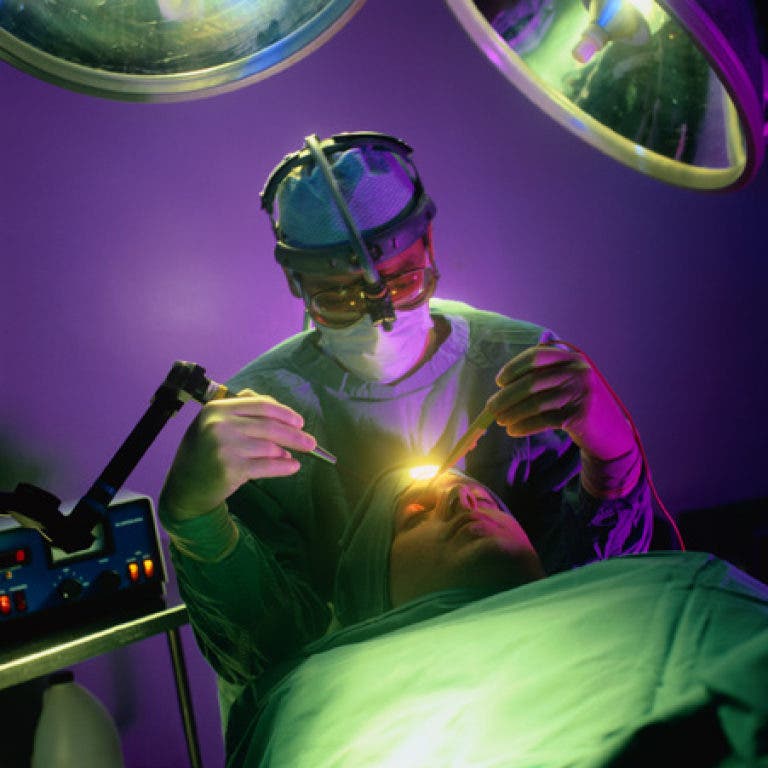
According to the National Eye Institute, about 120 million Americans wear contact lenses or eyeglasses to correct nearsightedness, farsightedness or astigmatism.
I still remember the leaves on the trees coming into focus the first time I walked outside with my new glasses on.
After a few years, I switched to contact lenses, which have served me well, despite the occasional lost lens or irritated eyelid. However, last week, I found myself in the ophthalmologist’s chair for the second time in a year, having a piece of torn contact removed from my eye.
Find out what's happening in Edinafor free with the latest updates from Patch.
It seemed like a good time to learn more about Lasik surgery. A number of people I know have had the surgery and love their new contact lens-free life.
Your eye is like a camera, and the curvature of your retina (the outer, clear, dome-shaped covering of your eye), in conjunction with the lens in your eye, helps control how well images focus on a layer of cells on the back part of your eye called the retina. The retina then sends the image to your brain.
Find out what's happening in Edinafor free with the latest updates from Patch.
If your eye isn’t perfectly shaped, objects look blurry close up or far away, depending on the shape. This is called refractive error and has to do with the way your eye bends light.
If you’re nearsighted—myopic—like more than 25 percent of all adult Americans, your eye is too oblong and images will focus in front of your retina, making distant objects look fuzzy. Glasses and contacts correct the way light rays bend and focus on the retina, allowing you to see clearly.
With Lasik surgery, the shape of your cornea is permanently changed to correct refractive error.
First, a tiny flap is cut from the top layers of the cornea using a blade or a laser, revealing the middle layer of the cornea—called the stroma. Your surgeon will leave a small corner of the flap still attached to the eye. The stroma is made mostly of water and a protein called collagen and makes up around 90 percent of the cornea’s thickness.
Then, a laser is used to focus intense heat on very small areas of your eye, in order to reshape the cornea by vaporizing parts of the stroma. The corneal flap is repositioned, without stitches.
Since Lasik hasn’t been around for very long (they started doing the procedure in Europe around 1989), I’ve always wondered about long-term effects of the surgery. My ophthalmologist, Dr. Gross at Edina Eye Clinic, said that so far, there don’t seem to be any major problems other than the fact that Lasik may make it more difficult to choose a lens for your eye should you need cataract surgery.
When I asked him if someone like me should have Lasik surgery, he said that if I don’t mind wearing contacts or glasses and they correct my vision well, I might want to just stick with my corrective lenses for now. But I'm also at an age when my eyes are changing.
Individuals with certain medical conditions aren’t candidates for Lasik, and people with certain jobs are not allowed to have the procedure. As I mentioned, your eyes change over time, along with your eyesight, so Lasik may not be a permanent solution to all your vision issues.
You can learn more about the procedure, risks and what to expect on the Food and Drug Administration (FDA) website.