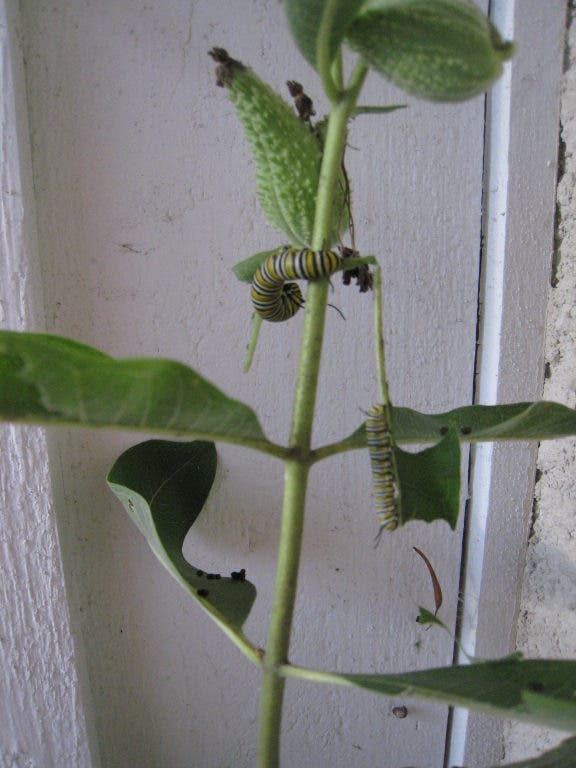
It’s not often you get to witness a miracle, but the kids and I manage to find a little magic every summer, in the guise of tiny, striped caterpillars.
There are few things more incredible than watching the metamorphosis from voracious larva to jewel-like chrysalis to majestic Monarch. We can't help cheering as our newly-hatched butterflies float away, clumsily at first before gaining confidence in their new wings and soaring to the tree-tops.
It’s a good time of year to look for Monarch caterpillars on milkweed plants. There are a number of kinds of milkweed, and it is the favorite food of this particular caterpillar. Look closely on damaged leaves of milkweed plants, and you may find your own caterpillar to take home! Be sure to pull the milkweed plant, or take plenty of leaves home with you as caterpillar food. You can cut the stalk and put it in water or store leaves between damp paper towels in the fridge.
Find out what's happening in Edinafor free with the latest updates from Patch.
The caterpillars we found this year were smaller than a grains of rice, but after only a week, they’ve grown to almost two inches long. In just 9-14 days, monarch caterpillars grow to around 2,000 times their original size!
Milkweed leaves and stems contain chemicals called alkaloids, which are toxic to birds and mammals. Monarch caterpillars and butterflies can eat and retain the poison in their bodies, allowing them to ward off predators who might otherwise eat them.
Find out what's happening in Edinafor free with the latest updates from Patch.
Adult Monarchs that hatch in the summer usually live from two to five weeks, mating and laying more eggs. The last population that hatches out in late summer and fall must migrate to Mexico, live through the winter, fly back north and reproduce before dying. These “vacationing” butterflies live much longer—from six to nine months.
Sadly, the Monarch butterfly population in the Midwest has been declining in recent years, possibly due to the use of the herbicide Roundup on agricultural crops. Roundup kills milkweed, which used to grow freely in ditches and fields. This is good for the farmers, but bad for the butterflies, which have no place to lay their eggs.
The Star Tribune recently reported property owners near the new Edina Public Works building are complaining about the naturalized landscaping, called a rain garden and designed to catch and purify water running off parking lots. The landscaping is sustainable, needs little care and saves water, while reducing herbicide and pesticide use in the area. In addition, it contains a number of milkweed plants, which host Monarchs. It would be sad to see the landscaping destroyed because it doesn’t fit the current corporate ideal.
You can email Edina’s City council at edinamail@ci.edina.mn.us to ask them to help preserve this natural landscaping, which will serve as a butterfly refuge. To help in your own yard or garden, it’s easy to plant a milkweed species called “Butterfly Weed” that looks lovely and makes a perfect nursery for Monarch caterpillars.