It’s nice to think that we can scrub our mouths free of the bacteria that cause cavities and bad breath, but in reality, by brushing and flossing we’re really just keeping the microbial zoo at bay. In fact, some of the normal bacteria in our mouth crowd disease-causing bacteria out, keeping our mouths healthy.
Around 12 billion microorganisms inhabit a healthy oral cavity. We are born without bacteria in our mouths, but the germ-free mouths of newborn infants are soon colonized by bacteria from their mothers or others who come in contact with them. As teeth develop, new bacteria join the ecosystem and play a role in dental health.
Your mouth and teeth can usually be kept healthy by regular brushing and flossing, which keeps a biofilm called plaque under control. Diet and sugar intake play an important role in plaque formation as well.
Find out what's happening in Edinafor free with the latest updates from Patch.
Teeth are covered with an extremely hard substance called enamel, which saliva sticks to, forming a thin film called a pellicle. Some kinds of normal mouth bacteria, like Streptococcus mutans (different from the strep throat bacteria), can attach themselves to this film and begin to form what is known as plaque.
Dental bacteria have to eat, and they love sugar—especially refined sugar. Whether it is table sugar, fruit sugar or even the sugar from simple carbohydrates like crackers, they break it down for energy so they can grow and divide.
Find out what's happening in Edinafor free with the latest updates from Patch.
As bacteria use the sugar, two products result. One is long chains of glucose (sugar) units called polysaccharides, which help cement the bacteria more firmly to each other while holding them on to the tooth’s surface. What we call plaque is made up of as many as 30 kinds of bacteria, proteins from saliva, polysaccharides and even minerals.
Without proper, regular cleaning, teeth can accumulate layers of bacteria up to 500 cells thick. Brushing and flossing removes most plaque, although it begins to form again within 24 hours after cleaning.
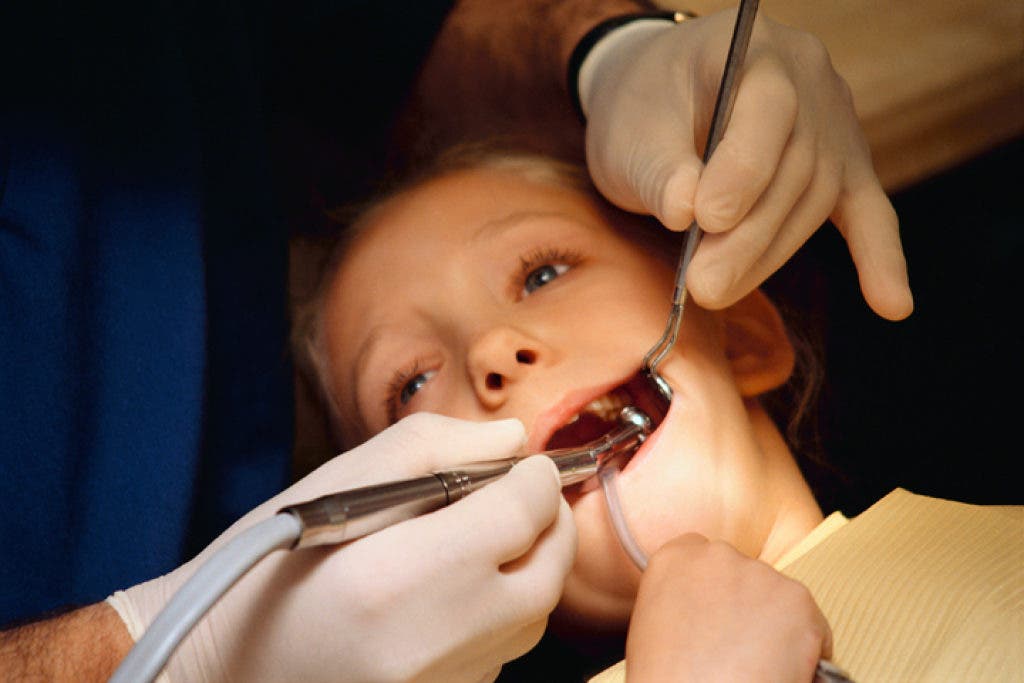
The second product of dental bacteria's sugar metabolism is lactic acid. This acid eats away at enamel, causing decay and holes in teeth called dental caries or cavities. Cavities are treated by removing the damaged area of the tooth and filling it with metal or plastic.
You can picture tooth enamel as many, many rods, packed together tightly to form the surface of each tooth. Cavities are formed when lactic acid leaks into the spaces between the rods to decay teeth.
Fortunately, the tiny spaces between these “rods” can be filled with fluoride which “mineralizes” the enamel, protecting teeth from decay. Fluoride treatments are much more pleasant than they used to be and fluoride is painted on teeth as a rubbery substance which can be brushed off at the end of the day.
So, don’t fear the bacteria in your mouth. Just control them by brushing, flossing and visiting your dentist regularly. Combining good dental care with a diet low in refined sugar may help prevent the more serious problems that can occur should bad bacteria move into a neglected mouth.
Here in Edina you will find a number of dental offices, including , and .