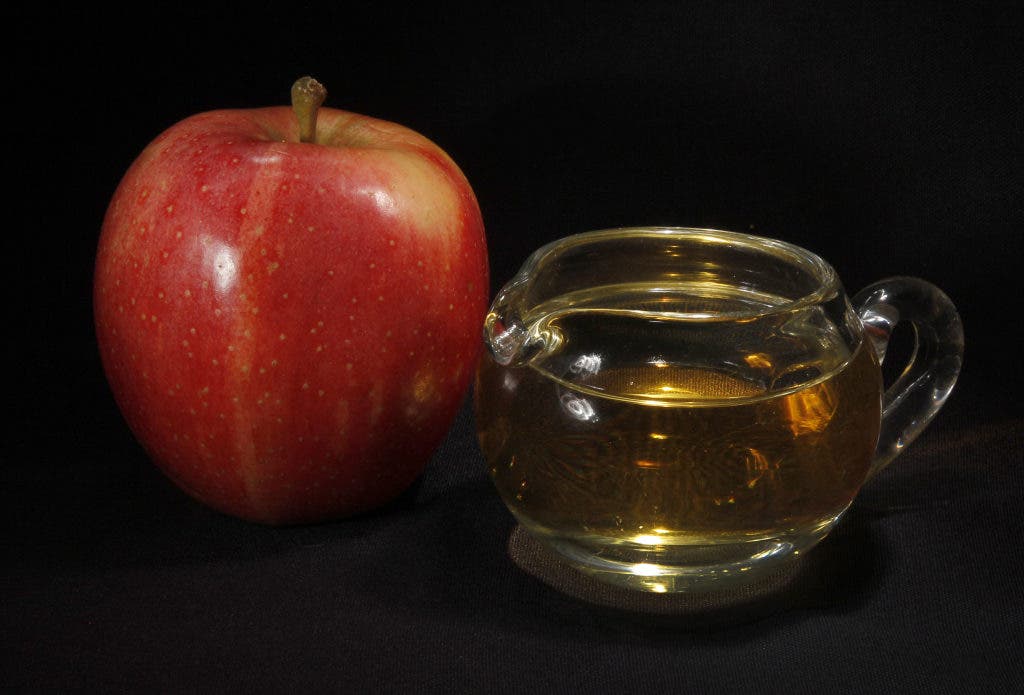
Who knew apple juice was such a risky beverage? Exactly what is arsenic, and why is everyone finding it in our juice?
A chemistry teacher would tell you that arsenic is what is known as a semi-metal and contains characteristics of both a metal and a non-metal. An element in the periodic table with the symbol As and atomic number 33, it occurs naturally in a number of minerals and is relatively abundant in the soil and water.
Arsenic is used for everything from treating wood to making semiconductor devices. In the days before antibiotics, physicians used it to treat Syphilis.
Find out what's happening in Edinafor free with the latest updates from Patch.
Industries like coal-fired power plants, and copper and lead smelting factories, add significant amounts of arsenic to the environment and until the 1980s, lead-arsenic insecticides were sprayed on crops, contaminating farmland throughout America.
Arsenic gets in our juice via the fruit, from the soil that apple trees and grape vines grow in, the water they consume as they grow, and the chemicals they are sprayed with. Although the U.S. has outlawed spraying crops with arsenic, some other countries who supply fruit for our juices have not.
Find out what's happening in Edinafor free with the latest updates from Patch.
Arsenic can be divided into two groups: inorganic and organic. Inorganic arsenic contains no carbon molecules, while organic arsenic has combined with carbon.
The inorganic form of arsenic is toxic is a known carcinogen, and has been linked to TypeII Diabetes.
Organic arsenic, on the other hand, is not considered harmful, but some biological processes can change organic arsenic back into harmful inorganic arsenic.
For years, chickens have been fed organic arsenic compounds to speed their growth. Recently, residual inorganic arsenic was found in their meat and according to Consumer Reports, “in 2011, working with the FDA, drug company Alpharma agreed to suspend the sale of Roxarsone, a poultry-feed additive, because it contained an organic form of arsenic that could convert into inorganic arsenic inside the bird, potentially contaminating the meat. Or it could contaminate soil when chicken droppings are used as fertilizer.”
Unfortunately, a number of other arsenic compounds are still being fed to meat animals including turkeys, chicken and pigs in order to make them grow faster and to make their meat look “prettier,” by affecting the pigment in the animal.
Perhaps, rather than blaming the F.D.A. for not testing our juice carefully enough, we should be asking bigger questions about our county’s industrial and agricultural practices.
If we don't regulate how much arsenic power plants and factories spew into the air, should we be surprised when it lands in our water and croplands?
If we continue to allow farmers to feed arsenic and antibiotics to our farm animals to speed their growth, fertilize our land with their arsenic-laden droppings, and spray our food crops with dangerous chemicals, we may have only ourselves to blame for the consequences to our health.
Although policy changes take time, your dollars can speak immediately and loudly. If you can afford to spend a little more to buy organic food, you'll reduce your exposure to chemicals and send a message to the agricultural community. In addition, the message you send may result in safer food for those who can't afford the extra dollar to buy organic.