Kids & Family
Local Oncologist: Quirk of Stats, Cigs Behind Higher Fridley Cancer Rates
MN Oncology's Tom Amatruda looks to smoking, statistical happenstance.


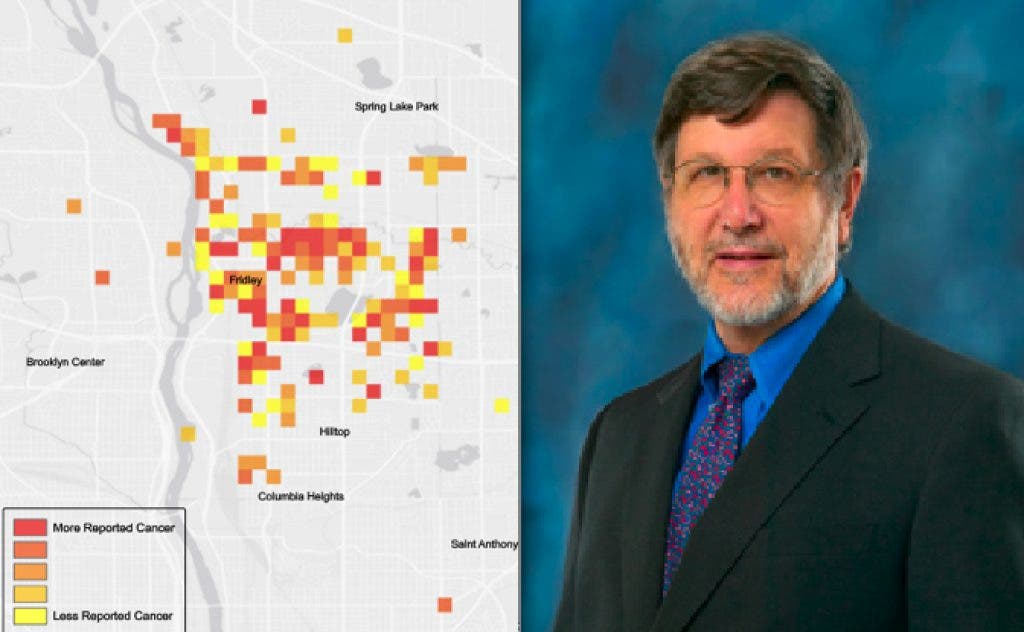
Dr. Tom Amatruda, a genetic specialist at Minnesota Oncology's Fridley clinic, said he does not believe environmental factors have significantly elevated Fridley residents’ risk for contracting cancer.
Last month, an epidemiologist at the Minnesota Cancer Surveillance System released data between 2000 and 2009 and the city’s lung cancer rates 30 percent higher.
But Amatruda said in an interview Thursday that these numbers could be written off to statistical variation and elevated smoking rates.
“A 10 percent higher rate of cancer in one community isn’t that significant,” he said. “You have now a town of about 40,000 with a 10 percent higher rate of cancer, and, well, there’re probably three towns around here of about 40,000 with about a three percent lower rate of cancer and unfortunately that’s just the way statistics go.” (For the record, the puts Fridley's population at 27,208.)
Amatruda said the 30 percent increase in lung cancer rates (48 percent among women) did indicate a “real phenomenon” but that it was likely caused by the popularity of smoking in Fridley 20 years ago.
He said he found data from the Minnesota Adult Tobacco Survey that show a slightly higher than average rate of smoking in Fridley in the 2000s and that he suspects there would be a similar trend in the 1970s and 80s.
“Lung cancer is caused by tobacco,” he said. “Anoka County has [historically] had access to tobacco in bars, whereas Ramsey and Hennepin county [had earlier] closed that down so it’s kind of more smoker friendly and therefore more cancer friendly.”
Amatruda said he was surprised to hear that there were and that there might be “some factors from them” but that smoking dwarfed contamination as a risk factor for cancer.
“I would think about it more if there was a strong cluster of a very rare cancer,” he said. “A cluster is going to have to be at least two or three times higher to see it stick up above the statistical variation.”
Amatruda said another possible explanation for higher than expected cancer rates could be lower than expected insurance rates.
“About 9 percent of people don’t have insurance in the Twin Cities metro area, maybe a little more here because this is not a rich area,” he said. “People don’t have insurance, they don’t get preventive care. When they don’t get preventive care, they get diagnosed with cancers at a more advanced stage. When they get diagnosed with cancers at a more advanced stage, the likelihood of death from cancer is higher.”
Get more local news delivered straight to your inbox. Sign up for free Patch newsletters and alerts.