Politics & Government
Hearing On Minnesota's Lawsuit To Halt Federal Immigration Surge Ends With No Ruling
Judge says she wants time to issue "extremely important" ruling.

January 28, 2026
The state of Minnesota and the Twin Cities appeared before a federal judge Monday and asked the court to stop the Trump administration’s immigration enforcement surge, arguing the chaos of recent weeks and the administration’s threats are unconstitutional.
Find out what's happening in Minneapolisfor free with the latest updates from Patch.
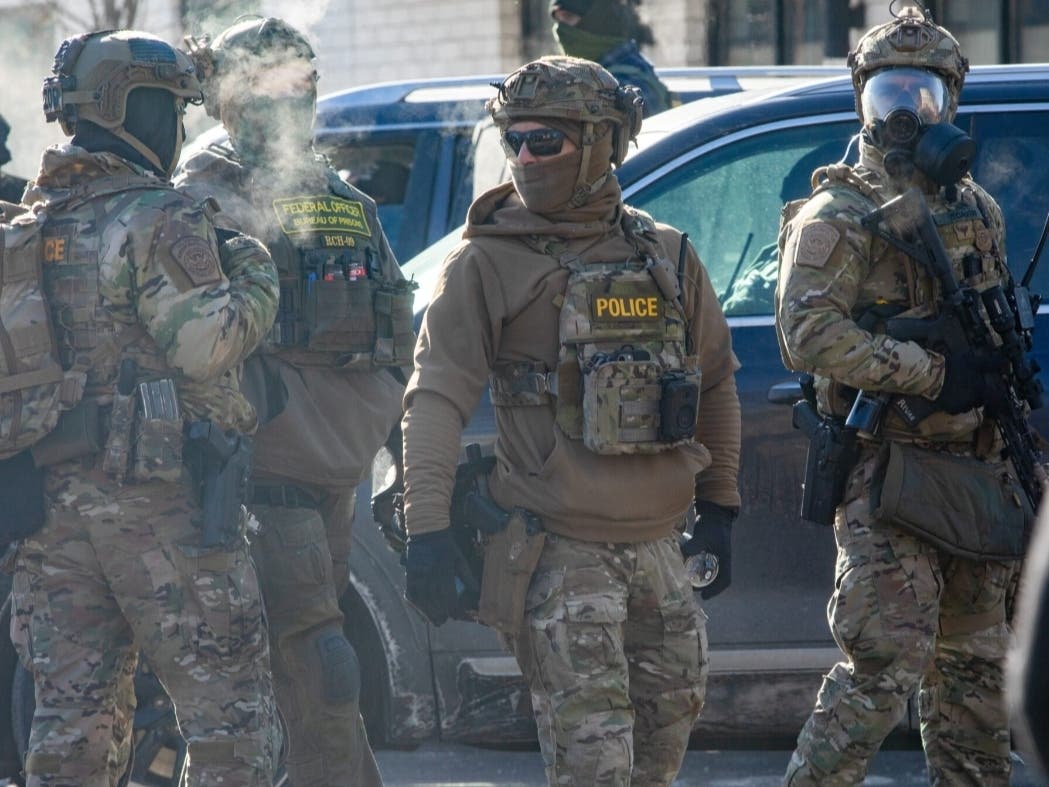
Minnesota, Minneapolis and St. Paul on Jan. 12 sued the Trump administration, alleging that the influx of federal agents under the Trump administration’s “Operation Metro Surge” harms Minnesota’s police powers and violates state sovereignty. These rights are guaranteed under the 10th Amendment.
U.S. District Judge Katherine Menendez, who was appointed by former President Joe Biden, heard arguments from both the state and federal government Monday but didn’t issue a ruling. Menendez asked skeptical questions of both sides, and though she said the case was “extremely important,” she didn’t issue a ruling Monday.
Find out what's happening in Minneapolisfor free with the latest updates from Patch.
The state submitted voluminous filings to bolster their case, documenting widespread use of racial profiling, arbitrary arrests and warrantless searches of private residences.
The Trump administration’s immigration crackdown in Minnesota has led to three shootings by immigration officers in three weeks, with two ending in death.
But most of the hearing was dedicated to abstract legal arguments, in particular the claim from the plaintiffs that the federal operation is violating the state’s sovereign rights under the 10th Amendment of the U.S. Constitution.
Brian Carter, an attorney for the state, said the government is using Operation Metro Surge to “coerce” the state into acceding to its policy goals. Under the 10th Amendment’s anti-commandeering doctrine, the federal government cannot coerce states to enforce federal laws.
As evidence, Carter pointed to a letter U.S. Attorney General Pam Bondi sent to Gov. Tim Walz in the wake of the killing of Minneapolis resident Alex Pretti by federal agents on Saturday. In that letter, Bondi suggested the Administration would scale back its immigration enforcement if Walz would release the state’s unredacted voter rolls, scrap all “sanctuary policies” designed to protect immigrants and share the state’s records of Medicaid and supplemental food assistance.
Carter referred to the missive as a “shakedown letter, a ransom note,” likening it to a threat from a mobster to burn down a restaurant. As further evidence of improper motive, he pointed to a tweet from President Donald Trump in which he stated that Minnesota’s “day of retribution” was coming.
Brian Carter argued that the Trump administration’s actions are “outrageously unlawful.”
“In the 250 years of this nation’s, of this republic’s history, we have never seen a federal government attack states based on personal animosity,” Carter said.
Menendez noted that the U.S. Constitution, federal law and “an awful lot of history support significant federal power around immigration.”
Brantley Mayers, an attorney with the Department of Justice’s Civil Division, urged Menendez to reject the state’s 10th Amendment arguments which, he said, “turns federalism on its head.” He did not rebut any of the factual claims made by the plaintiffs.
Mayers said Minnesota’s request to end Operation Metro Surge was “staggering.”
Mayers argued the Trump administration’s goal was to enforce federal immigration law. Because of Minneapolis’ so-called “sanctuary” policies, more federal agents are needed in the Twin Cities to enforce federal law.
Menendez appeared skeptical of this argument, noting that Chicago also has sanctuary policies. The federal government sent 400 immigration agents there, compared to Minnesota’s 3,000 plus, she said. She grilled the federal government’s attorney on whether Operation Metro Surge was really just about immigration enforcement or whether coercion was a factor.
“Is the executive trying to achieve a goal through force that it cannot achieve through the courts?” Menendez asked Mayers.
Mayers said no. “There’s nothing to back up this claim that we are here for another reason,” he said.
After the hearing, Attorney General Keith Ellison expressed optimism that the state would prevail.
“Once they decided it was retribution, they crossed a line,” Ellison said, referring to Trump’s tweet and Bondi’s demand letter. “At the end of the day, this is coercion and federal overreach.”
In a separate case earlier this month, Menendez ruled that the federal government could not retaliate against or detain people who are engaging in peaceful and unobtrusive protest. An appellate court temporarily blocked her ruling.
The Minnesota Reformer is an independent, nonprofit news organization dedicated to keeping Minnesotans informed and unearthing stories other outlets can’t or won’t tell..