Politics & Government
Judge Tosses 'Risible' Trump Subpoenas Targeting Gov. Walz, Other MN Democrats
Chief Judge Patrick Schiltz called the DOJ's justification for the grand jury subpoenas "risible" and ordered them thrown out.


MINNEAPOLIS, MN — A federal judge on Monday threw out six grand jury subpoenas the U.S. Department of Justice had served on top Minnesota officials over their resistance to federal immigration enforcement, calling the department's justification for the probe "risible" and finding the investigation was driven by retaliation, not law enforcement.
Chief Judge Patrick J. Schiltz of the U.S. District Court for the District of Minnesota ruled that the subpoenas' "dominant purpose" was to coerce state and local officials into cooperating with federal immigration agents and to punish them for refusing, not to pursue a legitimate criminal investigation.
"The evidence that the challenged subpoenas were issued for unlawful reasons is overwhelming," Schiltz wrote in the 29-page order, unsealed Monday.
Find out what's happening in Minneapolisfor free with the latest updates from Patch.
The subpoenas were served Jan. 20 on records custodians for the offices of Gov. Tim Walz, Minneapolis Mayor Jacob Frey, St. Paul Mayor Kaohly Her, Attorney General Keith Ellison, and the Hennepin and Ramsey County boards.
They sought broad categories of records related to the officials' cooperation with federal immigration authorities.
Find out what's happening in Minneapolisfor free with the latest updates from Patch.
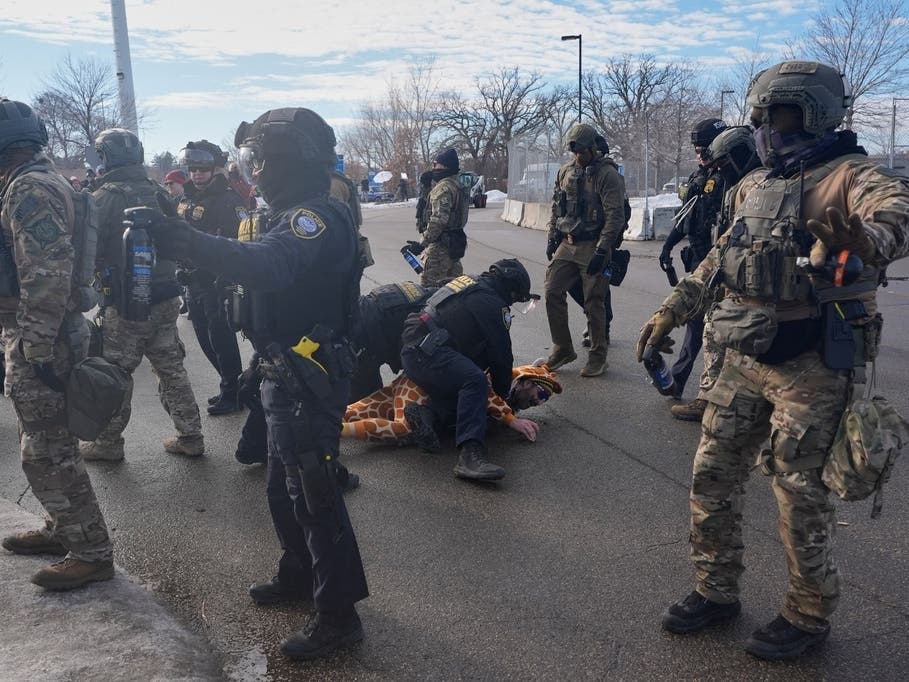
The subpoenas came amid the Trump administration's "Operation Metro Surge," a large-scale immigration enforcement campaign launched in Minnesota in December 2025 that deployed thousands of Department of Homeland Security agents in the state.
During the operation, federal agents killed Renee Good and Alex Pretti and shot Julio Sosa-Celis.
The Timeline
On Jan. 12, Ellison filed a lawsuit on behalf of the state challenging Metro Surge. The next day, President Trump posted to social media: "THE DAY OF RECKONING & RETRIBUTION IS COMING." Eight days later, the subpoenas arrived.
Schiltz also cited a White House website article warning that "Minnesota's 'Sanctuary' Defiance Has Consequences" as further evidence the subpoenas were part of a broader pressure campaign.
The court found the DOJ's stated investigatory justifications unpersuasive.
Among the four examples of allegedly suspicious conduct the government cited, two involved activity by Minneapolis City Council members who were not even subpoenaed.
The other two involved Hennepin and Ramsey County guidance instructing staff on how to interact with ICE agents, which the court found to be entirely lawful.
"One would expect that, before launching a sweeping investigation into nearly the entire political structure of a sovereign state, the Department would have identified at least one instance in which a county employee actually obstructed a law-enforcement officer," Schiltz wrote. The DOJ could not identify a single such instance.
Walz called the ruling a vindication. "Today's ruling is a victory for the rule of law and our democracy," he said. "A federal district judge found that the U.S. Department of Justice's investigation into me and other Minnesota elected officials was politically motivated, unconstitutional, and meritless."
Ellison said the ruling confirmed the investigation was political targeting from the start. "The facts are clear: the Trump administration is targeting me because I'm standing up for the people of Minnesota," he said. "It should disturb every American that Donald Trump is weaponizing the criminal justice system against people he disagrees with."
Frey was blunt in his assessment. "This Department of Justice investigation was never about justice, law, and order, but the absence of it," he said. "Criticism of government action is not a crime. No administration should use the tools of law enforcement to silence dissent."
Schiltz ordered the case unsealed Monday, saying the public has "a very strong interest in learning of this abuse of the grand-jury process by the Department." The DOJ may challenge the unsealing.
Additional briefing on whether any materials should remain sealed is due by July 1.
Get more local news delivered straight to your inbox. Sign up for free Patch newsletters and alerts.