Business & Tech
Perfect Partners: Chinese and Traditional Medicine Complement Each Other
Not Just Needles: There's more to Traditional Chinese Medicine than just acupuncture
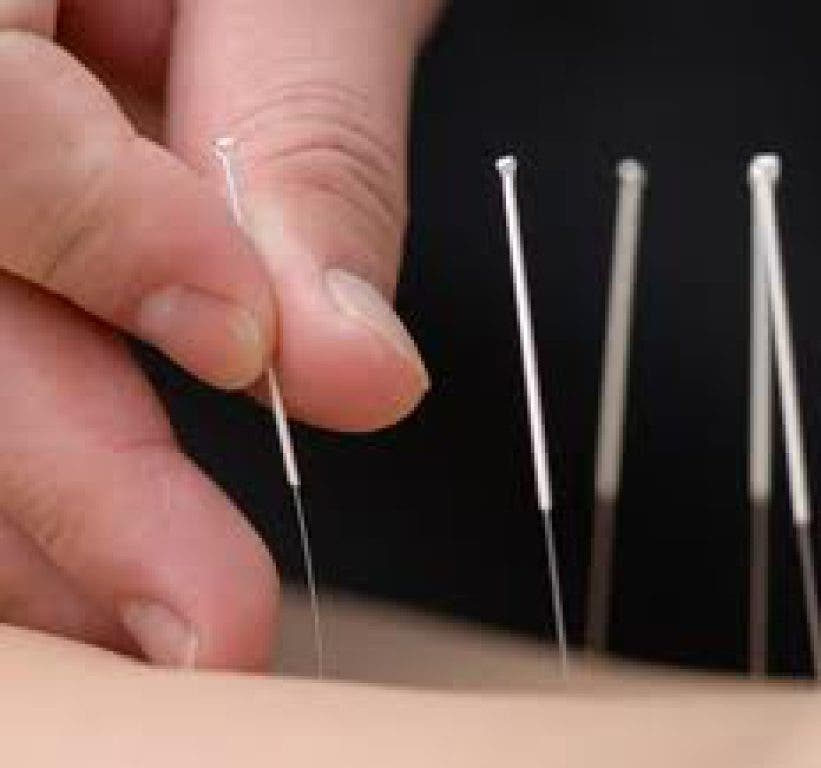

Have you ever had an ailment that just wouldn’t go away, despite your doctor’s best care?
In Northfield—as elsewhere—it’s become increasingly common for such patients to be referred to an acupuncturist, which is often their first venture into the widening world of alternative/complementary medicine.
But acupuncture is itself only one facet of Traditional Chinese Medicine, or TCM.
Find out what's happening in Northfieldfor free with the latest updates from Patch.
"Here, acupuncture is what most people think of when they think of Chinese medicine—ever since Nixon's visit focused attention on it," says Mika Turner, recently certified in TCM by the National Certification Commission for Acupuncture and Oriental Medicine (NCCAOM), and the latest to join Northfield’s roster of practitioners.
In China and East Asia—where TCM is the primary medicine—people are most familiar with herbal therapy, and millions are treated with herbs, Turner says. However, a more comprehensive version of TCM is gaining popularity as a complementary and alternative (CAM) practice in the U.S. that includes bodywork, dietary therapy and qi gong—an exercise to regulate the mind and breathing to control the flow of qi (vital energy).
Find out what's happening in Northfieldfor free with the latest updates from Patch.
The “qi” (pronounced “chee”) in qi gong is key to understanding how TCM works: it is based on regulating the flow of qi through the body in the belief that illness is caused when this flow is stagnated or blocked.
“TCM refers to a broad range of medical practices, sharing common theoretic concepts developed in China more than 2,000 years ago,” says Turner. “The aim of TCM is to bring individuals into harmony with their inner and outer environments to foster both health and healing.”
Unlike Western medicine, TCM is less concerned with individual organs than with the functional dynamics of systems that regulate digestion, breathing and circulation. Health is the harmonious interaction of these systems with each other and the outside world; disease is a disharmony in interaction. TCM diagnosis identifies these patterns of disharmony through a detailed medical history and physical examination, which takes pulse and tongue findings significantly into account.
Following the philosophy of “everything is related,” TCM intake questions may range from the concentration of one’s urine to taste and temperature preferences in food—all could be important diagnostic cues that traditional medical questionnaires may miss.
“The basic premise of TCM is that the body and the mind and the environment are an inseparable whole, divided into yin and yang, in which a balance between substance and function must be maintained,” says Jennie Gamer of in Northfield. “We look to see what part of the system has an over-abundance of something and which part has a lack—then we use the needles to open pathways between where there’s too much and where there’s too little.”
Turner recently joined Gamer in practice at Pivotal Point. Both are certified in TCM and in acupuncture; Turner has additional certification in herbal medicine, while Gamer also specializes in therapeutic massage and herbal medicine.
Herbs Common—Use Sense
With thousands of years’ experience in processing roots and herbs, the Chinese are the world’s foremost herbalists: TCM recognizes 6,000 different medicine substances, about 600 of which are commonly used in the U.S. Many—like ginger, astralagus, reishi and cordyceps mushrooms, licorice root and gotu kola—are familiar, and more are becoming widely available in health stores and on the web in tea pills and capsules.
But even though the Chinese view medicine and food as much the same thing, consumers should exercise caution.
Chinese herbs are chosen for their properties of temperature and taste that influence the yin and yang energy properties of the body; over-the-counter herbal blends may contain contradictory mixtures that only an expert can effectively apply.
“These combinations are OK, but you should see a practitioner first,” says Turner. “For example, what we call a ‘cold’ can have a ‘cold’ syndrome, or a ‘hot’ one, including fever, stiff neck, runny nose. If you take ‘warm’ herbs, you could increase your fever and make yourself worse.”
East Complements West
Many practitioners report that they came to the profession based on personal experience with the power of TCM to fill in the cracks of traditional American medicine, or to enhance it.
Turner reports that on an archaeological dig in China, a local TCM doctor eliminated her cold, cured an old ankle injury with massage, and healed her chronic eczema.
“That had a big impact on my life,” and launched her decision to “pick up the tool box” of TCM.
“Before I studied acupuncture, I had chronic back pain for years,” says Kim Chmielewski, a Licensed Acupuncturist (L.Ac.) and owner of in Northfield. “I had tried every possible avenue, from injections, physical therapy, heat and cold therapy, massage—you name it. Acupuncture was the only treatment that worked for me.”
Chmielewski also practices herbal therapy.
Turner learned from serving her internship at Abbott Northwestern Hospital in Minneapolis how well TCM can complement Western surgical medicine in an integrative environment: Abbott is a much-watched pioneer in offering alternative therapies to its surgical patients on request and free of charge.
“Post-surgical pain and nausea from that and from chemotherapy are common,” says Turner. “I’ve seen acupuncture having an impact on patients who are still in pain despite medication, and on post-surgical nausea and gas—these improvements also assist emotionally, and make people feel more relaxed and comfortable.”
Similarly, traditional M.D.s are increasingly instrumental in diagnosing patients and referring patients who may benefit from TCM.
Dr. Gary Carlson, M.D., himself practiced acupuncture at Allina Clinic in Northfield until this fall. He now does integrative medicine consultations and integrative psychiatry at the Penny George Institute in Minneapolis several days a week. He spends one and a half days per week at in these practices, as well; many have come to rely on him to triage and refer patients to local CAM providers.
A Holistic Health Philosophy
TCM’s basic philosophy of unity encourages patients to take more control over their own well-being.
“TCM can treat many different health issues, but it includes a lifestyle that contributes strongly to overall health,” says Chmielewski. “If someone comes to see me with a health issue that’s influenced by lifestyle or diet, I can do multiple treatments and the condition will improve, but it will also come back if the person doesn’t make the necessary changes.”
“TCM restores balance, which includes eating wholesome food that’s right for your body, getting the right amount of activity,” says Gamer. “Here in Northfield we have people who either don’t get enough, or overdo it—an addictive mindset. You’ve got to go with life’s cycles—the seasons, light and dark—to keep the mind and emotions calm and centered.”
With the increasing overlap between TCM and traditional medicine, insurance companies have begun to extend coverage to its practices.
All of Northfield’s TCM practitioners accept some insurance, although some carriers require an M.D.'s referral for specific ailments, and some require the fee to be paid up front and later reimbursed.