Health & Fitness
Featured Roseville Blog: Want To Conserve Energy? More Power To Ya!!
Roseville resident Chip Small discovers the source of his power--a coal mine in Wyoming.
Every weekday afternoon at 3:30, I pause and think about energy efficiency. Not because my environmental conscience is highly attuned to my electricity consumption.
No, it’s actually because the fluorescent lights in my office start flickering off and on repeatedly. There is a sensor that is supposed to detect when there is enough ambient light to turn off the fluorescent bulbs, which occurs like clockwork in mid-afternoon in my westward-facing office in the Ecology building on the U of M St. Paul campus.
Apparently, though, our sensor in my office is a little too sensitive, since as soon as the lights go out, it’s too dark and they commence flickering. An imperfect system1, but it does force me to get up and turn off the lights and maybe save a few kilowatt-hours each week.
Find out what's happening in Rosevillefor free with the latest updates from Patch.
In my last blog post I presented the results of my family’s household ecosystem fluxes2. Even though we have a fairly small house and hold out as long as we can stand before turning on the AC in the summer, home energy turns out to be the largest contributor to our carbon flux (2939 kg C last year), nearly as large as the next two categories (air travel and vehicle travel) combined.
Minnesota is one of the leading states in providing sources of renewable energy. Xcel Energy generates electricity from a number of stations using wind, hydropower, natural gas, refuse-derived fuel, and nuclear power. However, most of our electricity comes from coal3, and the burning of this coal to power our light bulbs, televisions, and air conditioners, is one of the single biggest sources of pollution in Minnesota.4
Find out what's happening in Rosevillefor free with the latest updates from Patch.
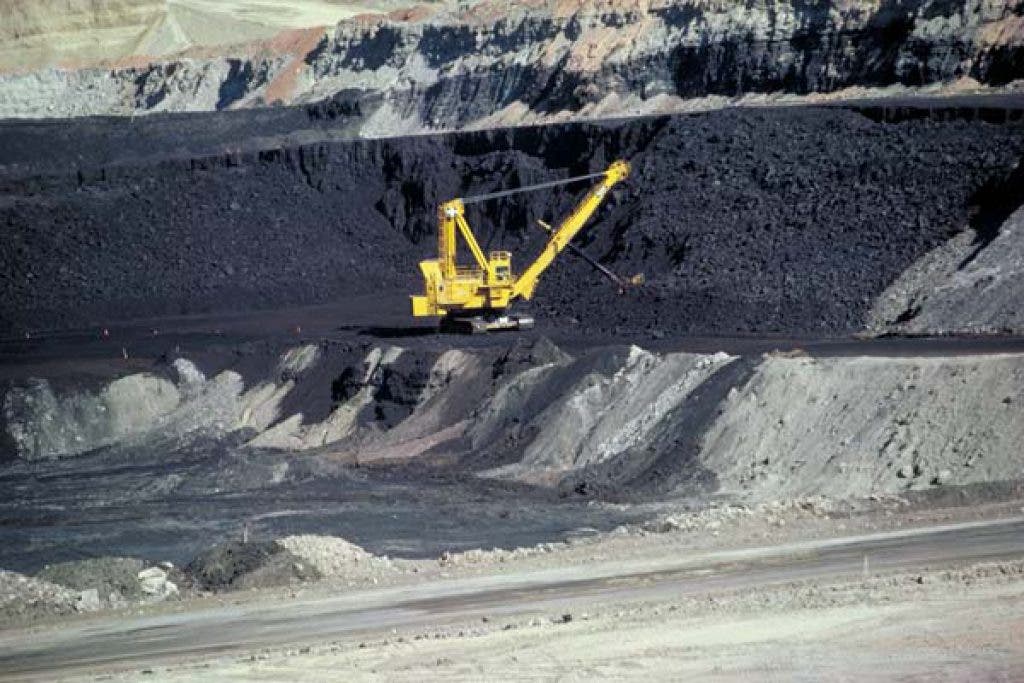
I confess, I’m kind of fascinated by coal. The energy running my laptop right now originated from a nuclear fusion reaction in the sun, which ejected photons that sped through space and were captured by chlorophyll molecules in the leaves of plants in a swamp in what is now Wyoming. These plants were buried and baked underground for 60 million years to become coal, and then were ripped out of the ground by a giant excavator, loaded onto railroad cars, hauled eastward to Minnesota, and burned in the 2,400 megawatt Sherco plant in Becker, where it generated steam and turned a turbine, pumping electricity through 50 miles of power lines to my home in Roseville.
The problem, though, comes from the pollutants that are generated along the way. Of course there’s the CO2, the principle greenhouse gas contributing to global warming, which is a product of burning any fossil fuel or biomass. There is also sulfur dioxide, nitrogen oxides, and particulate matter, which contribute to smog, acid rain, and respiratory diseases. There’s mercury as well, which is ejected into the atmosphere by coal-fired power plants, and ends up in lakes and streams, where it accumulates in fish tissue and can pose a neurological risk to humans.
Even if “clean coal” technologies can reduce these atmospheric inputs in coming decades5, there’s still the environmental impact of mining for coal. Surface mining is leveling mountaintops across a large swath of West Virginia and Kentucky, burying biologically rich streams and causing downstream water pollution even after restoration efforts6. And, while we have enough coal to last for several more centuries, fossil fuels are ultimately a finite resource and are fundamentally unsustainable.
We do have a choice. Minnesota state law requires that all public utilities offer their customers the opportunity to purchase green power7.
According to the MPCA, paying an additional $2 each month on your electric bill for 100 kW hours of green power (wind energy), over the course of a year, replaces enough coal-fired power to keep over 2,000 pounds of CO2, 6 pounds of sulfur dioxide, nearly 5 pounds of nitrogen oxides, and 24 milligrams of mercury out of the atmosphere—an environmental savings equivalent to driving our cars 2,400 fewer miles, or planting a half-acre of trees8. Just as importantly, it sends a signal to utilities that consumers are willing to pay for clean, renewable energy. As utilities make larger investments in green power, the cost should become more competitive with conventional sources.
Of course, the cleanest and cheapest energy is the energy that we don’t use. The Roseville “Living Smarter” website has useful tips on ways to save energy in your home9. And even if some of our energy-saving devices aren’t yet ready for prime time—like the sensor in my office—we’ll probably be seeing a lot more of them.
Notes:
1My officemate, Ben, shared with me that in his last office he was the only occupant of a group of desks in a windowless room in which the light was controlled by a motion sensor. After working at his desk for fifteen minutes, the lights would turn off. Ben would have to grab a broom and wave it in the air to turn the lights back on.
5 http://en.wikipedia.org/wiki/Clean_coal_technology
6 M. A. Palmer et al. 2010. Mountaintop Mining Consequences. Science 327: 148-149. http://palmerlab.umd.edu/palmer_etal_2010_mountaintop.pdf