Schools
Proper Steps Important In Return From Concussions
In Part II of this three-part series, a cautious approach to recovery can minimize the lingering effects of concussions.
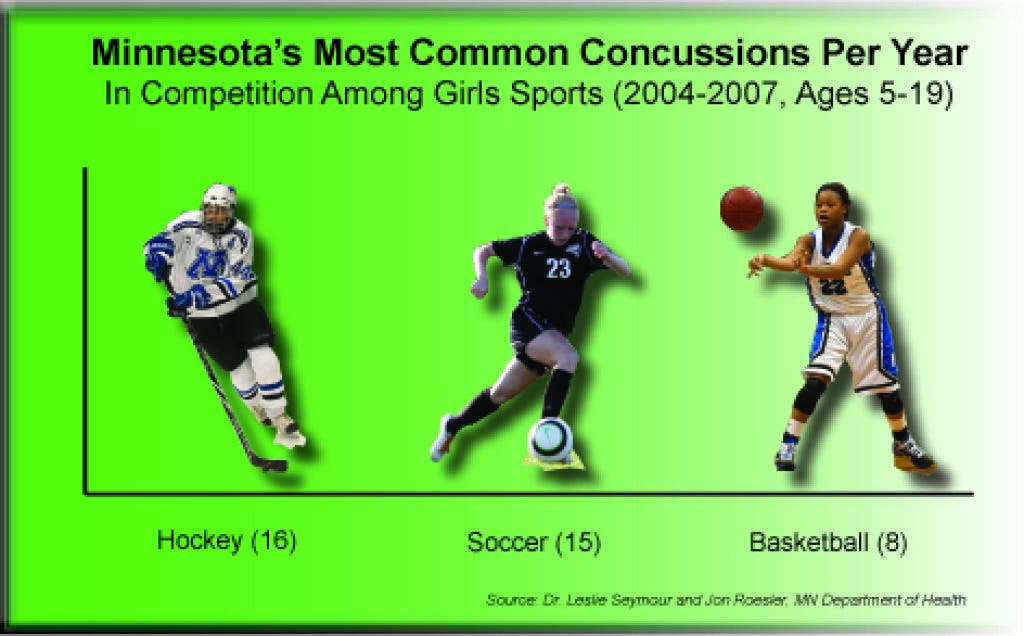
Concussions are often an “unseen” injury: you may not have a lump on your forehead and you may not be bleeding—but the damage is there.
In the short term concussions—a traumatic brain injury that changes the way the brain functions and is often caused by a blow to the head—can cause headaches and nausea. If untreated or ignored, especially in younger athletes, the long-term damage can be far worse.
In recent years, numerous studies and a flurry of media coverage have drawn attention to sports-related concussions and changed the way athletes, coaches and medical professionals think about them.
In May the Minnesota legislature passed a law that requires high school and youth coaches to take concussion-awareness tests, and for players to receive medical clearance before returning to play after such an injury. The law went into effect mid-August for high school athletics and Sept. 1 for youth programs.
Chris Simdorn, head football coach at Roseville High School, said he has seen how the public's attitude and medical knowledge has changed over the years regarding the seriousness of concussions.
“It's a little weird with all the things our government has to do, that they're going to make a regulation on concussions and try and regulate the high school football league,” Simdorn said.
But Simdorn added, “It's come full circle. I know when I played college football, I can think of four times when I was knocked completely unconscious and went back in the football game. That just doesn't happen anymore.”
Sitting it out
One of the main points of the concussion legislation in Minnesota was the requirement to keep athletes off the field until they recover from a concussion. Heather Bergeson, a sports medicine physician at the TRIA Orthopedic Center in Minneapolis, said that’s important because it puts the decision into a medical professional’s hands rather than a volunteer youth league coach.
Once the symptoms of concussion are gone, Bergeson recommended that athletes slowly return to play, doing light workouts before going back to practice and gameplay. That process could take at least a week—or more.
In addition, the law takes the pressure off young athletes who might feel obligated to get back in the game, even if they have lingering effects, Bergeson said.
Simdorn noted that, under Minnesota State High School League concussion rules, "even an official who sees any symptoms can ask a player to leave or tell the coach to take the player out. They have us all aware of it, and I think they're doing a nice job with it. You've got to err on the side of caution.”
The Centers for Disease Control and Prevention created the “Heads Up” campaign to create awareness of concussions in youth and high school sports. The campaign’s website reminds athletes, “It’s better to miss one game than the whole season.”
“Kids have a lot of pressure on them,” Bergeson said. “When you listen to them, what you hear is that they’re hurt and they don’t want to play.”
Media attention
The topic of sports concussions started gaining steam in 2009, when autopsies of several deceased former National Football League players revealed they suffered from brain damage caused by repetitive trauma—a condition known as chronic traumatic encephalopathy (CTE).
Researchers found that out of seven players who died by the age of 50, six of them suffered from CTE. The condition can cause problems with memory loss, concentration and coordination, according MayoClinic.com.
The NFL findings, along with a 2008 U.S. Army study that found that soldiers who suffered concussions are more likely to develop post-traumatic stress disorder, caused a “wave of awareness,” said David King, executive director of the Brain Injury Association of Minnesota.
Since then sports concussions at every age level and sport have received some attention.
Bergeson said although there is much more attention being paid to sports concussions, there is much more to understand.
One thing that medical professionals do know, Bergeson said, is that younger athletes tend to take longer to recover from concussions than adults. This is likely because their brains are still developing, she said.
And while the medical profession is still somewhat in the dark about the long-term effects of concussions, it’s important to take a conservative approach to treatment, she said.
“This law is a good framework to approach this systematically,” Bergeson said. “I think it’s a good thing for kids and their health.”
Everyone is different
Bergeson explained that concussions are caused when the brain is moved inside the skull, either from a direct or indirect blow.
There are numerous symptoms of concussions, Bergeson said, and people often display them in different ways. Some might feel nauseous, while others may suffer memory loss.
Scott Allen, athletic director at Roseville High School, said Roseville offers impact testing through Bethesda Hospital. "If they (the student) do get a concussion, they give them a baseline test again and see what they have to get back to before they can play," Allen said.
Find out what's happening in Rosevillefor free with the latest updates from Patch.
Working as an athletic trainer for the University of Minnesota football team more than a decade ago, Brent Millikin, president of the Minnesota Athletic Trainers’ Association, recalled one player who couldn’t remember what stadium he was in or what team he was playing against after sustaining a major hit.
In that instance, it was obvious that the player had suffered a major head injury. Other times, it’s not so clear.
“There are some challenges” to identifying concussions, Millikin said. “It’s not like an ankle sprain.”
Even during those times, if a player had a concussion Saturday, but felt better Sunday, he’d often be back on the field Monday, Millikin said.
“We know we need to be more conservative now,” he said.
This story is part of a three-part series examining the new state law on sports-related concussions in Minnesota youth sports. The series was reported by John Hageman, Roseville Patch freelancer Matthnew Davis, and edited by Regional Sports Coordinator Mark Remme.
TUESDAY (Part I):
TODAY (Part II): Why proper recovery steps are important to an athlete’s long-term health
THURSDAY (PART III): How one young woman’s testimony helped get the law passed, and how it affects youth sports