Saint Paul, MN|Local Classified|Gigs & Services|

What North St. Paul Homeowners Should Check on Their Deck Before Spring
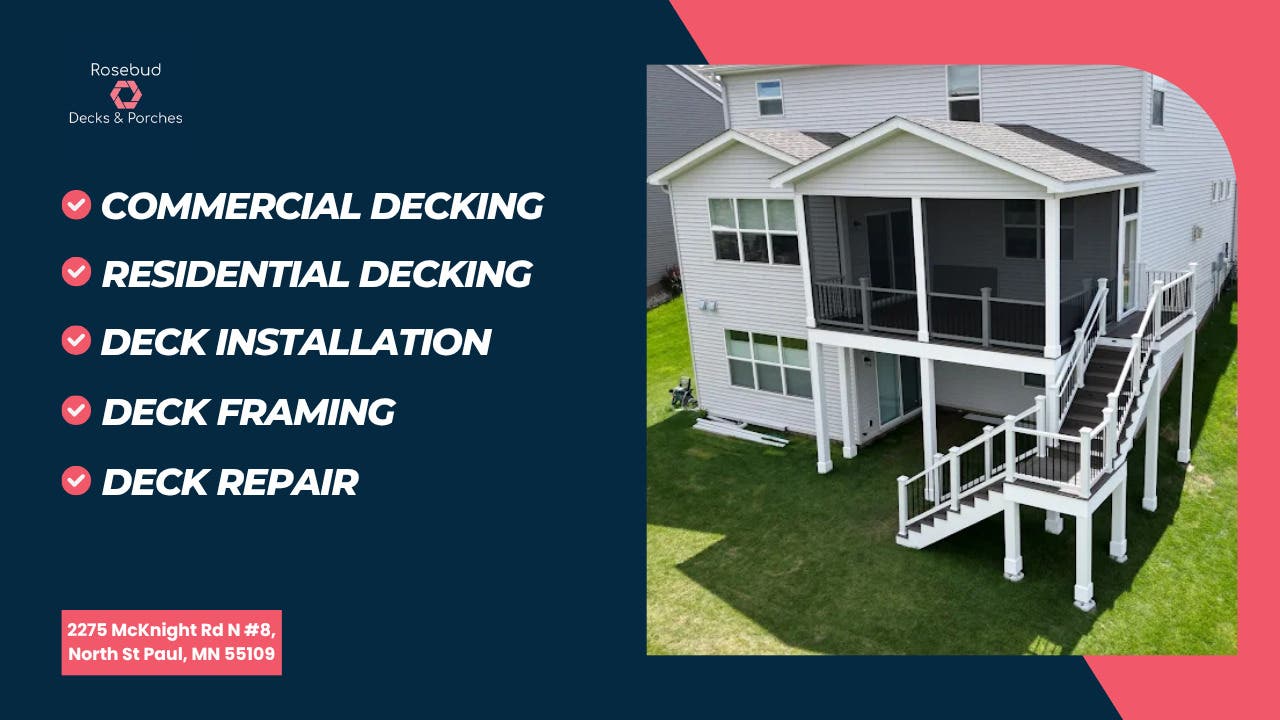
If your deck made it through another Ramsey County winter, it may look fine from the back door — but the real damage often hides where you cannot see it.
Minnesota's freeze-thaw cycle is one of the most damaging forces a residential deck faces each year. Through late winter and early spring, temperatures swing repeatedly above and below freezing. Water infiltrates wood fibers, composite seams, and structural joints, then expands as it refreezes. That cycle creates pressure that loosens fasteners, splits boards, shifts footings, and weakens the connections between a deck's framing and the home it attaches to.
By the time the damage becomes obvious, it has usually been building for months.
Here are five things North St. Paul homeowners should physically check before the spring season begins:
Deck boards. Walk the full surface and press down with your foot at regular intervals. Soft, spongy, or springy spots indicate rot or moisture-compromised wood underneath — even on composite decks where the surface boards themselves may still look intact.
Railings. Apply side-to-side pressure on each railing section. Freeze-thaw movement works the hardware loose over repeated cycles, and a railing that wobbles even slightly may not meet load requirements anymore.
Fasteners. Look for rust staining around screws and bolts. Surface rust is cosmetic; dark streaks running down the board below the fastener point indicate deeper corrosion that can compromise holding strength.
Board gaps. Check whether gaps between deck boards have widened since last fall. Excessive gaps allow more water infiltration and can signal that the substructure underneath has shifted.
Ledger connection. Where the deck meets the house is the most critical structural point in the entire build. Look for any separation, staining, or soft material at the ledger board — this area is most vulnerable to water intrusion and freeze-thaw damage.
A post-winter walkthrough takes less than 15 minutes and can identify issues that worsen significantly once warm-weather moisture and heavy foot traffic arrive. If any of these warning signs are present, a professional inspection before the building season starts is the most reliable way to catch structural concerns early.
Rosebud Decks & Porches
2275 McKnight Rd N #8, North St Paul, MN 55109
651-260-2368
https://www.rosebudconstruction.com/