Politics & Government
Here's Why No Charges Were Filed In The Police Killing Of Amir Locke
Under Minnesota's current law, "there is not sufficient admissible evidence to support a criminal charge," the prosecutors said.


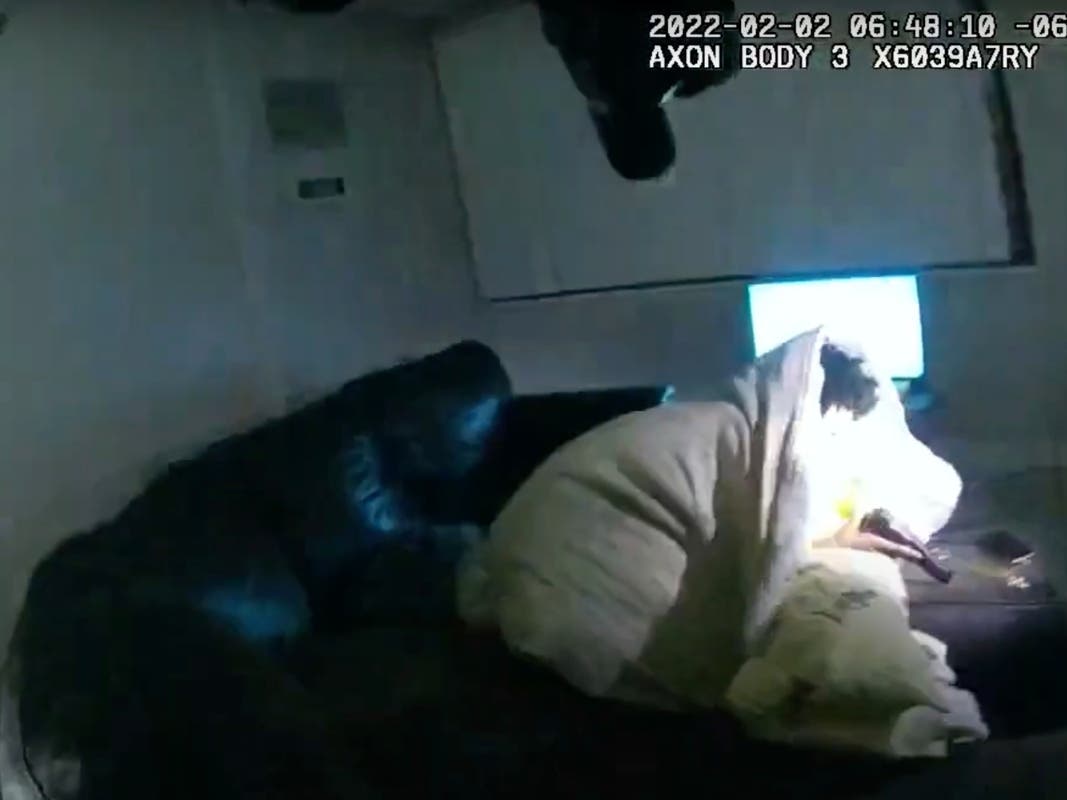
MINNEAPOLIS — Hennepin County Attorney Michael Freeman and Minnesota Attorney General Keith Ellison announced Wednesday that they are declining to file criminal charges in the deadly police shooting of Amir Locke.
Under Minnesota's current law, "there is not sufficient admissible evidence to support a criminal charge," the prosecutors said.
Locke, 22, was shot and killed during a no-knock search warrant on Feb. 2 at a downtown apartment on the 1100 block of Marquette Avenue South. Locke was not named in the search warrant and he was not a suspect in the investigation.
Find out what's happening in Southwest Minneapolisfor free with the latest updates from Patch.
The city identified the officer who shot Locke as Mark Hanneman.
"He should be alive today, and his death is a tragedy," read a joint statement from Freeman and Ellison.
Find out what's happening in Southwest Minneapolisfor free with the latest updates from Patch.
"After a thorough review of all available evidence, however, there is insufficient admissible evidence to file criminal charges in this case. Specifically, the State would be unable to disprove beyond a reasonable doubt any of the elements of Minnesota's use-of-deadly-force statute that authorizes the use of force by Officer Hanneman. Nor would the State be able to prove beyond a reasonable doubt a criminal charge against any other officer involved in the decision-making that led to the death of Amir Locke."
Minnesota state statute section 609.066 says police officers can use deadly force "only when necessary." Acceptable uses of deadly force include:
- To protect the peace officer or another from apparent death or great bodily harm;
- To effect the arrest or capture, or prevent the escape, of a person whom the peace officer knows or has reasonable grounds to believe has committed or attempted to commit a felony involving the use or threatened use of deadly force
- To effect the arrest or capture, or prevent the escape, of a person whom the officer knows or has reasonable grounds to believe has committed or attempted to commit a felony if the officer reasonably believes that the person will cause death or great bodily harm if the person's apprehension is delayed.
Freeman and Ellison note four factors that gave Mark Hanneman legal authority to shoot Locke:
- Police were conducting a search warrant related to a homicide in which "high-powered rounds" had been used
- The suspects remained at large
- The suspects were known to possess firearms and engage in violent conduct
- An unidentified individual was holding a firearm pointed in the direction of at least one officer with others present.
"These circumstances are such that an objectively reasonable officer in Officer Hanneman’s position would have perceived an immediate threat of death or great bodily harm that was reasonably likely to occur, and an objectively reasonable officer would not delay in using deadly force," the prosecutors concluded.
After the announcement of no charges, the mother of Locke — Karen Wells — said she is "disgusted with the city of Minneapolis" and promised to fight for justice in the civil courts.
Get more local news delivered straight to your inbox. Sign up for free Patch newsletters and alerts.