Schools
No Act of Kindness, No Matter How Small, is Ever Wasted
Lake Harriet Lower Campus sends 1,000 origami hearts to Japan.

Early this spring, Debi Mattson taught her class of second graders at how to make origami hearts in math class. It was a fun lesson, a challenge in practical application. The class had also just wrapped up a section on fables; Mattson cited Aesop’s No act of kindness, no matter how small, is ever wasted as one of her favorites.
But shortly thereafter, Japan was hit by a record breaking earthquake and tsunami, and the ordinary paper hearts quickly became something much more meaningful.
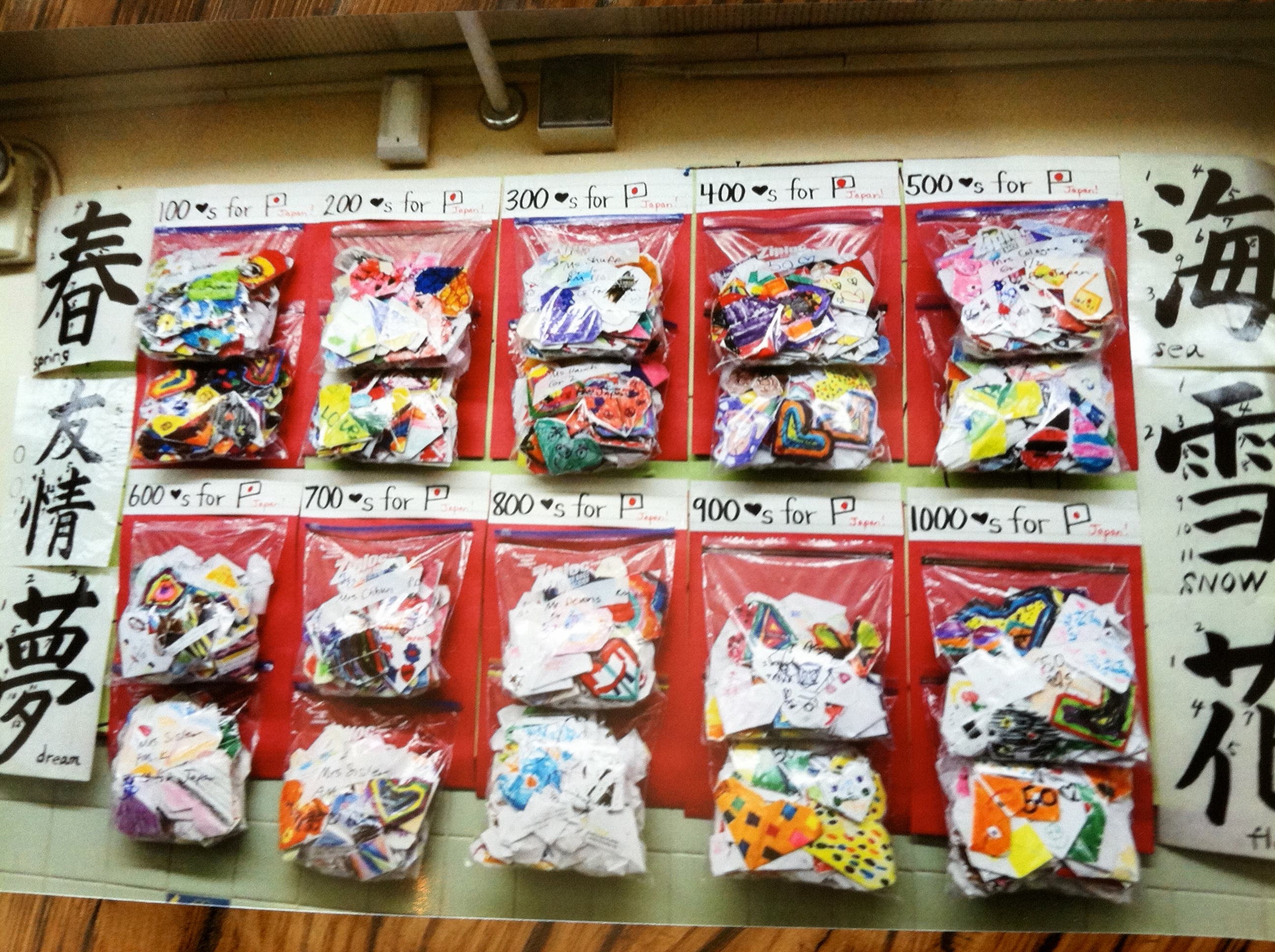
With her class and the rest of the school, Mattson set a goal to make 1,000 origami hearts to send to schoolchildren in Japan as a way of showing them that kids on the other side of the world are thinking of them.
Find out what's happening in Southwest Minneapolisfor free with the latest updates from Patch.
Mattson held two after school origami classes, open to any student in the school. She gave instructions on making the hearts to the other teachers in the school. Soon, it was a whole-school project with a poster outside the office keeping track of the progress.
The students couldn’t have been more excited to participate. The significance of the gesture, however small, was not lost on them.
Find out what's happening in Southwest Minneapolisfor free with the latest updates from Patch.
“I was walking in the hall and a kindergartner came up and tugged on my dress and said, “Ms. Mattson, Ms. Mattson! Did you send the hearts to my mystery friend yet? I’ll never see them but they know that I love them,” Mattson said.
And mystery friends they are, by necessity. The 1,000 origami hearts, made handily and decorated by the kindergarten through second-graders, were sent to an elementary school in Sendai, Japan last week. (School runs through the end of July in Japan.) Each heart had a sticker indicating it came from a student in Minnesota, USA. There was no mention that the hearts came from Lake Harriet Lower Campus, or even Minneapolis. For this act of kindness to remain just that, and not become a burden, it was important to stay anonymous.
In Japanese culture, receiving a gift creates a feeling of obligation to return a gift — even, it seems, during a time of crisis.
Mattson, who taught English in Japan for a year, originally got in touch with an American contact at a Japanese school where she hoped to send the hearts. To Mattson’s surprise, her contact asked her not to, saying that, after the earthquake, the school did not have money or time to return a gift.
“I said, ‘We don’t want anything in return; this is a random act of kindness. The kids don’t want anything back. But she said, ‘No, it’s the Japanese way; we’ll feel obligated,’” Mattson said.
Mattson then called on her friend Fuki Taira-Sweet, a translator from Japan who now lives in Minneapolis, to help.
Taira-Sweet said the hearts would have to be sent secretly. If the recipients didn’t know who the hearts came from, they wouldn’t feel obligated to return the gesture. She contacted a friend at a school in Sendai who agreed to take care of the package and to keep the origin of the origami hearts a secret.
Taira-Sweet, who has friends in the area dealing with the aftermath of the earthquake and tsunami, said she believes the gesture will be appreciated.
“They will be stunned because they will see the physical mass of these and then each one is so colorful, some have messages (...) I think that they will be very, very touched,” Taira-Sweet said.