Community Corner
The Best Commercial Flat Roof Systems for Kansas and Missouri Weather Conditions
Learn which roofing materials withstand Kansas and Missouri's severe weather while protecting your investment and reducing energy costs.
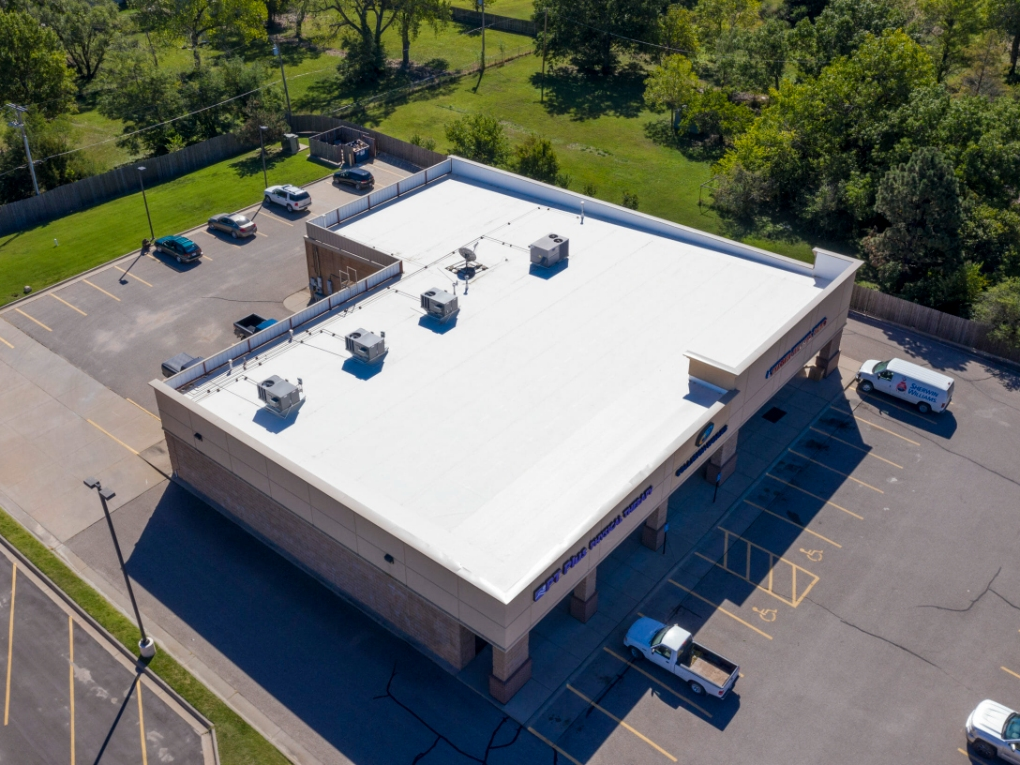
This is a paid post contributed by a Patch Community Partner. The views expressed in this post are the author's own, and the information presented has not been verified by Patch.
Severe weather across Kansas and Missouri puts commercial flat roofs to the test year-round, making material selection a critical business decision. Quality roofing systems protect buildings from hail damage, wind uplift and temperature extremes while reducing energy costs. Choosing an appropriate option ensures long-term durability and business continuity.
This guide draws on insights from Rhoden Roofing, LLC, a roofing contractor serving the Kansas and Missouri region with expertise in commercial, residential and multifamily projects. Its experience with regional weather patterns and commercial roofing systems informs these material recommendations.
Common Commercial Roofing Challenges in the Midwest
Commercial buildings in Kansas and Missouri face environmental threats that shorten roof lifespan and disrupt operations. Regional weather patterns create unique challenges for property owners selecting roofing materials.
Flat and low-slope roofs are particularly vulnerable because they expose large surface areas to the elements. Drainage problems cause water to pool after storms, creating ponding that accelerates wear and increases the risk of leaks. These roofs must also withstand significant temperature swings between scorching summers and freezing winters.
Severe hailstorms in the region produce hail ranging from golf-ball-sized to 4.75 inches in diameter, damaging building exteriors and roofs. These storms can also bring straight-line winds over 70 mph that tear at roofing membranes. Combined, hail impact and wind uplift can compromise even well-maintained roofing systems.
Why Material Selection Matters
Choosing the right roofing material can determine how well a commercial roof handles Kansas and Missouri weather. Hail, high winds and frequent temperature changes can all contribute to roof damage, while intense summer heat can increase cooling demands. A properly selected system can help address these challenges while providing reliable protection over the long term.
Initial installation cost is only one factor to consider. Although multilayer asphalt roofs can have higher up-front costs, property owners should also evaluate the total life-cycle cost of a roofing system, including energy efficiency, maintenance and expected service life. A durable, well-suited system can reduce the need for frequent repairs and help prevent weather-related damage from disrupting business operations.
The right material should match the building's design, use and exposure to local conditions. Choosing a system with appropriate weather resistance, energy performance and durability can help reduce long-term ownership costs while protecting the property and the business inside.
Choosing the Right Roofing Material for Midwest Buildings
Several flat roofing systems perform well in the climates of Kansas and Missouri, each with its distinct strengths. Understanding these differences helps property owners make informed decisions that align with their building's needs and budget.
TPO (Thermoplastic Polyolefin)
TPO is a popular single-ply membrane for commercial properties throughout the Midwest. According to Rhoden Roofing, LLC, TPO is the most common flat roof material in Kansas, Oklahoma and Missouri. Its combination of durability and energy efficiency makes it well-suited to commercial buildings that experience hot summer conditions.
Key Features
- Heat-welded seams: Seams are fused with heat to create watertight bonds that resist leaks better than adhesive-based systems.
- Reflective surface: White or light-colored membranes reflect sunlight and reduce cooling loads during summer months.
- Impact resistance: TPO membranes withstand hail impacts that would damage other roofing materials.
- Cost-effective installation: TPO systems offer competitive pricing while delivering reliable long-term performance.
PVC (Polyvinyl Chloride)
PVC roofing excels in applications where chemical resistance is essential, offering strong protection for buildings with unique environmental exposures. According to Rhoden Roofing, LLC, because of this resistance, PVC is a better choice for restaurants and other industries that vent grease or chemical vapors on the roof.
Key Features
- Chemical resistance: PVC membranes resist degradation from grease, oils and other chemicals that would damage alternative materials.
- Welded seams: Heat-welded seams provide continuous protection against water infiltration.
- Fire resistance: PVC roofing systems meet stringent fire safety requirements for commercial buildings.
- Long lifespan: Properly installed PVC roofs can last 20 years or more with appropriate maintenance.
EPDM (Ethylene Propylene Diene Monomer)
EPDM is a flexible synthetic rubber membrane. Its elasticity allows it to expand and contract with changing temperatures. This was previously considered advantageous, as the material bends rather than breaks under thermal stress. However, Rhoden Roofing, LLC explains that movement strains seams, especially at the perimeter or around rooftop HVAC units. Over time, repeated expansion and contraction weaken adhesive integrity and produce leaks.
Key Features
- Flexibility: The rubber membrane accommodates building movement and thermal expansion.
- Proven track record: EPDM has been used successfully on commercial buildings for decades.
- Lower initial cost: EPDM systems typically have a lower up-front investment than other membrane options.
Modified Bitumen
Modified bitumen is an alternative for roofs with heavy foot traffic, offering specific advantages in certain applications. For example, Rhoden Roofing, LLC, notes that modified bitumen is an asphalt-based low-slope roof system that withstands hail impacts well. However, it lacks heat-welded seams for continuous protection, as with membrane roofs.
Key Features
- Hail resistance: The thick, reinforced material absorbs hail impacts without puncturing.
- Durability for high-traffic roofs: Modified bitumen handles foot traffic better than single-ply membranes.
- Multiple installation methods: Systems can be torch-applied, cold-adhered or self-adhering, depending on project requirements.
- Granulated surface options: Mineral granules provide additional UV protection and improve weather resistance.
Frequently Asked Questions
Here are some common questions about commercial flat roofs.
How long does a commercial flat roof last?
Rhoden Roofing, LLC says most commercial roofs last 14 to 25 years, depending on material, installation quality and maintenance. With proper care, systems can reach 25 to 30 years, while neglected installations may fail in as little as 10 to 14 years.
How often should I have my roof inspected?
Rhoden Roofing, LLC explains that commercial roofs should be inspected twice a year and after major storms to prevent leaks and meet warranty coverage. Spring and fall reviews allow property owners to identify and address minor issues before they escalate. Post-storm assessments document damage for insurance purposes and verify the system remains watertight.
Protecting Businesses for the Long Term
Matching appropriate roofing systems to business needs and local climate conditions protects commercial property investments. Kansas and Missouri weather demands materials that withstand hail, wind and temperature extremes while delivering energy efficiency. Property owners who prioritize quality and maintenance schedules position their buildings for decades of reliable performance.
This post is an advertorial piece contributed by a Patch Community Partner, a local brand partner. To learn more, click here.