Politics & Government
'It Could Be Ugly': Experts Worried About Nevada Execution Drugs
"It sounds like a high-risk venture. Even trained people can't claim to know what's going to happen," said law professor Deborah Denno.

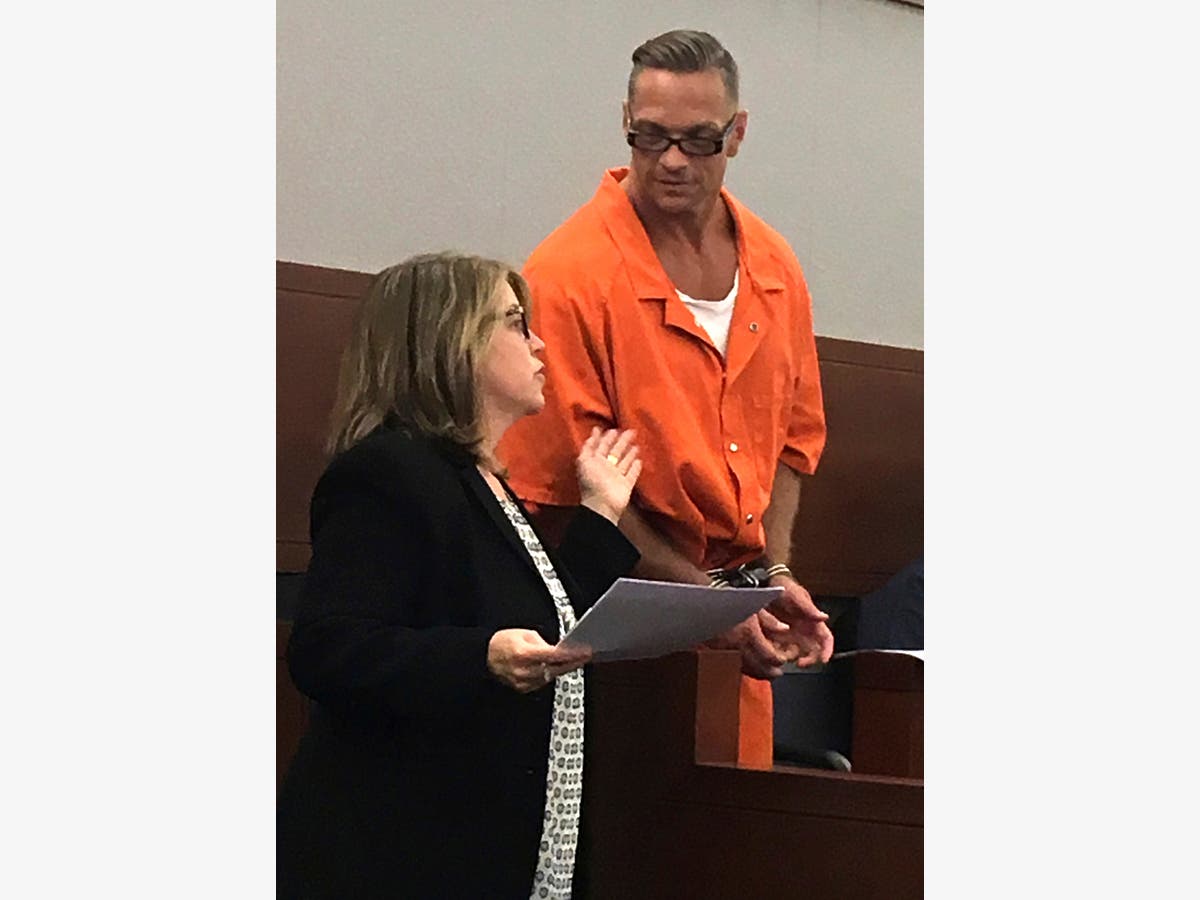
LAS VEGAS, NV — Nevada is turning to a lethal cocktail that has never been tried before to execute Scott Raymond Dozier, a 46-year-old death row inmate twice convicted of murder. Even though he volunteered to die — and indicated in court that he doesn't care if he suffers — some experts are balking at the state's trial-and-error approach, which would involve the sedative diazepam, commonly known as Valium, the painkiller fentanyl and the paralytic cisatracurium.
None have been used in executions before and Nevada hasn't performed an execution in more than a decade. Fentanyl is at the center of a nationwide opioid epidemic, with thousands of overdose deaths blamed on heroin laced with the synthetic opioid. It often enters the U.S. from China and other countries and was faulted in Prince's fatal overdose last year.
An execution using diazepam along with high doses of fentanyl, could risk complications such as vomiting, which is common in people experiencing fentanyl overdoses.
Find out what's happening in Across Nevadafor free with the latest updates from Patch.
"It could be ugly," said Jonathan Groner, a Columbus, Ohio, surgeon and lethal injection expert.
If the state's highest court approves the plan and it works without complications, the system could offer an alternative execution method to other states seeking hard-to-obtain drugs for lethal injections. But the drugs also carry serious risks, and their use in an execution could invite new shortages of medication used for surgery and pain relief.
Find out what's happening in Across Nevadafor free with the latest updates from Patch.
"It's an experiment," said Deborah Denno, a law professor and lethal injection expert at Fordham University in New York. "It sounds like a high-risk venture. Even trained people can't claim to know what's going to happen."
Using fentanyl for an execution could also spur drugmakers in the U.S. and abroad to pull the legal version of the drug from the market in protest, Groner said, which could cut the supply for other legitimate purposes.
A similar scenario occurred several years ago after Missouri announced a plan to become the first state to put an inmate to death using propofol, the powerful anesthetic blamed for the 2009 death of Michael Jackson. An outcry from the medical community helped scrap that approach.
Using a paralytic as a third drug could prevent body movements and disguise any suffering the condemned inmate might experience, Groner said.
The paralytic agent "pretty much ensures that if an execution is botched, we won't know it," he said.
The Nevada judge who delayed the execution of Scott Raymond Dozier cited concerns about "masking" pain and suffering when she balked at letting Nevada prison officials use cisatracurium.
Clark County District Court Judge Jennifer Togliatti said the state could go forward with the execution but only with diazepam and fentanyl.
An attorney representing state Attorney General Adam Laxalt rejected that idea and said state officials would appeal to the Nevada Supreme Court, despite the wishes of Dozier, a 46-year-old twice convicted of murder. He has volunteered to die and said in court that he does not care if he suffers.
A stay of execution was filed Tuesday, the same day Dozier's death had been scheduled. Written arguments have not yet been submitted to the seven-member state high court, and a court spokesman said Thursday it wasn't immediately known if justices would hold hearings or make a ruling based on court filings.
The Nevada execution protocol was developed by a state chief medical officer, an anesthesiologist, who resigned two weeks ago but said his departure had nothing to do with the execution.
If it goes according to plan, the diazepam will put Dozier to sleep, followed by the fentanyl, which will depress his breathing enough to kill him. Then the cisatracurium is supposed to make death a certainty.
But an expert medical witness testified that if anything goes wrong with the first two drugs, and Dozier is still alive when the paralytic is administered, he could be left aware, unable to move and suffering "air hunger" until he suffocates.
If Dozier experiences awareness, "it would be a horrific experience," said Dr. David Waisel, a Harvard University anesthesiology professor presented as an expert witness by federal public defenders challenging Nevada's three-drug protocol.
Some other death-penalty states are already following Nevada's lead in the hopes that the drug combination might provide a new execution method without the difficulty of obtaining drugs made by European companies opposed to the death penalty.
Nebraska last week proposed using the same three drugs along with potassium chloride — to stop the heart — for a yet-to-be scheduled execution next year.
The 31 states in the U.S. with the death penalty have wrestled with finding lethal injection drugs since pharmaceutical manufacturers stopped making some products available. Some executions using substitute drugs resulted in slow, apparently agonizing deaths.
Executions in Arizona were placed on hold after convicted killer Joseph Rudolph Wood took nearly two hours to die in 2014 after receiving a two-drug combination — the anesthetic midazolam and the painkiller hydromorphone.
Most death-penalty states are reaching for untried options, said Robert Dunham, executive director of the Death Penalty Information Center, a nonprofit that charts how states carry out executions.
"Sometimes they're guessing, and sometimes they're just desperate," Dunham said.
"Sometimes you can guess and get lucky," he added. "But we're in a position where everyone is just holding their breath hoping it doesn't go wrong."
By KEN RITTER and ANDREW WELSH-HUGGINS, Associated Press
Photo credit: Ken Ritter/Associated Press