Politics & Government
Jobs, Wages And Hard Work: New Hampshire Candidates Make Their Labor Day Case
Before the primary, candidates were asked: Why are you the best candidate for workers and what was the toughest job you ever had?

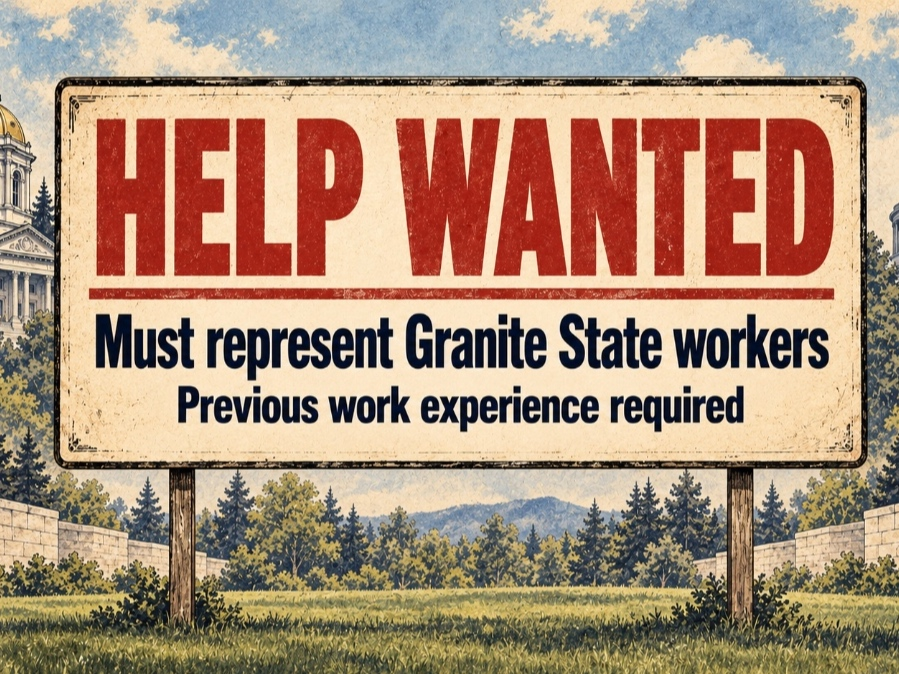
One started with a paper route. Another spent a summer cutting up cod in a fish market. All say they’re the best candidates to represent Granite State workers in Washington.
With the Sept. 8 primary almost here, NHJournal asked candidates in New Hampshire’s congressional races two Labor Day questions: Why are you the best candidate for workers, and what was the toughest job you ever had?
Find out what's happening in Across New Hampshirefor free with the latest updates from Patch.
Their answers revealed sharp ideological differences over what Granite State workers need from Washington. Democrats emphasized unions and higher wages, while Republicans focused on affordability, energy costs, and personal experience.
Nationally, employers added 162,000 jobs last month, while the unemployment rate remained at 4.1%.
Find out what's happening in Across New Hampshirefor free with the latest updates from Patch.
For New Hampshire workers, the Labor Day economic picture is more complicated. Granite Staters have one of the nation’s lowest unemployment rates, at 2.8%, and relatively high average weekly wages. But the state’s workforce was essentially flat over the past year; a separate federal measure showed employment declining, and the cost of housing, energy, and other necessities continues to erode workers’ gains.
According to the U.S. Bureau of Labor Statistics, an estimated 753,500 Granite Staters were employed in July, while about 21,900 were unemployed.
A separate BLS report released Friday found New Hampshire employment fell 1.2% between March 2025 and March 2026. Employment declined in each of the state’s three largest counties: 2.4% in Merrimack County, 1.4% in Hillsborough County and 1.2% in Rockingham County.
The state ranked 41st for wage growth, even as prices continued to rise.
Democratic U.S. Senate candidate Karishma Manzur said government officials have placed business interests ahead of employees.
“Too many lawmakers are prioritizing profits over people. We must reverse it,” Manzur said.
“Workers should have the power to negotiate for better wages, benefits, and working conditions. That means protecting unions, raising the federal minimum wage to at least $20 per hour, and making sure a full-time job can actually support a family.”
Manzur said one of her toughest jobs was working in restaurants for $4.25 an hour, with unpredictable hours and income. She also relied on public transportation, which she described as stressful and expensive.
“I learned very early on that just having a job and working hard doesn’t necessarily provide anyone with financial security,” Manzur said.
Manzur’s opponent, U.S. Rep. Chris Pappas, declined to respond, as did NH-01 Democrat Stefany Shaheen.
Shaheen’s opponent, Carleigh Beriont, a Harvard lecturer and chair of the Hampton Select Board, helped organize Harvard graduate workers and establish UAW Local 5118. She pointed to her experience organizing her workplace and helping negotiate its first union contract.
“I know what it costs to ask someone to sign a card when they’re afraid of retaliation or losing their job, and I know what it feels like to win,” Beriont said.
She cited support from the United Auto Workers and recognition from the Professional Fire Fighters of New Hampshire and the State Employees’ Association of New Hampshire.
And what was Beriont’s toughest job?
“I worked behind the counter in a fish market the summer after 8th grade. I had a broken arm and made minimum wage,” Beriont said. “By the end of summer, my cast was pretty gross, but I learned how to filet a variety of fish, answer questions from customers like ‘how much fish can I eat,’ and deep-clean a walk-in freezer.”
Scott Brown, a candidate in the Republican U.S. Senate primary, offered his life story rather than a specific labor-policy proposal.
“I have been working since I was 12. Nothing has been handed to me. It takes a lifelong worker to know how to help workers,” Brown said.
Brown said his family also gives him firsthand exposure to the pressures facing working families.
“As the only person who’s a grandfather of four who deals on a daily basis with my daughters who are struggling each day with the high cost of housing, child care, health care and numerous other issues, I believe it takes someone who’s working on these issues on a constant basis to actually understand them and represent us in Washington,” Brown said.
Brown’s Republican primary opponent, John Sununu, said inflation and its effects are the biggest challenge facing workers and pledged to address them.
“I’m focused on actually lowering energy and health care costs, keeping New Hampshire taxes low, and fixing health care instead of breaking it.”
Sununu blamed Pappas, the leading candidate in the Democratic Senate primary, and former House Speaker Nancy Pelosi for federal spending that he said helped drive inflation.
“New Hampshire workers deserve an independent leader who will always put them first,” Sununu said.
Sununu’s first job was delivering newspapers. He said it taught him to be accountable, to listen to customers, to arrive on time, and to keep working until the job was done.
In the NH-01 Republican primary, Anthony DiLorenzo also delivered newspapers, starting at age eight.
“But my hardest job was building Key Auto Group. 24-hour days, stress about payroll and caring for my employees, while balancing it all with a young family. It was extremely difficult and taxing work to turn one used car lot into 40 businesses and 1,000+ jobs.”
DiLorenzo said his experience running the business gave him skills that could benefit working Americans, particularly on health care.
“I have negotiated with health insurers for all of my employees, and have seen the disasters of our health care system firsthand.”
Fellow NH-01 Republican and business owner Hollie Noveletsky touted her support for “America First” policies that she said would protect U.S. workers from unfair international competition. She has also advocated “Buy American” initiatives that she said would help American workers.
Noveletsky identified her most difficult work as assisting survivors of Sierra Leone’s civil war. She traveled to the country three times, working at the Dr. Henry L. McCurtis Clinic for War Wounded Victims in Makeni and with women who had been held as sex slaves in the village of Yele.
Noveletsky described 15-hour days, long drives over dirt roads, paramilitary roadblocks, and facilities without running water or electricity. She contracted malaria during her second trip.
“But it wasn’t the conditions that made the trip difficult,” Noveletsky said. “It was listening to the stories of survivors that were so hard to hear. But bearing witness to another’s trauma is a moral imperative of caring that takes tremendous strength.”
The experience, she said, showed her both “the depth of cruelty that humans can sink to, and the strength of the human spirit in survivors.”
This story was originally published by the NH Journal, an online news publication dedicated to providing fair, unbiased reporting on, and analysis of, political news of interest to New Hampshire. For more stories from the NH Journal, visit NHJournal.com.