Politics & Government
Legislation To Protect Federal Experimental Forests Introduced By Goodlander, Pappas
The legislation bans the Secretary of Agriculture from closing any U.S. Forest Service Research and Development facility.

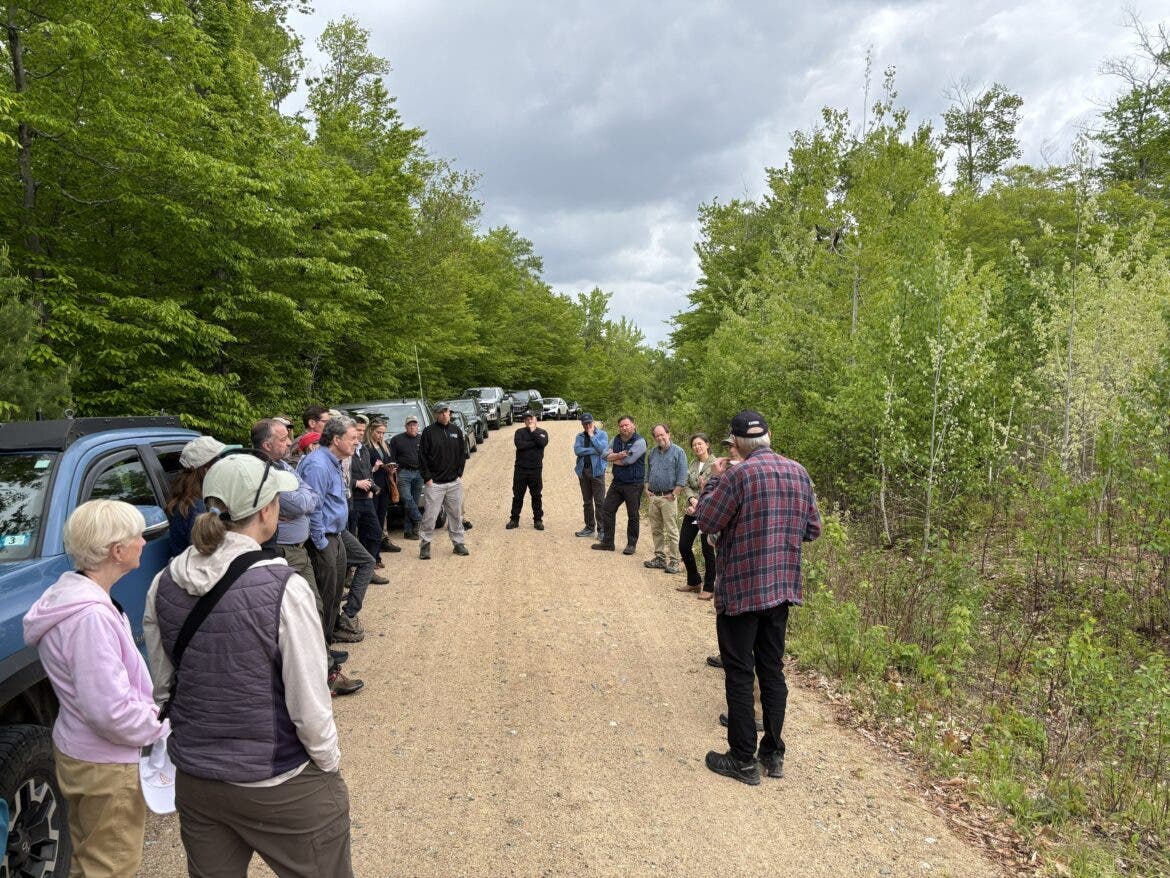
BARTLETT, NH — Three weeks after visiting the Bartlett Experimental Forest and hearing of concerns of the impacts of its potential closure, here, Congresswoman Maggie Goodlander, D-NH, has introduced legislation with Congressman Chris Pappas, D-NH, to save them.
On Thursday, the two brought forward the measure to prohibit the Secretary of Agriculture from closing any U.S. Forest Service Research and Development facility, including Experimental Forests, unless Congress expressly authorizes the closure.
Find out what's happening in Across New Hampshirefor free with the latest updates from Patch.
There are 84 such research facilities across the country and two are in New Hampshire.
An intense lobbying effort to keep the Hubbard Brook Experimental Forest in Woodstock was successful, with the help of Republican Gov. Kelly Ayotte while federal officials say they are studying whether the Bartlett facility should permanently close.
Find out what's happening in Across New Hampshirefor free with the latest updates from Patch.
“This bill is very simple,” said Goodlander. “No administration should be able to shutter world-class facilities that support our entire forest economy without the communities that rely on them getting a say. Granite Staters depend on these incredible forests to sustain good-paying forest economy jobs, protect our air and water, and keep the northern forests in our country healthy for generations to come.”
In a statement, Pappas said “our nation’s public forests provide us with clean air and water, allow for outdoor recreation, and are part of our way of life in New Hampshire...The Protecting America’s Forest Act would stop the administration’s attempt to reorganize the U.S. Forest Service which oversees our public lands and world-class research program. I’m glad to be leading this legislation with Congresswoman Goodlander, and I’ll continue to fight overreach by the administration and protect our great outdoors.”
The bill is welcome news to the state's land conservation and forestry community which have expressed concern that the Trump Administration's reorganization of the National Forest, and relocation of its headquarters from Washington, D.C. to Colorado would unravel and perhaps dismantle important work that has been done for almost 100 years, here on the predominantly northern hardwood forest.
In an opinion-editorial in the NH Union Leader, Thursday, Jack Savage, president of the Society for the Protection of NH Forests wrote that "If the closure of the experimental forests goes forward, essential scientific work at them will be profoundly diminished.
"It also introduces troubling questions like 'will knowledge acquired for managing forest for forest-based products, habitat, fire resistance continue to grow or stagnate? Will the department fill vacant positions at the experimental forests and other research centers? with the Forest Service even continue the research at Bartlett?'" Savage wrote.
The congressmen's' statement noted that Bartlett and Hubbard Brook are nationally recognized research assets that help foresters, landowners, scientists, and policymakers understand and manage northern forests. These facilities serve as the backbone of science-based forest management, and provide critical information to support conservation, climate resilience, wildfire preparedness, and the forest products sector across the country.
In April, Goodlander and Pappas joined 60 of their colleagues in a letter opposing the proposed reorganization of the Forest Service and calling for the effort to be halted. The members warned that the proposal would undermine the agency's world-class research program, worsen staffing and expertise losses, and put public lands and nearby communities at risk.
The Trump Administration has cited budgetary considerations and cost savings for the decision and has maintained that scientific work will continue.
But supporters of the work, which is now halted due to a lack of staff, told Goodlander that they are deeply troubled.
On June 1, Goodlander met with more than 50 forest experts and supporters of the Bartlett Experimental Forest and learned while
Hubbard Brook does world class ecosystem bio/geo chemistry work, Bartlett does applied forest research.
After a walk on the forest Goodlander said “just to be here with people who are in the forest industry, every stage of the supply chain, to hear from people who have been working in this forest since 1958, it’s incredible. You just can’t recreate this. As I was saying, it is hard from a distance to imagine how anyone would be orchestrating and executing a reorganization plan without actually coming here and talking to the people… You’ve got to see it. You’ve got to understand the relationships that are complex.
“…in the case of Bartlett, we are going to have to be creative, but also relentless. Because you just can’t allow these forests, which can’t be recreated, to be put on the chopping block,” Goodlander said.
“One of my big takeaways is being quiet does not help anyone in New Hampshire. We’ve got to be really clear about what’s not happening and where we want things to go,” Goodlander said.
Research over the last 30 years at Bartlett has included studies on habitat for amphibians, small mammals, song birds and bats.
Silvicultural threats, including invasive pests, have been studied to inform landowners on action to be taken to protect value and assets.
Hubbard Brook is known for its study of the forest impacts from acid rain and helped inform the decisions which led to the Clean Air Act.
Anthea Lavallee, executive director of the Hubbard Brook Foundation, said at the gathering with Goodlander June 1 that the science is still really important today, particularly as new wood products are coming to the market with new manufacturing technology.
“These new markets and supply chains as we build them stronger will revitalize our northern forest economy. Knowing how the forest is changing…is going to be essential for managing new wood products sustainably into the future,” Lavallee said.
Jasen Stock, executive director of New Hampshire Timberland Owners Association, said: "The entire forest community appreciates the Congresswoman's support. The forestry research done at the Bartlett Experimental Forest continues to inform hardwood forest and wildlife management decisions throughout North America."
This article first appeared on InDepthNH.org and is republished here under a Creative Commons license.