Politics & Government
New Hampshire Politics' Primary Math Problems: Democrat Extremism And Republican Apathy
Secretary of State David Scanlan predicted overall turnout would be higher for Republicans than Democrats. It was the exact opposite.

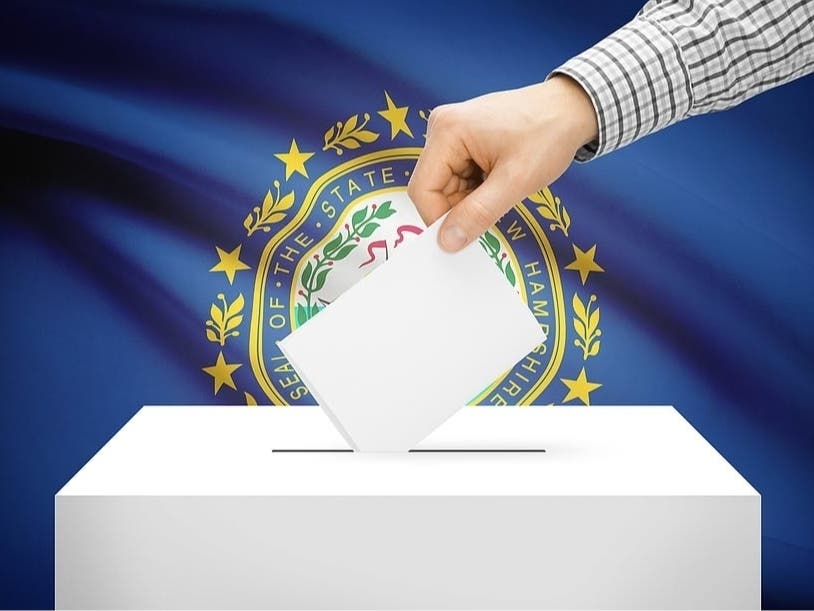
Political professionals will tell you that, in elections, you can’t beat math. But even after the races are over, the numbers can reveal clues about the political climate and the likely future ahead.
For example, after Tuesday’s New Hampshire primary, House Majority Leader Rep. Jason Osborne (R-Auburn) highlighted a number he believes reflects the current state of the New Hampshire Democratic Party.
Find out what's happening in Across New Hampshirefor free with the latest updates from Patch.
“Nearly one in three New Hampshire Democrats who voted yesterday voted for a socialist,” Osborne posted on social media. “That is not a fringe, and it is not a protest. It is a third of their party, roughly 50,000 people, and every one of them will be on the rolls again in November.”
Karishma Manzur, a far-left, anti-Israel radical who supports a government-run health care system and abolishing ICE, won around 49,000 votes in her U.S. Senate primary race against U.S. Rep. Chris Pappas.
Find out what's happening in Across New Hampshirefor free with the latest updates from Patch.
In the NH-01 race, Stefany Shaheen and Carleigh Beriont both ran as single-payer health care advocates who attacked candidates for taking campaign money from Americans who support AIPAC. Shaheen won with 29,000 votes, while Beriont received more than 18,000 votes in her third-place finish.
The New Hampshire Democratic Party’s shift to the left is clear.
Another key number from Tuesday, former NHGOP Chair Fergus Cullen said, is turnout for the two parties. Democrats had big numbers, while the GOP lagged.
“There were 78,000 votes in the NH-01 Democratic primary, but around 55,000 for the Republicans,” Cullen noted. “Actual votes are the best forecast there is, and it’s pretty clear. The Democrats have a lot of energy. It’s not all DSA — and besides, none of the DSA voters are going to vote for Sununu or DiLorenzo.”
New Hampshire Secretary of State David Scanlan predicted overall turnout would be higher for Republicans than Democrats, with 145,751 GOP ballots cast versus 103,024 Democratic ballots.
In fact, preliminary numbers show the reverse was closer to the truth. Some 150,000 Democratic ballots were pulled, compared to just over 100,000 for the GOP.
“President Trump has told his voters to act like he’s on the ballot this fall. Unfortunately for Republicans, it was the Democrats who got the message, generating a sizeable energy and enthusiasm gap Republicans need to close quickly,” said GOP strategist Jim Merrill.
On the other hand, Republican winners on Tuesday dominated their races, while Democratic winners underperformed. The most notable example is Stefany Shaheen, daughter of U.S. Sen. Jeanne Shaheen, who entered the race as the presumed front-runner a year ago but eked out a two-point win over Maura Sullivan with just under 37% of the vote.
Pappas had a numbers problem, too, GOP communications professional Patrick Hynes said.
“In Pappas’ late internal poll release, he was receiving 71% of the vote to Manzur’s 15%. On primary day, Pappas received 65% of the vote to Manzur’s 32%. This suggests nearly all the undecideds broke for Manzur in the final two weeks of the campaign.”
This story was originally published by the NH Journal, an online news publication dedicated to providing fair, unbiased reporting on, and analysis of, political news of interest to New Hampshire. For more stories from the NH Journal, visit NHJournal.com.