Politics & Government
NH House Rejects SNAP Funding Addition During Committee Of Conference Meeting
The House decided not to support a version of a bill to allocate $4.4M more for Supplemental Nutrition Assistance Program admin costs.

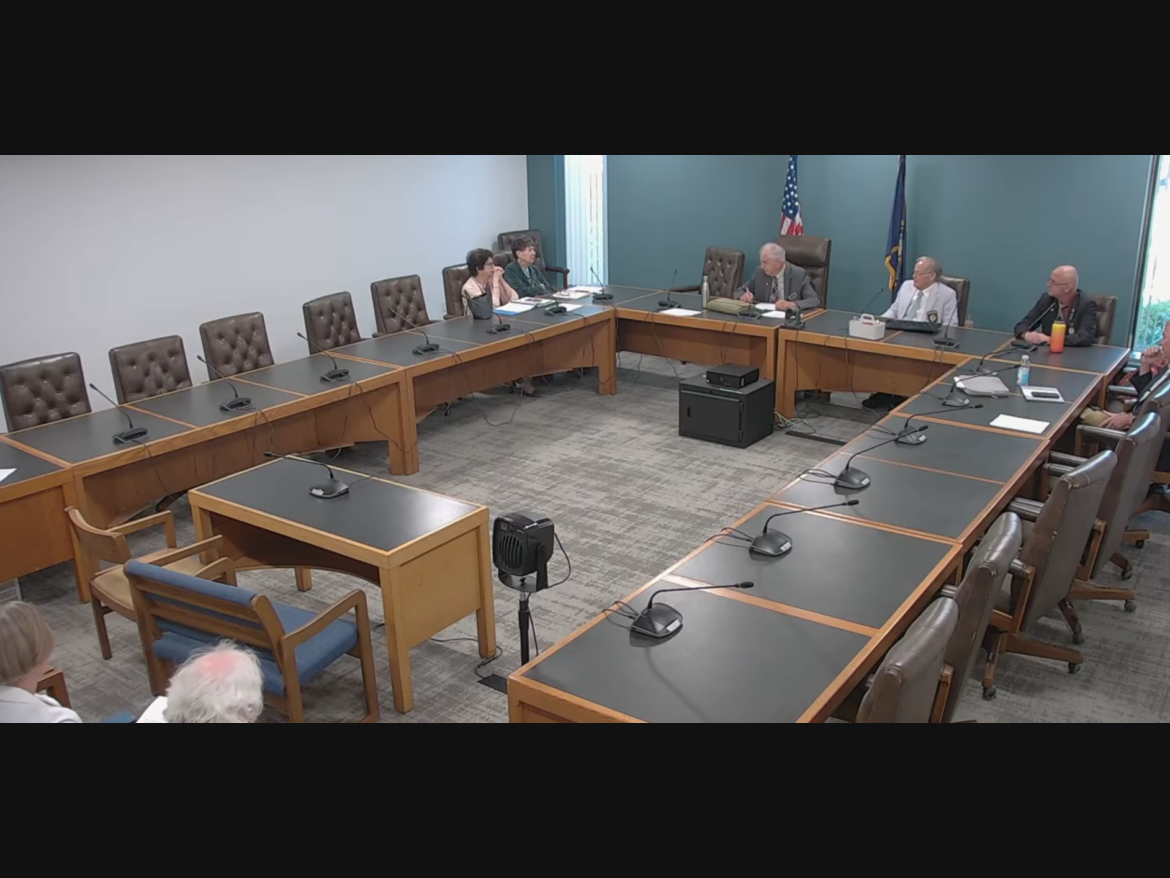
CONCORD, NH — The House decided not to support a version of a bill that would allocate $4.4 million for Supplemental Nutrition Assistance Program (SNAP) administrative costs during a committee of conference meeting Tuesday morning.
House Bill (HB) 1574 also authorizes school boards to extend free and reduced-price meal program eligibility for students with an individualized education program (IEP) who are already age 21 but attending school until the age of 22. It also directs the state to reimburse school boards from the general fund for free and reduced-price meals for such eligible students.
Find out what's happening in Across New Hampshirefor free with the latest updates from Patch.
“The biggest change between the House version and the Senate version is the addition of the $4.4 million for the SNAP administrative costs. Certainly, the federal government is changing the way they are doing SNAP. Right now, the administrative costs — instead of being 50-50 — are going to be 75-25%… This is, ‘Pay me now or pay me later,’” Sen. James Gray, R-Rochester, said.
Gray's comments referenced changes included in a federal reconciliation package signed into law on July 4, 2025 that raises states' share of SNAP administrative costs from 50% to 75%, starting in fiscal year 2027, according to an analysis by No Kid Hungry (which is comprised of program, policy, and innovation experts committed to ending hunger in the US by providing information and resources to stakeholders).
Find out what's happening in Across New Hampshirefor free with the latest updates from Patch.
He could not be reached after the meeting for further comment.
Gray continued that around 2027, the federal government is going to start reducing the amount of federal money that is reimbursed for SNAP benefits based on error rates. The error rates help measure the percentage of benefit dollars issued incorrectly, combining both overpayments (benefits distributed to eligible or ineligible households above standard amounts) and underpayments, according to the USDA Food and Nutrition Service.
“If you’re taking money away from the administration, guess what is most likely to happen to the error rate; it’s most likely to go up. When the error rate goes up in ’27, when they (the government) start doing what they are planning on doing, then our reimbursement for SNAP benefits is going to go down. It will hurt the children,” Gray said.
Christine Santaniello, associate commissioner of the New Hampshire Department of Health and Human Services (DHHS), said the error rate for fiscal year 2024 was 7.57%. She said they will not get the numbers for 2025 until the end of the year. Nationally, she said the error rate was around 10.19%, adding: “so, we were well below.”
“This program also had 70 positions unfunded in eligibility for this biennium, and has a current vacancy rate of 26.6%,” Santaniello said.
She said she could not give projections of what the error rate would be if they were to not receive the $4.4 million, but speculated that “it will only increase. If our error rate is over 8%, we will have to pay 10% of the SNAP benefits. That is for a partial fiscal year, which would be Oct. 1, 2027, it would be just under $12 million.”
Santaniello noted the following fiscal year — because it would have been a full federal fiscal year — would be under $16 million of general funds.
“It is the Senate’s position that spending $4.4 million to keep the people who are looking out for us is going to pay, and save big dividends in the future. The Senate, the way they have done things and sending over bills that have cost impact to them, this is within our projections that we will be able to do that,” Gray said.
According to the language of the bill: in previous correspondence with the Office of the Legislative Budget Assistant (LBA), the Department noted that in federal fiscal year 2024, federal SNAP benefits distributed to NH residents totaled $154.3 million, while in state fiscal year 2025, SNAP administrative costs totaled $24.4 million. SNAP administrative costs therefore equated to approximately 15.8 percent of benefit costs over these overlapping periods.
Rep. Daniel Popovici-Muller, R-Windham, said, “I understand they (DHHS) have a complicated job. God knows they are the largest agency that we have in the state, and they have the largest budget, but I do trust that they will allocate funds and prioritize funds correctly because the underlying bill — HB 1574 — is a very necessary bill that tries to spend about $70-80,000 to address a clear concern. It is also unfortunate that the language that’s in front of us is a Senate amendment, it is pretty much the HB 1750 which failed earlier in the House.”
Popovici-Muller said he did not believe the bill to be necessary because “the department would definitely prefer to have this appropriation, I completely understand that, but it is my belief that the department has the ability to allocate the correct resources, so the error rate stays to the level where the federal government will not penalize us.”
Rep. David Luneau, D-Hopkinton, said further cuts to DHHS are only going to continue to harm kids in New Hampshire. He said it’s well worth the state to not continue to put child safety in jeopardy and that “we should do what we can do to preserve our good error rate and not increase costs down the road.”
After a brief break for discussion, Committee Chair Rep. Rick Ladd, R-Haverhill, said the House position is 110% behind the first portion of the bill that was presented to the Senate, where money will be provided to support students who turn 21.
“However, we cannot support the version of the bill right now for an additional $4.4 million…This committee of conference, we cannot support the version of the Senate (amendment) right now, (so) it looks like the bill is dead,” Ladd said.
This article first appeared on InDepthNH.org and is republished here under a Creative Commons license.