Politics & Government
Polling Vindicated? NH's Blue Tsunami Gives Pollsters Bragging Rights
Pollsters may not have caught the full scale of Tuesday's "Blue Tsunami," but they accurately stated the GOP was going to have a bad night.

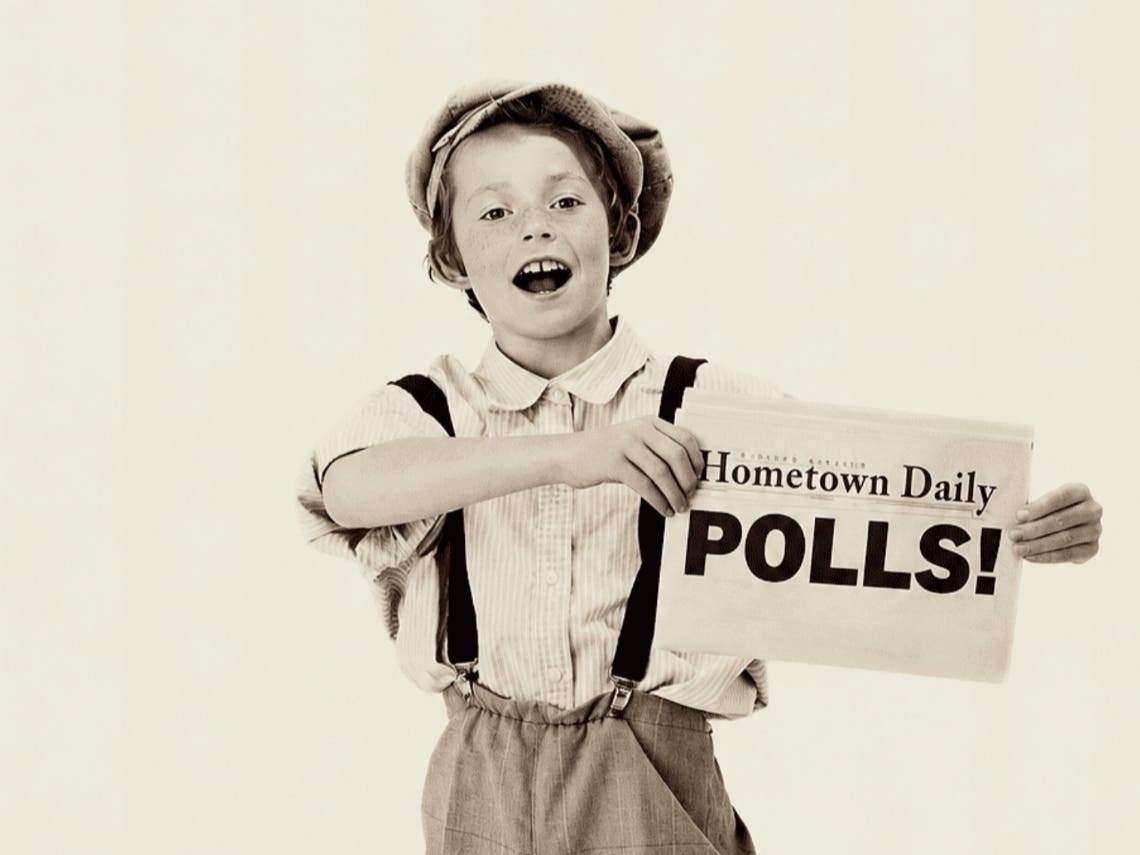
Disparaging the political polling industry has become as common a part of the election cycle as attack ads and campaign mailers. And major election misses, particularly involving undercounting support for President Donald Trump, have undermined confidence in the industry.
But the pollsters sampling New Hampshire voters in the 2026 cycle say their industry did a good job. In fact, ask UNH Survey Center’s Andrew Smith what grade New Hampshire’s pollsters deserve, and he’ll say an “A+.”
Find out what's happening in Across New Hampshirefor free with the latest updates from Patch.
Smith is particularly pleased with the UNH Survey Center’s performance in its final preelection poll.
“We were the only people that saw the magnitude of the lead that Democrats had in the [state] House, Senate and Executive Council,” Smith told NHJournal. “We were the only ones that saw that the governor’s race was going to be very close. We also saw that the Senate and the congressional races weren’t going to be that close.”
Find out what's happening in Across New Hampshirefor free with the latest updates from Patch.
He’s not alone.
St. Anselm College’s Neil Levesque, also executive director of the New Hampshire Institute of Politics, boasts that the college’s polling provided an “accurate picture of the results.”
While the pollsters may not have caught the full scale of Tuesday’s “Blue Tsunami,” they did accurately indicate Republicans were going to have a very bad night, and there were no major surprises.
Emerson College’s Spencer Kimball, a staunch defender of the polling industry, told NHJournal that the results validated the industry as a whole.
“Overall, it was a good night,” Kimball said. “Our national polling for nearly a half year showed that Democrats [had] a double-digit lead over the Republicans in the House popular vote, reflective of Tuesday night’s outcome.”
“We conducted a series of congressional district polls that found upsets for many sitting Republicans in districts Trump won, which appears to be the story of the election. Democrats outperformed 2024 margins among Hispanics, independents, and young voters, the shift among these groups larger than polls found in Texas, but generally reflected in our polling in Kansas.”
While Granite State political professionals often dismiss the UNH Survey Center’s results as unreliable, raising questions about its use of recurring panelists, Smith’s operation came closer than St. Anselm’s to the reported outcome in the U.S. Senate race. UNH recruits its panel through surveys sent to randomly selected phone numbers or addresses.
UNH’s poll, released two days before the election, showed Democrat Chris Pappas leading Republican John E. Sununu, 54% to 42%. On the other hand, St. A’s poll, released Oct. 22, showed Pappas leading Sununu, 50% to 43%.
The reported returns: Pappas led 56% to 42%.
In the New Hampshire governor’s race, Republican Gov. Kelly Ayotte defeated Democratic candidate Cinde Warmington to win her second term, with reported returns putting her ahead 51% to 47% — a four-percentage-point margin.
St. A’s showed Ayotte leading Warmington, 50% to 42% — an eight-percentage-point margin — while UNH showed a tie at 48% for both candidates.
Greg Moore, with Americans for Prosperity, is a vocal critic of public polling in general and UNH in particular.
“Polling is a lot easier in presidential years than in midterms,” Moore said of the industry’s performance this cycle. “In midterm wave elections, like 2018, 2010, 2006, you never know the size of the wave until it hits.”
Smith disagreed, arguing that UNH measured midterm elections more accurately than presidential elections.
“Midterm elections tend to be better than general elections,” Smith said. “The 2016 and 2024 elections were not good, but they were still not that bad in traditional senses. The problem was that both of those elections were very close, so people didn’t see that the candidate who was winning actually won.”
Smith said pollsters faced challenges getting Republicans to participate in both 2016 and 2020, but this cycle did not present those same challenges.
“We can tell, because our numbers were accurate, so the only way you know that that’s the case is by evaluating what actually happened,” Smith said.
Pollsters, Smith said, are constantly adjusting for numerous potential errors, ranging from sampling error to nonresponse and measurement challenges. Journalists, in particular, he said, are keen to overemphasize sampling errors when measuring accuracy.
“They don’t understand margins of sampling error because you have to add and subtract the margin of sampling error to both candidates’ estimates,” Smith said. “The rule of thumb is you have to double your margin of sampling error to be able to say if a candidate has a statistically significant lead or not.”
The biggest challenge everyone should keep in mind when reviewing polling data, Smith said, is that pollsters are more like psychologists than statisticians.
“Survey research is not a statistical science; it’s a psychological science,” Smith said. “We’re trying to get things in people’s heads that they may or may not even know.”
This story was originally published by the NH Journal, an online news publication dedicated to providing fair, unbiased reporting on, and analysis of, political news of interest to New Hampshire. For more stories from the NH Journal, visit NHJournal.com.