Business & Tech
Sale Pending On New Hampshire's Largest Land Parcel, Conn. Lakes Headwaters
Manulife Investment Management, a timber management investment organization, will buy the 146,400-acre Connecticut Lakes Headwaters Tract.

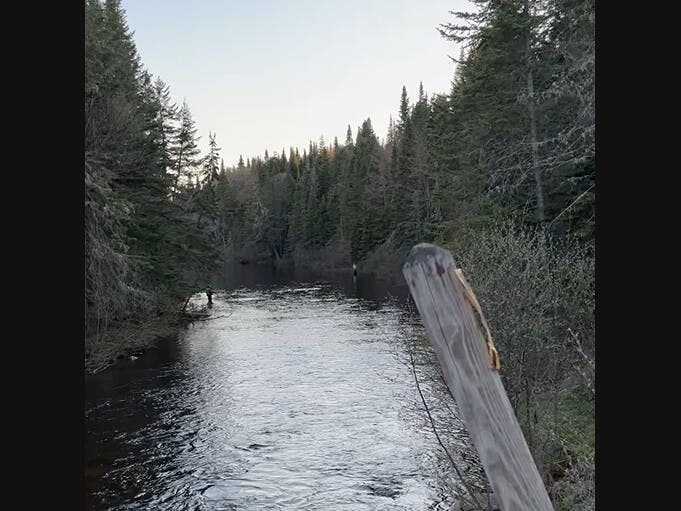
PITTSBURG, NH — Manulife Investment Management, a timber management investment organization, has signed a purchase and sales agreement to buy the 146,400-acre Connecticut Lakes Headwaters Tract from Aurora Sustainable Lands LLC in Pittsburg, Stewartstown, and Clarksville.
A price has not yet been disclosed.
Find out what's happening in Across New Hampshirefor free with the latest updates from Patch.
The state has a right of first refusal on this, the state's largest land tract, to match the offer in 45 days from last Friday and come up with a 10 percent deposit, state officials said.
Executive Councilor for District 1 Joe Kenney, R-Wakefield, confirmed the purchase and sale has been drafted, that he believes the sale price is between $50 million and $70 million and said now the "devil is in the details."
Find out what's happening in Across New Hampshirefor free with the latest updates from Patch.
It comes at the end of a legislative season where there is not a lot of millions of dollars kicking around the State House, he noted.
Elizabeth Bartlett, who is the spokesperson for Manulife Investment management, https://manulifeimlanduse.com/ declined comment Thursday.
According to its website Manulife Investment Management, (formerly Hancock Forest Management) is an organization that specializes in global farmland and timberland portfolio development with over 3.2 million acres in the United States under management and worldwide portfolio with tracts in New Zealand, Chile, and Brazil.
The seller, Aurora Sustainable Lands LLC, https://aurorasustainablelands.com/approach/ is a "carbon first" company that bought it along with many other holdings in a 2023 merger with other lands.
The company can make money both cutting the trees and holding them from a cut to help corporations meet their net zero carbon goals as a tradeoff to actually reducing their footprint.
Aurora assumed the tract, which in 2013 was enrolled in the California Air Resources Board Compliance Offset Program https://ww2.arb.ca.gov/our-work/programs/compliance-offset-program for 100 years.
The land, unbeknownst to the state, was placed in that program and did not discover the change until several years ago.
According to the state carbon registry Connecticut Lakes Realty manages 141,062 acres in carbon capture in Coos County, by far the largest of the dozen or so carbon programs in the state. There is currently a moratorium on new carbon programs and a bill signed into law by Gov. Kelly Ayotte prevents public lands from being in carbon sequestration programs.
Aurora has cut timber on the land but not at the previous rate of cut over the past 20 years, impacting jobs and local taxes and prompting legislation and public concern.
The state holds an easement on the entire parcel to ensure logging and recreation. It paid over $40 million more than 20 years ago when it was offered for sale by International Paper. That amount included outright purchase of 25,000 acres for a natural area in Pittsburg which is state owned and maintained by NH Fish and Game which abuts the tract.
It was not until about 2023 that North Country political leaders discovered that the land was enrolled in a carbon sequestration program where property owners can get paid to not log to help corporations get to zero emissions goals.
They learned because loggers were complaining that there was little work for them on the tract and Milan Lumber, which had procured logs to process, faced a furlough for a time. Selectmen in the towns also were noticing a drop in timber tax revenue.
Aurora responded with a payment in lieu of tax loss for the towns and has begun to pick up its pace of logging tract while still maintaining its carbon sequestration program.
Manulife, according to its website: "strive(s) to practice a land stewardship ethic that integrates the growing, managing, and harvesting of trees and crops with environmental conservation. Our practices protect soil, air, water quality, biological diversity, wildlife habitat, aquatic habitat, recreation and aesthetics. Sustainable practices allow us to actively manage and protect our clients’ investments in a way that maintains and enhances economic, community and natural resource values."
The Headwaters tract is a vast wild woodland which was logged hard for industrial paper and other products for the first half of the 20th century.
The land is is at the state's very tip and borders Canada in places. In the late 1990s the state responded with alarm when International Paper said it was for sale.
The land has been integral to the character of the North Country where the forest provided jobs and recreation, particularly snowmobiling and hunting.
With the guidance of then Gov. Jeanne Shaheen (now a U.S. Senator) and former U.S. Senator Judd Gregg, along with conservation groups, an easement was created for logging and recreation. This set up a long term plan for logging timber by the fee owners to help feed the mills and offer employment while still leaving the tract taxable rather than becoming a state park or federal land.
The plan never contemplated the advent of carbon sequestration which offers property owners a new way to make money off the land by not cutting it because it did not exist at the time.
A ten-year logging plan between the state and Aurora is almost five years in and not completed, though state officials said last Friday they believe they are close to an agreement for the five remaining years.
It would be cut at a rate of about 30,000 cords a year, a lot more than the past few years and more than Aurora's first offer of 20,000 cords a year which was rejected by the state.
Currently the tract is producing about 30,000 cords a year, an improvement, loggers say, and the proposed new agreement would allow for the towns to receive a voluntary payment in lieu of taxes if the timber tax amount falls below a 10-year average.
It is an assumable easement which would go with the property if sold.
Since the state took action there have been three owners but only one other waiver of first refusal.
The first owner was Lyme Timber which sold to the Forestland Group and the state waived its rights to buy.
It was the Forestland Group which placed the parcel in carbon capture on the California market in 2013.
The Forestland Group was merged with Bluesource, (now Aurora) along with many other formerly industrial landholdings totaling more than 1.3 million acres in North America.
Because it was a merger, there was no right of first refusal and no real estate transfer taxes paid.
This transaction would likely trigger a real estate transfer tax to the state.
Aurora recently received the offer from Manulife, rather than Aurora seeking a buyer. The purchase and sales agreement was signed last Friday, May 22 only hours after a citizen advisory group for the headwaters tract was told by officials of Aurora and the governor's office that a purchase and sales agreement was possibly in the offing.
Jasen Stock, executive director for the NH Timberland Owners Association, said the value to many multinational Timber Investment Management Organizations is its size and contiguous nature of the tract, noting that many of the largest tracts have already been sold and there is an economy of scale when appropriating such large tracts into an investment portfolio in one transaction.
He said he thought that an offer of $60 million was in the ballpark for its value and if the state had the money to pay for the right of first refusal it would be better spent on lands that are not protected, noting that the easement now is working well and that the public already paid for that which protects its primary interests in logging and recreation.
Kenney, who attended the Connecticut Lakes Headwaters Citizens Committee meeting in Pittsburg last week, said on Wednesday that in 2013 the state "lost track" of its oversight responsibilities and was unaware of the land being enrolled for 100 years in carbon sequestration.
He has been supporting legislation to create another form of the timber tax as it relates to carbon sequestration and has been part of an effort now underway in the legislature to study carbon capture and its impacts.
He said if the state waives its right of first refusal and allows the sale to move forward, the state Department of Natural and Cultural Resources needs to be more vigilant and observe its fiduciary responsibilities to the land.
"The appropriate questions were never asked," he said before the land essentially became a climate capture farm.
The governor's office did not respond to a request for comment.
This article first appeared on InDepthNH.org and is republished here under a Creative Commons license.