Politics & Government
U.S. Supreme Court Ruling Shakes Certainty In New Hampshire Mail-In And Absentee Ballots
The Secretary of State's office urged voters who knew they were going to vote by absentee ballot to request and return their ballots.

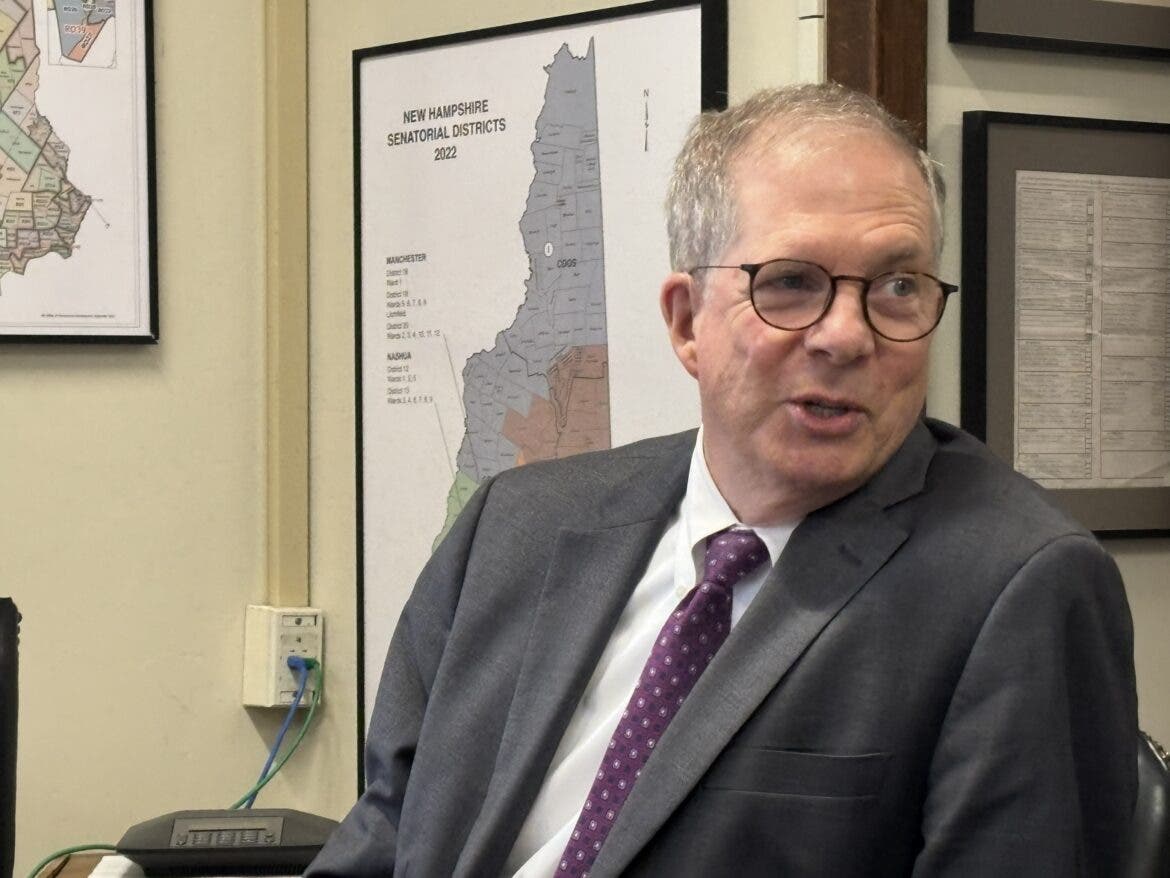
Secretary of State David Scanlan said Tuesday that his office is monitoring election litigation and could not say whether the recent U.S. Supreme Court ruling on mail-in ballots will affect absentee ballots in New Hampshire ahead of the Sept. 8 primary or Nov. 3 election.
“At the national level there is still litigation pending over the President’s executive order related to mail-in ballots. Implementation of the Executive Order for the 2026 elections is uncertain,” Scanlan said in a statement. “We are monitoring these actions along with the Attorney General’s Office and will make further comment when warranted.”
Find out what's happening in Across New Hampshirefor free with the latest updates from Patch.
The Secretary of State’s office urged voters who knew they were going to vote by absentee ballot to request and return their ballots as soon as possible.
On Monday, the U.S. Supreme Court ruled on one of two cases challenging President Trump’s executive order restricting mail-in voting, lifting the injunction on the executive order by ruling that states’ did not yet have standing to sue.
Find out what's happening in Across New Hampshirefor free with the latest updates from Patch.
The other injunction comes from a case filed by the League of Women Voters of Massachusetts against the Trump administration for creating rules that restrict mail-in ballots. Those rules were finalized by the U.S. Postal Service on August 21.
On the recently lifted injunction, the League of Women Voters (LWV) remained sanguine that their case continued to block implementation of the executive order:
“We’re disappointed by this interim ruling by the Supreme Court in the separate but related case brought by certain states. However, the district court’s order in our case blocking USPS from proceeding with the Rule remains in place, and we will fight to keep it that way or to secure new relief,” the LWV said in a press release. “It is important to note that today’s ruling only addresses the timing of the state plaintiffs’ challenge. It does not affect any voters’ ability to cast a mail ballot. The Supreme Court did not rule on the merits of the executive order, and made clear: ‘If the Postal Service’s final rule harms the States, they may challenge that rule.'”
New Hampshire doesn’t have universal mail-in voting, but does allow for voters to cast ballots by mail if they qualify for an absentee ballot. Reasons voters can give to qualify for a mail-in absentee ballot are disability, illness, working, caregiving, religious observance, incarceration for a misdemeanor or pre-trial, a severe winter storm warning.
However, absentee ballots for elections for federal office travel through the U.S. Postal Service. Under the new rule that was finalized on Aug. 21 and would take effect immediately if all injunctions were lifted, election officials would need to create a list of all voters, register it through a federal portal, and redesign ballot envelopes to include barcodes. If a state didn’t follow these rules, the USPS could refuse to take those ballots.
Liz Tentarelli, president of the League of Women Voters of New Hampshire, said the Sept. 8 state primary should not be affected because the rule excludes primary elections and because no federal voter list currently exists against which postal workers could check absentee ballots.
“I don’t think the primary is the issue, but none of us will know what will happen in November at this point,” Tentarelli said. “There will be court cases.”
However courts rule and agencies implement the rulings, Tentarelli said she is more concerned about the voter confusion and doubt, which is a form of voter suppression.
“People will be reluctant to drop those absentee ballots in the mail,” Tentarelli said. “People in retirement communities — are they either not going to vote or make a superhuman effort to get to the polls? Will the whole community have to rally around people without transportation? That’s voter suppression. Doubt is voter suppression.”
Currently, there are no lists of citizens against which election officials can check and there are no rules issued by the state on that front and absentee ballots are slowly trickling in, Tentarelli said.
The Secretary of State’s does have a section of their website at app.sos.nh.gov where voters can check their registration, the status of requested ballots and track the progress of their absentee ballots after they are submitted.
This story was originally published by InDepth NH.