Politics & Government
Would Warmington Block Federal Education Scholarship Funds For NH?
The new program would give taxpayers a nonrefundable, dollar-for-dollar income tax credit of up to $1,700 for qualifying donations to orgs.

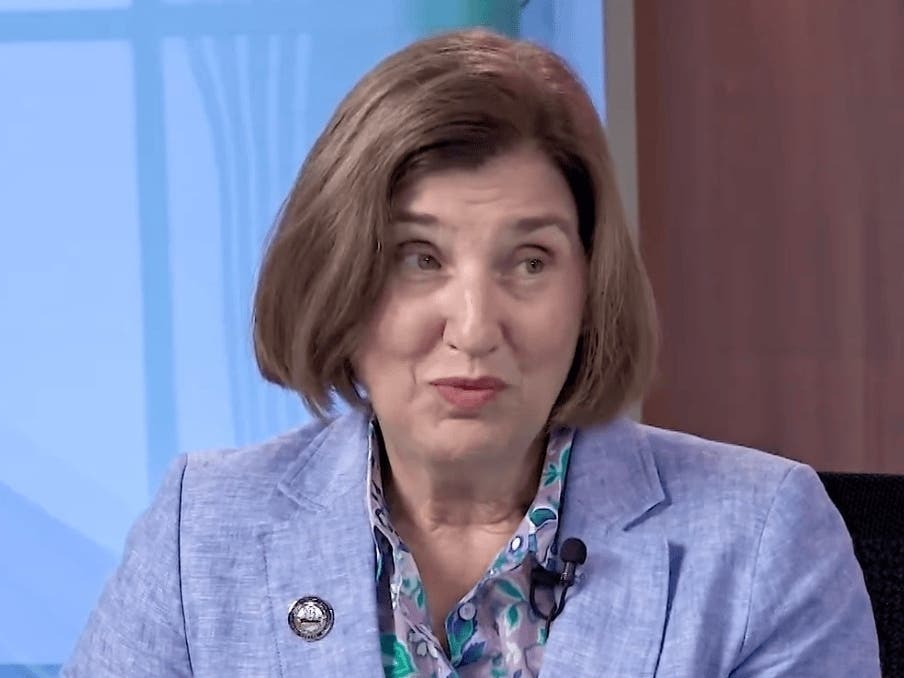
In 2021, Democrat Cinde Warmington was the only executive councilor to vote against accepting $10.1 million in federal education funding because it would benefit charter schools.
Now that the Trump administration has released details regarding the Federal Scholarship Tax Credit program, families hoping to use those scholarships are asking if a governor Warmington would try to pull New Hampshire out of the program, joining other blue-state governors in rejecting the funding.
Find out what's happening in Across New Hampshirefor free with the latest updates from Patch.
The Treasury Department and IRS released proposed regulations last week, along with temporary rules establishing procedures for the program’s Jan. 1, 2027, launch. The guidance outlines how the scholarships can benefit both students attending private schools and those who remain in public classrooms.
Find out what's happening in Across New Hampshirefor free with the latest updates from Patch.
“This guidance gives New Hampshire much greater clarity as we prepare for the new tax credit launch in January, and it reinforces just how impactful this opportunity will be for students,” said Kate Baker Demers, executive director of Children’s Scholarship Fund New Hampshire.
The new program would give taxpayers a nonrefundable, dollar-for-dollar federal income tax credit of up to $1,700 for qualifying cash donations to scholarship-granting organizations. Under the proposed rules, married couples filing jointly could claim up to $3,400 in deductions.
Those donations would be used to fund educational opportunities, from private school tuition to books to additional tutoring, etc., for New Hampshire students.
Republican Gov. Kelly Ayotte signed legislation securing New Hampshire’s participation, making it the only New England state to opt into the scholarship program and allow local families to access the funding. Ayotte also signed legislation expanding access to the state’s Education Freedom Accounts, which currently serve more than 12,500 students.
According to IRS data, Massachusetts, Vermont, Maine, Connecticut and Rhode Island were absent from the agency’s roster as of mid-September. Would a Governor Warmington work to have New Hampshire abandon the scholarship program and join them?
Warmington, a vocal opponent of school choice, has vowed to “nuke” the EFA program. Asked about the federal scholarships, which are entirely funded by federal tax credits and use no state or local funding, Warmington declined to answer.
Across the state line in Massachusetts, opponents of education choice are urging Democratic Gov. Maura Healey to keep her deep blue state out of the new scholarship program.
The Massachusetts Association of School Superintendents released a statement Sept. 29 warning that the program would favor private schools and could accelerate the decline in public school enrollment.
Mary Bourque, the association’s executive director, said, “The deck is heavily stacked against public schools.” The association argues that public school students would have more limited uses for the scholarships and that disparities between wealthier and poorer communities could grow.
Supporters of the scholarships echo Warmington’s recent statement that affluent parents “already have school choice” and, therefore, refusing to opt in hurts low-income families, not the wealthy. (Warmington sent her own children to the elite Tilton School for secondary education, an independent boarding and preparatory school in New Hampshire. Tilton charges $47,000 for day school and nearly $75,200 for boarding school.)
In Vermont, Republican Gov. Phil Scott signed legislation in June limiting eligible uses to benefit public school students and students attending independent schools eligible for public funding, among other requirements.
Those restrictions could conflict with the proposed federal rules, which say participating states cannot exclude otherwise qualified scholarship organizations by imposing additional restrictions on school types or eligible expenses.
“Education freedom is about recognizing that every child is different and putting more resources within reach of families,” said Demers. “Whether a student needs tutoring in a public school, specialized services, educational technology, or help accessing a different educational setting, the goal is the same: helping that child thrive.”
This story was originally published by the NH Journal, an online news publication dedicated to providing fair, unbiased reporting on, and analysis of, political news of interest to New Hampshire. For more stories from the NH Journal, visit NHJournal.com.