If you followed Bedford Town Council in 2013, then you are probably aware that the Council emerged from its annual Retreat with renewed commitment to addressing Bedford’s road conditions. Bedford maintains almost 200 miles of roads – among the highest in the state -- from the four-lane swaths of South River Road to the long and frequently-traveled “collector roads” that bring us from one side of town to the other to the “local roads” on which most of us reside.
In 2003, the Town faced an estimated $50 million of backlogged repairs on over 130 miles of roads in failing condition. Over the past ten years, using a combination of long-term borrowing, the annual maintenance budget, and developer contributions, the backlog has been reduced to about 60 miles of roads at a repair cost that exceeds $30 million.
Since 2003, the cost of asphalt and diesel fuel has doubled, so funds for road repairs go half as far as they did ten years ago. The longer roads are allowed to deteriorate, the higher the cost of repair. So, while we have cut in half the number of roads that need critical attention, the remainder still represents about one-third of our total road miles and about one-third of our residential population. Ask the residents on those 60 miles of roads if they think we’re better off today, and they’ll say no.
Find out what's happening in Bedfordfor free with the latest updates from Patch.
Over the course of this summer, the Town Council, Town Manager, and Public Works Director studied the problem and agreed to pursue a $30 million bond for road and related infrastructure on those 60 miles of roads, which include both collector and local roads. The Public Works Director compiled a list of roads (available on the Town’s website) in various stages of disrepair that we will fix over the seven years following issuance of this major bond. The intention is to seek voter authorization in March 2014 and to issue the bond in $10 million increments over the next six years, with construction work occurring from 2015-2022. At the same time, to maximize return on investment and avoid slipping into another vicious cycle of deferred maintenance, the Town will have to increase its annual maintenance budget to stay current with inflation (the $1 million annual maintenance budget has not increased since 2003, despite higher costs).
There are two types of improvements that these roads will see if the bond is approved: about 34 miles need a full rebuild or “reclaim and overlay,” in which the existing pavement is reclaimed, drainage repaired or upgraded, and a new asphalt top is placed for a smooth surface and restored grades for effective drainage and runoff; and about 25 miles will receive a less costly “structural overlay” in which sections of the road are repaired and the entire road receives a new asphalt top. These improvements represent about $27 million of the bond, with $3 million reserved for bridge repairs and replacements.
Find out what's happening in Bedfordfor free with the latest updates from Patch.
I’ll finish this column by trying to answer some of the questions we’ve heard over the last year:
- If the bond is approved, when will the Town fix my road? We have posted on the DPW page of the Town’s website the list of roads to be covered by this bond. While we cannot assign a definite schedule more than a year out, we believe that the bond will cover necessary repairs to all of these roads. The roads will be worked on in a priority informed by road condition and location, which will be generated in part through our pavement management system. Given that the work under the proposed road bond will not begin until 2015 (if approved, 2014 will be dedicated to planning and design) and will take a good six years to complete, it is likely that other roads not currently on this list will require major repair during that time period or that identified roads will require a higher level of repair than currently anticipated, which may result in the delay of attention to other roads. As we approach each construction season, we will keep the Town Council and residents informed of the upcoming road projects.
- Why can’t you tell me exactly when my road will be fixed? While we have a general idea of roads that we would like to fix in the current and next construction seasons, road conditions can change rapidly, especially once they have begun to deteriorate. We inspect roads at least annually and receive feedback from our highway maintenance crews about any changes that have occurred since last inspection. Our concern about projecting a construction schedule beyond one year is that roads that we had not planned on addressing could, in one year’s time, move ahead of another road that we had intended to repair. While are confident that we will be able to address all of the roads on this list within the 6-7 years following bond approval, we do not want to make promises with respect to specific roads that we cannot keep due to changing road conditions, weather, price increases, or other unanticipated factors.
- Why borrow? Why not increase the annual budget? Once we identified the magnitude of the problem, we realized that it could not be addressed with annual increases in the operating budget. To get ahead of the repair cycle, we need to spend a minimum of $5 million per year over the next six years. That is the only level of spending that will allow us to complete repairs needed town-wide and get on a sustainable path of annual maintenance. The annual operating budget could not support that level of increase -- a $5 million increase to the operating budget would be a $1.50 increase to the tax rate every year for six years, almost tripling our current tax rate by year six. Under the current bond proposal, the Town would issue three 15-year bonds, which allows the cost to be spread out over a longer period of time and shared with future users of the roads. Under the proposed bond, the cost of the debt in the first two years will be about 30 cents on the tax rate ($120 per year for a $400,000 home), increasing to 60 cents in years three and four and to 90 cents at its highest in years five and six. During this time, other debt will be paid off that offsets the tax rate impact of the road bond.
- Why seek $30 million all at once? Why not three $10 million bonds? Our concern about seeking three separate authorizations for $10 million each is that once the first $10-20 million is spent and the majority of roads in town have been improved, it will be more difficult to receive two-thirds voter approval for the last bond to finish the project. There are about 2000 homes (approximately 6000 voters) on the roads in most need of repair. As roads are improved, the number of voters living on the unimproved roads shrinks, thereby posing a greater challenge to achieving the required two-thirds voter approval at the polls.
- How do we make decisions about what roads to repair and at what level? The Town owns a pavement management software system that reports on pavement condition based on inputs such as age, construction material, and speed and number of vehicles. Every spring, when roads are at their worst, the Public Works Department updates the system with the results of field inspections. During planning stages, the Public Works Director considers available funds coming from the operating budget, bonds, and development fees, and he enters these figures into the system to help guide our road projects for the next construction seasons. Based on road conditions and available funds, the pavement management system gives us a list of roads in order of “benefit value” – that is, where the investment in our roads will have the greatest benefit. Time after time, the pavement management system tells us that the highest benefit value comes from our collector roads: those roads that handle the highest, heaviest, and fastest daily traffic. Now that the majority of collector road miles was addressed using the 2011 infrastructure bond, we can refocus our attention on local roads.
- Is our approach to road repairs sound and appropriate? This strategy was supported by an analysis performed by CMA Engineers, an independent engineering firm engaged by the Town Council in 2008 to evaluate the Town’s roads program. CMA’s report (available upon request) found that the Town’s “selection of roadways for rehabilitation is rational, objective, and non-biased based on the application of the software and logical judgments.” The 2008 report also stated that “continued investment at or near historic rates would accomplish [the goal of moving Bedford’s roadways from “rehabilitation” to “maintenance” status].” That investment did not take place from 2006-2011, when voters did not approve a series of road bonds, so this proposal aims to put us back on track.
- If we approve the authorization and all these roads are repaired, how long before we are asked for more money for roads? If this $30 million bond is approved and construction works stays on schedule through 2019, then by that point all roads in Bedford will have been constructed or upgraded during the last 20 years. This puts us back to the beginning of our road maintenance cycle which, if funded consistently and adequately, should avoid the need for another major bond in the foreseeable future.
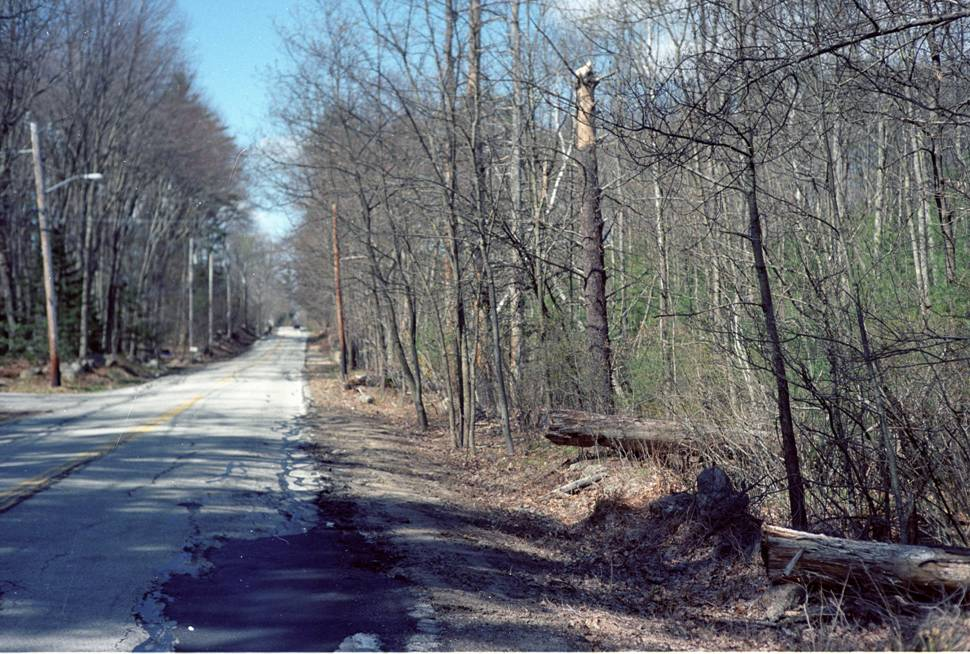
We’ve had numerous conversations with unhappy residents on some of those 60 miles of roads and we encourage you to speak to your friends and neighbors on these roads. Take a drive down Old Farm Road or Cambridge Road or Birkdale Road or Normand Circle. Go running on Worthley Road and try to find a flat surface. These roads cannot go another ten years without improvement. Postponing this work would be a disservice not only to the residents on these roads, but to all taxpayers who will be expected to pay the higher cost of deferred maintenance.
The public hearing on the $30 million road bond is scheduled for the Town Council meeting on Wednesday, February 12, 2014 at 7:00 PM. Voting will take place on March 11, 2014 from 7 AM –7 PM at Bedford High School (absentee voters should check the Town Clerk’s website in mid-February for absentee ballot information). Budgetary Town Meeting will take place on Wednesday, March 12, 2014 at 7:00 PM, and all voting must take place in person (no absentee voting per NH state law).