Politics & Government
Cline: A Local Tax Cap Lesson From… Wait, Where?
Think tank president: Local governments there didn't wither away; Prop 2 1/2 didn't shrink them at all; property tax revenues increased.

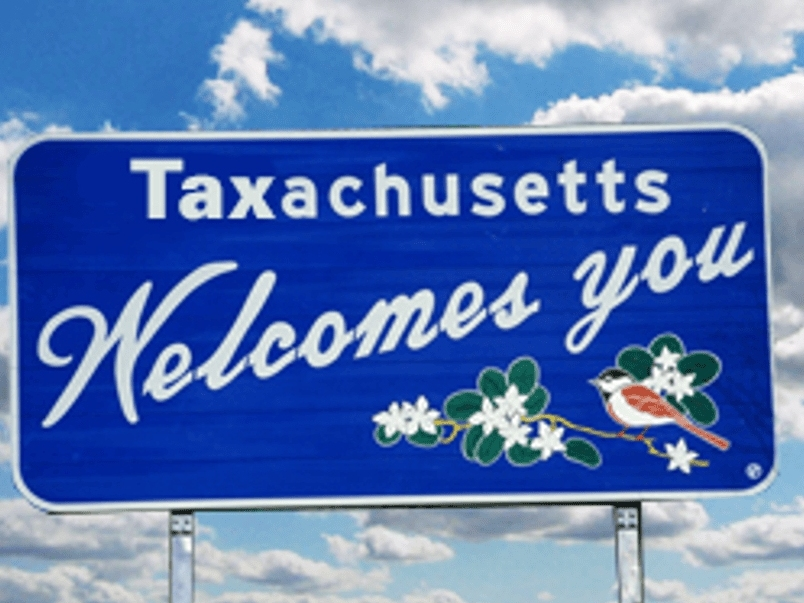
The 1980 Reagan Revolution had lasting effects that can still be felt today, even as low as the local government level. In one state, voters doubled down on anti-tax sentiment that year, supporting Ronald Reagan for president while imposing a permanent cap on property tax increases.
A successful tax cap imposed in 1980 in a Reagan-voting state would seem like an obvious example for tax cap opponents to cite during New Hampshire’s regular debates over whether to limit local property tax increases. Just imagine how those local governments shriveled away over the past 45 years.
Find out what's happening in Bedfordfor free with the latest updates from Patch.
Yet the state is seldom mentioned in New Hampshire’s tax cap debates.
That’s because the state is Massachusetts.
Find out what's happening in Bedfordfor free with the latest updates from Patch.
Local governments there didn’t wither away and die. The cap didn’t shrink them at all. Local property tax revenues more than doubled.
Neither side’s most dire or most hopeful predictions came true. And that’s really useful when considering whether New Hampshire should adopt some form of property tax cap.
In 1980, Massachusetts voters chose Reagan over Jimmy Carter and approved Proposition 2 1/2, which capped at 2.5% the rate at which property tax revenues could grow from one year to the next.
Proposition 2 1/2 included two important exceptions. Local government capital outlays and new growth in the property tax base were excluded from the cap.
A Tax Foundation report last year showed that property tax collections in Massachusetts more than doubled from 1984-2023, after adjusting for inflation and population growth. But property tax revenues “would have risen far faster still” without the cap, the report concluded.
Shortly after he lost 40 states to Ronald Reagan’s successor in 1988, Massachusetts Gov. Michael Dukakis convened a task force to look for ways to increase local government revenues.
The task force recommended some modifications to Proposition 2 1/2, but firmly advocated keeping it.
“The discipline that Proposition 2 1/2 imposed on the property tax … is an important element of the local tax structure,” the report concluded. “As a tax on shelter, property taxes should continue to be constrained and the decline in burden caused by the 2 1/2 limit protected. Both the ceiling on the tax rate and an annual limit on tax increases should be retained.”
The only other New England state with a statewide property tax cap is Rhode Island. That state releases an annual report on the cap, which shows that it is effective at slowing the rate of growth of property taxes too.
New Hampshire authorizes municipalities to limit property tax increases, but has no statewide cap. That would still be the case if a much-misunderstood tax cap bill, House Bill 1300, becomes law.
Instead of imposing a statewide cap, HB 1300 would merely require that voters be given the option to limit school district revenue increases to the rate of inflation and administrative costs. School districts account for more than 70% of local property taxes in New Hampshire. As the Josiah Bartlett Center has shown, their spending has risen dramatically this century as enrollment has plummeted.
In the House version, these caps would apply only to the next school budget. To keep them, voters would have to approve them at every general election. They would never become permanent.
In the Senate version, voters would have one chance to cap school district tax revenues this fall.
Unlike in Massachusetts, HB 1300 would include increases in taxable property value due to new construction. That likely would prevent the more than doubling of real property tax revenues that happened in Massachusetts from 1984-2023.
Andrew Cline is president of the Josiah Bartlett Center for Public Policy. He wrote this for NHJournal.com.
This story was originally published by the NH Journal, an online news publication dedicated to providing fair, unbiased reporting on, and analysis of, political news of interest to New Hampshire. For more stories from the NH Journal, visit NHJournal.com.