Politics & Government
3,000 NH Businesses Apply For Coronavirus Main Street Relief Fund
Governor "very impressed" as restaurants open for outdoor seating; expects Executive Council to approve spending; some outdoor rec reopens.


CONCORD, NH — In just a few days, thousands of businesses across New Hampshire filed applications to tap into $400 million in coronavirus relief and recovery funds, according to Gov. Chris Sununu.
The creation of the Main Street Relief Fund was announced Friday and since that time, about 3,000 small businesses, with revenues under $25 million, have filed applications to tap into the fund. Businesses citing lost revenues due to the COVID-19 outbreak can file a simple application online and then, if they qualify, use the funds to pay bills, pay mortgages, and property taxes, or however the businesses choose.
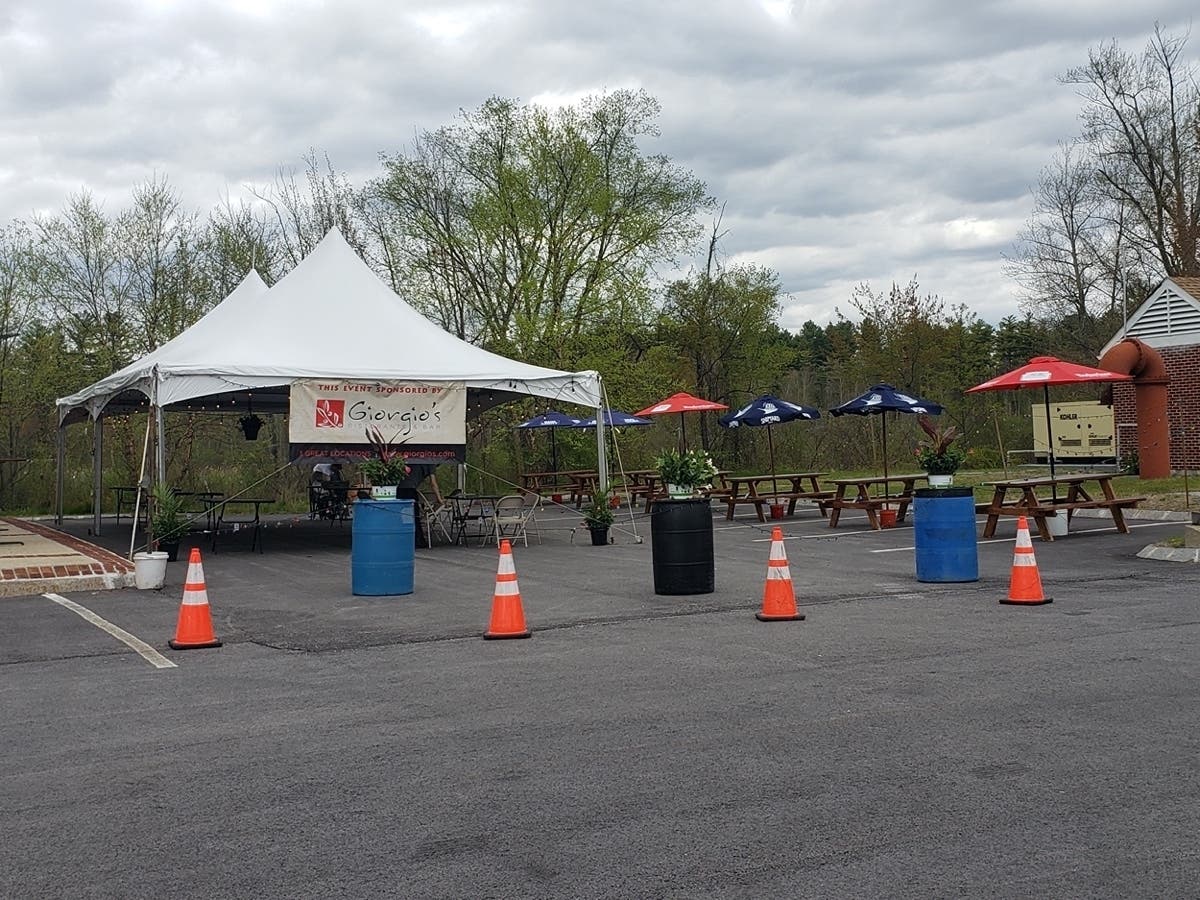
Monday was also the first day of outdoor seating as part of the state's "flex open" strategy to slowly reopen the state's economy, with safety guidelines for both patrons and employees. Sununu said he was "very impressed with some of the creativity" offered by eateries and others. He thanked members of the reopen task force, the health department, communities, and the liquor commission, for getting restaurants to this point.
Find out what's happening in Concordfor free with the latest updates from Patch.
"I think they did a great job," Sununu said.
Don't miss updates about coronavirus precautions and information in New Hampshire as they are announced. Sign up for Patch news alerts and newsletters.
Find out what's happening in Concordfor free with the latest updates from Patch.
COVID-19 Health Update
Dr. Benjamin Chan, the state epidemiologist, announced the state had 57 new positive test results, nine new hospitalizations, and no new deaths due directly to or as a complication of the new coronavirus.
Chan said health officials and their commercial partners had tested nearly 62,000 people with a combination of polymerase chain reaction (PCR) and antibody testing.
The antibody tests, he said, could take up to a couple of weeks to develop and show results and clarified those tests were not being used to detect infection but to find people who were potentially exposed to the virus but never came down with symptoms or had immunity to COVID-19. Chan said health officials "still do not understand what an antibody test means for infection."
Both the antibody and PCR numbers do tell health officials there are a large number of New Hampshire residents who have not been infected, remain unexposed, without any evidence of protection, he said. Chan added there was still the potential that at-risk individuals — people 60 or older as well as chronic and underlying health conditions — could still become infected, which is why the state was building protections into the business openings, and slowly allowing the economy to reopen.
"We're in this for the long haul, so to speak," Chan said.
Sununu agreed saying officials were using "a data-driven approach" to try and "ramp up the ability to flex open" and more testing was "a huge tool" for officials to use. The main focus, he said, had been long-term care facilities where there have been numerous outbreaks where residents are essentially trapped and become infected by carriers who were employees and visitors. Sununu said there was not a single data point that was overly positive or negative. Officials, he said, will continue to expand testing and use the results to make decisions on reopening the economy.
"(The testing) is clearly a good sign that we're on the right track," Sununu said.
New Sectors To Open
Sununu said two new sectors were being added to the reopen list: child care centers, beyond the 250 facilities that chose to remain open during the pandemic, and some outdoor recreational facilities and sports, with 10 people or less.
Child care centers had $25 million to tap into to ensure their facilities were adequate as well as new and updated guidance to ensure safety and security of children and staff. Some of the procedures include daily screenings of students and employees, limited room capacity, and staggered drop-offs, as well as other guidance.
Outdoor recreation that can reopen, with new guidelines include biking, mini-golf, canoeing, equestrian, paintball, shooting ranges, and other recreational, outdoor activities.
Later this week, Sununu said, personal care business reopening guidelines will be released.
The governor also said he hoped the kerfuffle with the Executive Council about how millions of dollars in CARE Acts funding would be spent would be resolved for the June warrant Wednesday as his office provided members with about 250 pages of documentation laying out how all the different programs would work and how funds will be spent. Approval, he said, was needed to ensure state government can stay open, proceeds with its functions, and so employees get paid.
Questions And Answers
During a question and answer period, Chan was asked about child care and whether temperature checking during drop-off wasn't something that was already being done and how it was different than before. He said the safety precautions would be more extensive and have built in protections. It would also build on social distancing which can be difficult in a child setting, he said.
When asked about whether data gathered during the child care reopening process would be used to determine whether schools would reopen in the fall, Chan didn't really answer the question. He did say that health officials would continue investigate each case of COVID-19 and see if cases or clusters popped up as well as tracing any chain of transmission. As different segments reopen, Chan added, more infections are to be expected, which is why reopening was a gradual process.
The governor was asked about Massachusetts' four phase reopening plan including new guidelines for churches and beaches — which will open June 1 in the Bay State. Sununu said he spoke to Baker Monday and the planned seemed "good for them" because they have a lot of larger venues and businesses and much more to contend with. That state's level of contagion is different, he said. On beaches, the governor said there were so many in Massachusetts beaches, with many controlled by local cities and towns via home rule, that it was a variable Bake had to take into account. Sununu said he would be watching what happens down there for guidance, too.
Patch takes community journalism seriously and we want to be as much service to our readers as possible at this very uncertain time. If you are a public health worker, medical provider, elected official, patient, or other coronavirus expert — or you simply have a news tip you'd like to share — please fill out this form. We'll keep names and personal information private.
"Can we open (beaches) by June 1? It's a goal but not a promise," Sununu said.
Sununu hoped Granite Staters would enjoy the Memorial Day Weekend by taking in "a home hike challenge," and enjoy time with family."
On the Executive Council, Sununu said the information delivered to members was extensive and most of it already accessible online. He said he was "surprised" by District 5 Executive Councilor Deborah Pignatelli's comments about not knowing how the money would be spent "when it has all been online for weeks."
Sununu was asked about the state renting the Grappone Conference Center, a building owned by Steve Duprey, a longtime Republican activist, to expand space for contact tracing. The governor said a ballroom and some office space had been rented for a couple of weeks and the rental would come out of FEMA or CARES Act funds.
When asked about whether any of the 14 surge hospitals opened by the New Hampshire National Guard would be closed since they weren't needed, Sununu said officials were looking at the possibility. If an emergency were to arise and they were needed again, it would only take 48 to 72 hours to set them back up, he said. Sununu said he was expecting and planning for a second surge, especially during the cooler months. It would be naïve for anyone to think that might not happen, the governor said.
With summer approaching, a decision would need to be made on amusement parks opening.
"It's going to be tough," Sununu said, due to potential cluster infections on rides where crowds are normally very large.
When asked whether New Hampshire was in a submission or mitigation fight against the new coronavirus, Chan said both — with the end goal to break the chains of transmission and contain outbreaks.
Chan was also asked about the turnaround time, at this point, from when a PCR test is taken and when the results are available and reported as part of the daily update during the evening. He said typically, a test on one day, if positive, might be reported by that night or 9 a.m. the next day. Sometimes, the delay can be 15 to 20 hours.
When asked if there any part of any of the health emergency orders or any other policy that has been implemented that requires a patient at a hospital, walk-in care, or any other medical facility to be tested for COVID-19 without their permission, Sununu did not answer the question. He said he hadn't heard of any cases but some hospitals were requiring testing.
Patch has requested clarification on the response.
Learn More About The Spread Of COVID-19
The COVID-19 virus is spread through respiratory droplets, usually through coughing and sneezing, and exposure to others who are sick or might be showing symptoms.
Health officials emphasize residents should follow these recommendations:
- Avoid any domestic and international travel, especially on public transportation such as buses, trains, and airplanes.
- Practice social distancing. Stay at least 6 feet from other people, including distancing while in waiting areas or lines.
- Anybody who is told to self-quarantine and stay at home due to exposure to a person with confirmed or suspect COVID-19 needs to stay home and not go out into public places.
- If you are 60 years or older or have chronic medical conditions, you need to stay home and not go out.
- Avoid gatherings of 10 people or more.
- Employers need to move to telework as much as possible.
- There is increasing evidence that this virus can survive for hours or possibly even a few days on surfaces, so people should clean frequently touched surfaces, including door handles, grocery carts and grocery basket handles, etc.
Take the same precautions as you would if you were sick:
- Stay home and avoid public places when sick (i.e., social distancing).
- Cover mouth and nose when coughing and sneezing.
- Wash hands frequently.
- Disinfect frequently touched surfaces.
More information from the New Hampshire Department of Health and Human Services about coronavirus can be found here on the department's website.
- Guidance to schools can be found can be found here.
- Instructions for returning travelers to self-observe for symptoms of COVID-19 are available are available here.
- For more information on COVID-19 in NH, visit its site here.
- For the latest information from the CDC, visit its site here.
ALSO READ:
- Nearly 3,200 Coronavirus Specimens Collected In NH: Data Update
- NH Lawmakers Move To Bigger Digs — But Budget Deficit Follows
- First Inmate Positive COVID-19 Case At NH Correctional Facility
- 12 More Dead; 98 More Infected By Coronavirus In New Hampshire
- Robocalls Fall Victim To Coronavirus In NH
Got a news tip? Send it to tony.schinella@patch.com. View videos on Tony Schinella's YouTube channel.
Get more local news delivered straight to your inbox. Sign up for free Patch newsletters and alerts.